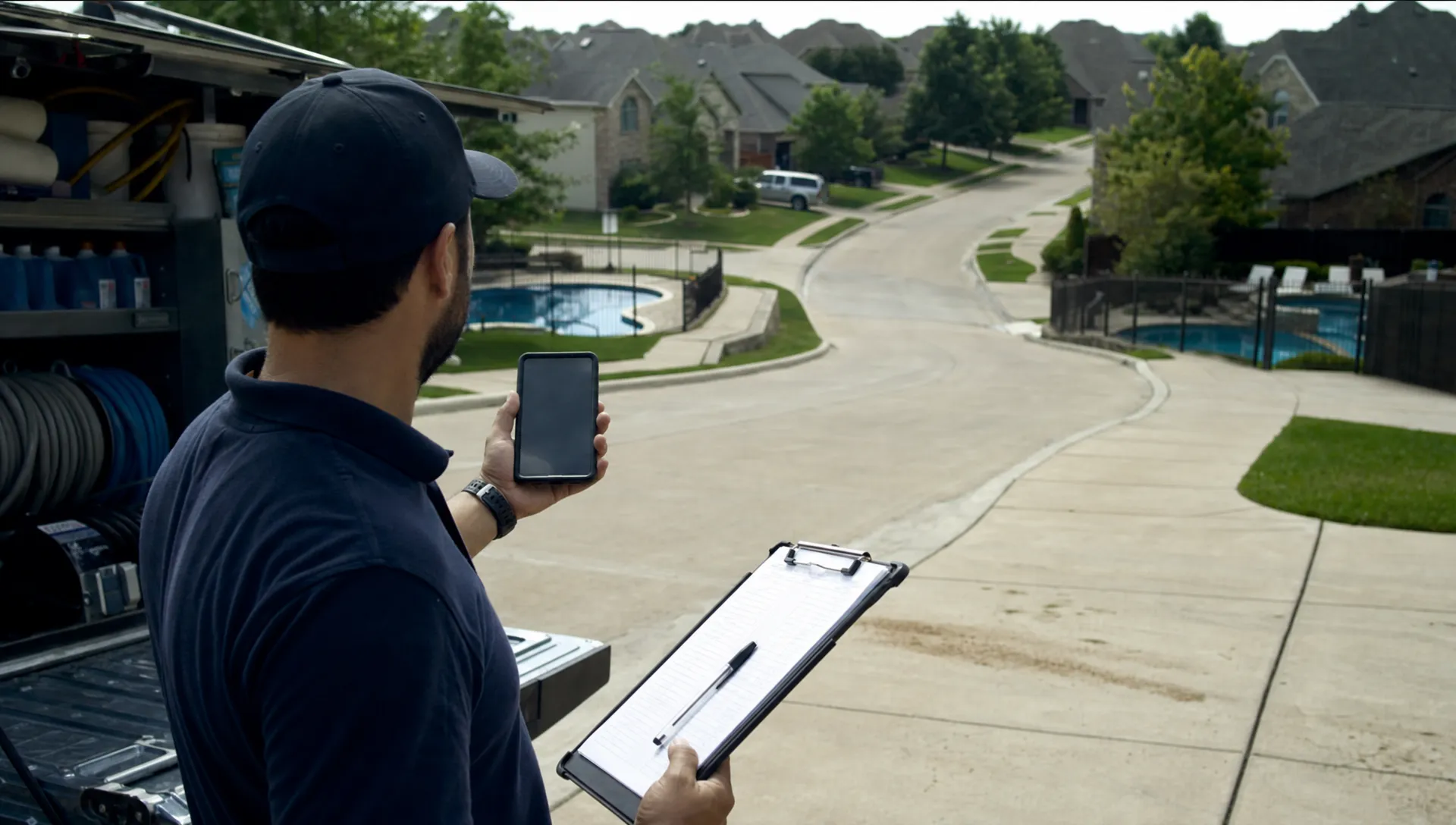
Pool companies do not grow profitably by chasing every lead in town. They grow by winning the right weekly service accounts in the right neighborhoods, then keeping those customers long enough for route density to compound.
That is where CRM marketing software becomes more than a contact database. For a pool service business, it can connect marketing, sales, scheduling, field service, homeowner communication, and billing into one workflow. Instead of asking, “How many leads did we get?” the better question becomes, “How many of those leads turned into profitable stops on routes we already run?”
The difference matters. A new customer across town may add revenue but drain margin. A new customer two streets over from an existing Tuesday route can improve drive time, technician productivity, and lifetime value. The best CRM strategy helps you find, follow up with, and close more of those accounts.
Why route growth is different for pool companies
Many local service businesses can sell one-off jobs anywhere in their market. Pool service companies operate under a tighter constraint: geography. Every new account has to fit into a recurring route pattern, technician capacity, chemical inventory, gate access, service expectations, and billing workflow.
That makes marketing harder, but also more strategic. You are not just buying leads. You are building route density.
A homeowner who submits a form after seeing a Google ad may look like a good lead, but the CRM should help answer deeper questions:
- Is this property near an existing route?
- Does it need weekly service, seasonal service, repairs, or equipment upgrades?
- Has the homeowner requested service before?
- Which technician or service day would make sense?
- What follow-up is needed before the lead goes cold?
Without a system, these answers are scattered across texts, spreadsheets, sticky notes, email inboxes, and the owner’s memory. With CRM marketing software, they become structured data your team can actually use.
What CRM marketing software means in a pool service context
Generic CRMs are often built around sales reps, deal stages, and email campaigns. Pool companies need those basics, but they also need property-level context. One homeowner may own multiple properties. One property may have a spa, automation system, salt cell, heater, gate code, dog warning, preferred billing contact, and a history of water issues.
For pool companies, CRM marketing software should help connect three layers:
| CRM layer | What it tracks | Why it helps win routes |
|---|---|---|
| Lead and customer data | Names, contact details, inquiry source, follow-up status | Prevents missed leads and keeps sales conversations moving |
| Property and equipment data | Pool type, access notes, photos, equipment, service history | Helps quote accurately and set expectations before the first visit |
| Route and operations data | Service day, technician, location, visit notes, billing status | Turns new accounts into profitable, repeatable stops |
This is why a pool-specific system is often more useful than a generic marketing database. The CRM should not stop at “lead won.” It should support the handoff into the route, the first visit, ongoing communication, and future revenue opportunities.
SplashIQ, for example, includes a pool service CRM built around customers, properties, equipment, visit history, leads, and follow-ups, which is the type of structure pool teams need when growth depends on both sales and field execution.
Faster follow-up wins more high-intent leads
Homeowners shopping for pool service rarely contact only one company. They may fill out two forms, text a company recommended by a neighbor, and ask a question in a local Facebook group on the same day. Speed matters because the first professional response often frames the entire buying decision.
CRM marketing software helps by capturing inquiries in one place and making next steps visible. A lead should not disappear because it arrived through a website form instead of a phone call. A quote request should not sit unanswered because the office manager is waiting for the owner to confirm route availability.
The goal is not to automate every conversation. The goal is to make follow-up consistent:
- New inquiry received
- Property address verified
- Route fit checked
- Estimate or callback assigned
- Follow-up reminder created
- Lost reason captured if the lead does not close
When this process is visible, you can spot pipeline leaks. Maybe leads from one zip code close well, but only when contacted within two hours. Maybe repair-only inquiries often become weekly service accounts after a technician documents equipment condition. Maybe leads are being lost after the first quote because no one follows up.
If your team is still defining lead stages and response routines, the principles in these CRM lead management tips for pool companies can help tighten the handoff from inquiry to booked account.
Better targeting creates denser, more profitable routes
Marketing is not only about generating more demand. For pool service companies, it is about generating demand in the right places.
A CRM can show which neighborhoods already produce strong retention, fewer access problems, faster payments, and profitable service patterns. That data can shape marketing decisions. Instead of advertising equally across an entire service area, you can prioritize areas where your routes already have density or where one more stop would improve the day’s economics.
For example, a company might identify that Thursday’s route has several strong accounts in one subdivision but a 40-minute gap between clusters. The marketing strategy can then focus on postcards, referral asks, local search pages, or homeowner outreach in that specific subdivision. The CRM does not replace the marketing channel, but it tells you where the next best accounts should come from.
This is where the phrase “win more routes” becomes practical. You are not simply increasing lead volume. You are using customer and property data to build stronger days for your technicians.
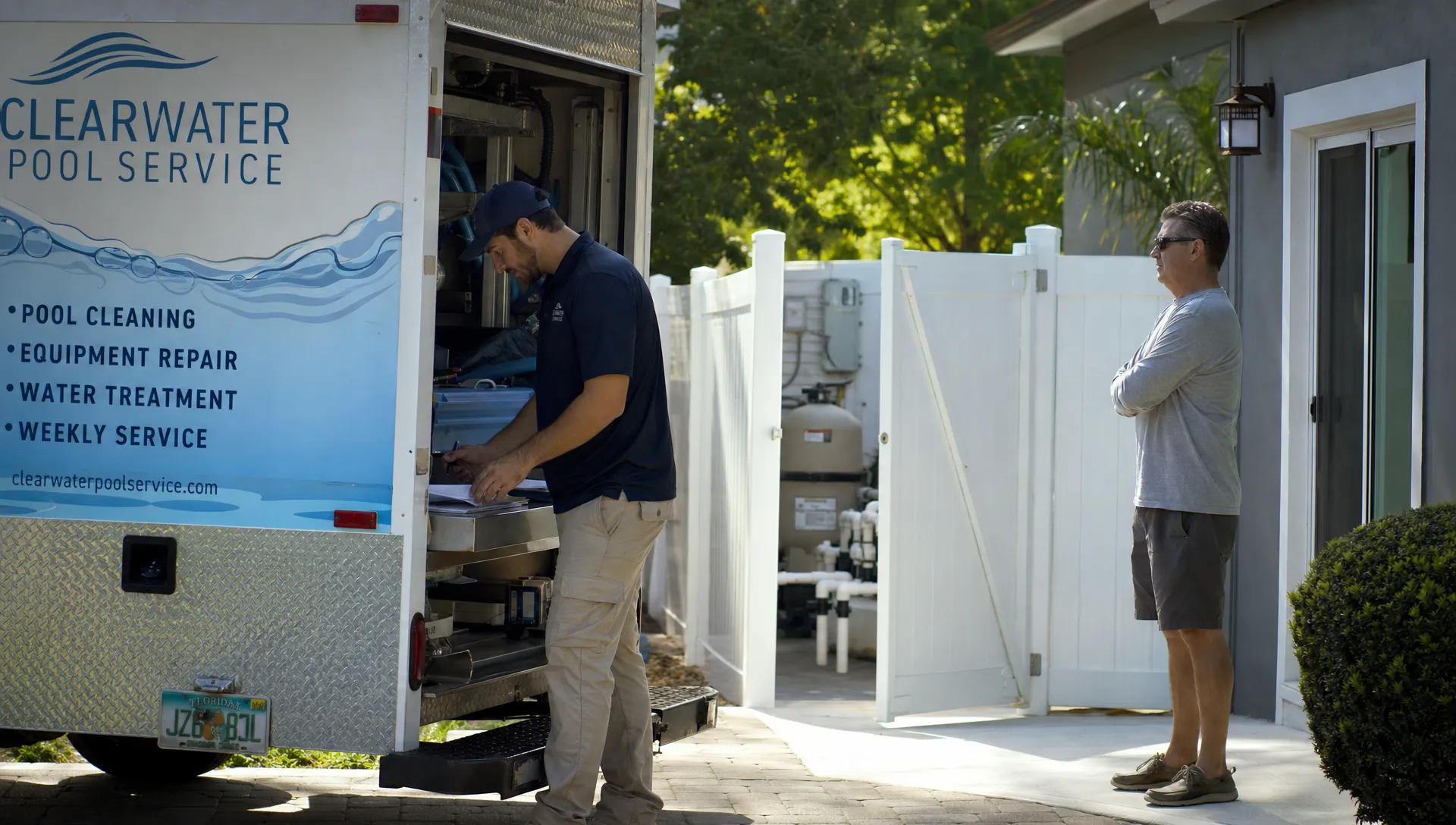
CRM data helps turn one customer into nearby referrals
Pool service is local, visible, and trust-driven. If one homeowner on a street hires your company and has a good experience, nearby homeowners may be easier to win. The CRM should help you recognize and act on that opportunity.
After a successful onboarding visit, your team can tag the property by neighborhood, track referral source, and schedule a thoughtful follow-up. If the homeowner is happy, you can ask for a review or referral at the right time. If several customers in the same community mention the same pool problem, such as algae after storms or aging pumps, your messaging can become more relevant.
Reddit discussions in communities like r/pools often reveal how homeowners think about pool service: they want reliability, clear proof that the visit happened, honest communication, and help understanding water or equipment problems. Small business operators in r/smallbusiness also frequently discuss the challenge of following up without sounding robotic. These conversations are not formal market research, but they are useful voice-of-customer clues.
For pool companies, the lesson is simple: marketing messages should match the homeowner’s real concerns. “We service pools” is generic. “Know when we visited, what we tested, and what your pool needs next” is closer to the value a homeowner actually feels.
Service proof strengthens marketing after the sale
Many pool companies think marketing ends when the customer signs up. In recurring service, the opposite is true. Every visit is part of retention marketing.
Homeowners are often not home when technicians arrive. If they do not see the work, they may wonder what was done. Over time, that uncertainty can lead to complaints, cancellations, or price sensitivity. CRM-connected service records help reduce that doubt.
Water-quality logs, before-and-after photos, visit notes, and equipment history create a record of value. When that information is connected to the customer profile and available for office follow-up, the company can respond faster and more confidently.
This matters for route growth because retention protects capacity. A company that loses accounts as fast as it wins them is always rebuilding the same route. A company that keeps customers can add new stops on top of a stable base.
Marketing and operations need the same source of truth
A common growth problem is that marketing sells one experience while operations struggles to deliver another. The website promises fast communication. The office is buried in texts. The salesperson says weekly service can start next week. The route is already full. The homeowner expects photo updates. The technician is using paper notes.
CRM marketing software helps when it becomes the shared source of truth across office and field teams. Marketing can see which leads are converting. The office can see route constraints. Technicians can see property notes. Billing can see whether a customer is active, paused, or waiting on an estimate.
This is especially important as a pool company grows beyond the owner personally managing every detail. At five trucks, small data gaps become expensive. At ten trucks, they become operational bottlenecks.
A connected platform can help support growth by bringing scheduling, field notes, customer records, and billing into the same workflow. For a broader operational view, this guide on how pool service business software supports growth explains why replacing spreadsheets and paper checklists becomes more important as route volume increases.
Automation should support the relationship, not replace it
Pool service is still a relationship business. Homeowners want quick answers, but they also want to feel that someone understands their property. That is why automation needs guardrails.
Useful CRM automation might remind the office to follow up on an estimate, trigger a message after a completed visit, or flag a lead that has not received a response. Poor automation sends generic messages at the wrong time or ignores context the homeowner already provided.
If you are exploring more advanced CRM automation, this guide to automating CRM work without losing the human connection is a helpful primer on using signals, guardrails, and human review so automation improves responsiveness without damaging trust.
For pool companies, the best automation is practical and grounded in the service workflow. It should make the team more consistent, not less personal.
The route-winning CRM metrics to watch
To know whether CRM marketing software is helping, look beyond total leads. More leads are not always better if they come from low-fit areas or create scheduling strain.
Better metrics include:
| Metric | What it tells you | Why it matters |
|---|---|---|
| Lead response time | How quickly new inquiries receive a reply | Faster responses often improve close rates |
| Lead source by closed account | Which channels produce actual customers | Helps shift spend toward quality leads |
| Closed accounts by neighborhood | Where new customers are being added | Shows whether marketing is improving route density |
| Estimate follow-up rate | How consistently quotes are pursued | Reduces preventable lost revenue |
| New stops per route day | How growth affects technician schedules | Connects sales success to operational capacity |
| Cancellation reason | Why customers leave | Protects route value and improves retention |
These metrics help owners make better decisions. If one channel produces many leads but few accounts, it may need better targeting. If a neighborhood closes well but causes long drive times, it may not be the next growth priority. If cancellations mention communication, visit proof and homeowner updates may matter more than discounts.
How to evaluate CRM marketing software for a pool company
The right system should match how pool service actually works. Before choosing software, map your current path from first inquiry to recurring service account. Then look for gaps.
Ask practical questions:
- Can the CRM track both homeowners and properties?
- Can it store equipment details, gate codes, visit history, and photos?
- Can office staff see lead status and follow-up tasks?
- Can route scheduling connect to customer and property records?
- Can technicians work in the field, including when connectivity is limited?
- Can homeowners receive clear updates, invoices, and payment options?
- Can the team see which marketing sources are producing profitable accounts?
The best fit is usually the system your team will actually use every day. A feature-rich CRM that sits unused will not improve routes. A pool-focused workflow that technicians, office staff, and managers can keep current is far more valuable.
A simple rollout plan for pool companies
CRM adoption does not need to happen all at once. In fact, trying to rebuild every process in one week can create confusion. Start with the workflows that most directly affect route growth.
First, centralize all new leads and customer records. Make sure every inquiry has a source, property address, status, owner, and next action. This alone can recover revenue that used to fall through the cracks.
Second, connect leads to route decisions. When a new service request comes in, evaluate geography and service fit before quoting blindly. This helps the team pursue accounts that strengthen the business instead of simply filling the calendar.
Third, standardize first-visit documentation. Capture photos, water readings, equipment notes, and access details so the office, technician, and homeowner all begin with the same facts.
Fourth, review data monthly. Look at which neighborhoods, lead sources, and follow-up patterns are producing the best accounts. Use that insight to adjust marketing spend and route planning.
Over time, the CRM becomes a learning system for the business. It shows where growth is happening, where profit is being lost, and where the next route opportunity is likely to appear.
Frequently Asked Questions
What is CRM marketing software for pool companies? CRM marketing software helps pool companies manage leads, customer records, property details, follow-up, and marketing source data. In a pool service context, it is most valuable when it connects those records to scheduling, field visits, service history, and billing.
How does a CRM help a pool company win more routes? A CRM helps pool companies respond faster, track every inquiry, identify high-fit neighborhoods, improve referral follow-up, and connect new customers to existing route capacity. This supports denser routes instead of scattered growth.
Is a generic CRM enough for a pool service business? A generic CRM may work for basic contact tracking, but pool companies often need property-level records, equipment history, gate notes, service logs, route scheduling, photos, and homeowner communication. Those details are essential for recurring service operations.
What CRM metrics should pool companies track? Important metrics include lead response time, close rate by source, closed accounts by neighborhood, estimate follow-up rate, cancellations, and new stops per route day. These connect marketing performance to route profitability.
Can CRM automation hurt customer relationships? It can if messages are generic, poorly timed, or disconnected from the homeowner’s actual service history. The best automation supports human follow-up with reminders, clear records, and timely updates while keeping the relationship personal.
Turn better follow-up into stronger routes
Winning more pool routes is not about chasing every possible lead. It is about building a repeatable system for capturing demand, following up quickly, choosing the right accounts, and delivering a service experience homeowners trust.
SplashIQ brings CRM, smart route scheduling, water-quality logs, equipment tracking, field operations, homeowner communication, and payments into one platform built for pool service companies. If your team is ready to replace scattered spreadsheets and paper checklists with a connected workflow, visit SplashIQ to see how it can support your next stage of route growth.