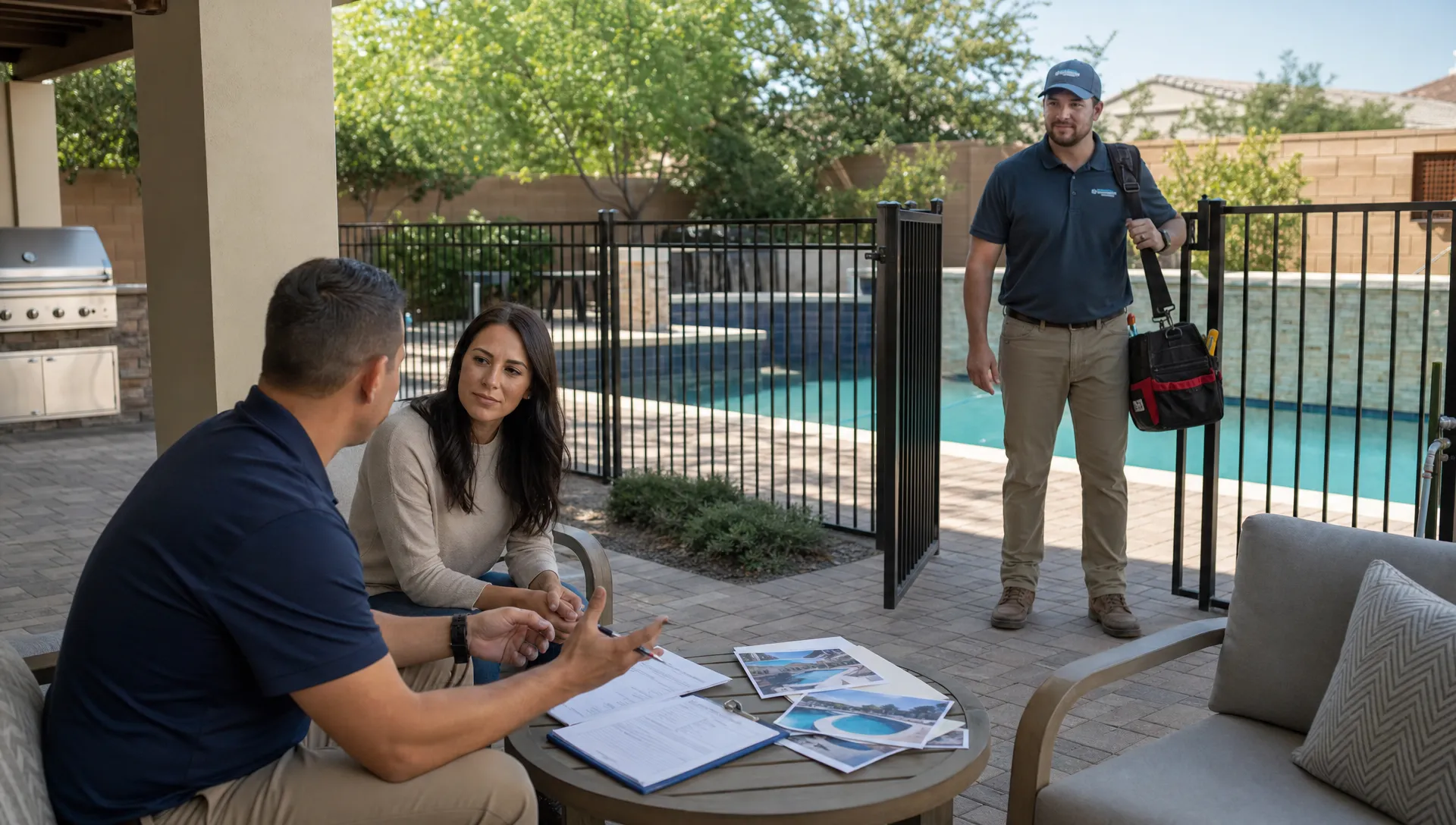
Growth in a pool care business usually feels good until the owner realizes every route, repair estimate, emergency call and invoice still depends on them. At that point, hiring is no longer about finding someone who can skim leaves. It is about building a company that can deliver the same standard of service when the owner is not standing in the backyard.
Pool service hiring is unique because technicians work inside customers' homes, often without direct supervision. They handle chemicals, drive company vehicles, document water quality, notice equipment problems and represent the brand in short homeowner interactions. A great hire protects route density, keeps customers informed and catches repair opportunities early. A poor hire creates callbacks, safety risks and reputation damage.
The goal is not to hire fast. The goal is to hire in a way that makes the next hire easier.
Know when your pool care business is ready to hire
Many owners wait too long because they do not want the payroll risk. Others hire too early because they are tired. Both choices can hurt. The right timing depends on route density, cash flow, service quality and the type of work that is holding you back.
Before posting a job, look at your business for signals that hiring will unlock profitable capacity rather than create a new management problem.
| Signal | What it usually means | Smart hiring move |
|---|---|---|
| You are turning down recurring service in neighborhoods where you already have customers | Demand exists and new stops would increase route density | Hire or train a route technician |
| You are behind on invoices, estimates or homeowner follow-up | Admin work is constraining growth | Consider office or dispatch support before another field hire |
| Callbacks are rising even though your schedule is full | Quality control is slipping | Build training and service checklists before adding more stops |
| Repairs are being delayed because maintenance routes take all your time | Revenue opportunities are being missed | Add a maintenance tech or promote a lead so skilled techs can handle repairs |
| You can cover payroll for 60 to 90 days without relying on immediate growth | Cash flow has room for onboarding time | Start recruiting before peak season pressure hits |
Do not treat headcount as proof of success. A lean company with dense routes, clean billing and repeatable field notes can be healthier than a larger company held together by the owner texting instructions all day.
Define the role before you write the job ad
A common mistake is hiring a vague helper. The ad says pool technician, but the owner needs someone to clean, test water, sell repairs, answer homeowner questions, fix pumps, drive safely, update notes and occasionally work Saturdays. That job description is too broad for most candidates and almost impossible to train against.
Start by naming the bottleneck. Then hire for that bottleneck.
| Role | Best for | Core responsibilities |
|---|---|---|
| Route service technician | Expanding recurring maintenance capacity | Cleaning, brushing, skimming, water testing, chemical logging, photos and basic issue reporting |
| Senior technician or field lead | Improving quality across multiple techs | Difficult stops, training, callbacks, equipment checks and route coaching |
| Repair technician | Capturing more repair revenue | Troubleshooting, repair documentation, estimates, parts coordination and homeowner communication |
| Office coordinator or dispatcher | Reducing owner interruptions | Lead intake, schedule changes, homeowner messages, billing follow-up and route support |
| Sales or estimate coordinator | Converting more qualified work | Site visits, estimate follow-up, financing conversations and handoff to operations |
If you are making your first hire, a route technician is often the simplest place to start because the work can be standardized. If your routes are already unstable, an office coordinator may create more capacity than a second truck by keeping schedules, leads and billing from piling up.
Build a hiring scorecard around the work, not the resume
Experience matters, but a pool care business cannot rely on experience alone. Many candidates know how to clean a pool but have weak documentation habits. Others are strong technically but poor with homeowners. Some are coachable, careful and reliable even if they need training on pool chemistry or equipment.
A scorecard keeps you from hiring based on gut feel. Use the same criteria for each candidate and rate what actually affects route quality.
Your scorecard should cover reliability, driving responsibility, coachability, homeowner communication, documentation habits and safety mindset. Technical experience belongs on the scorecard too, but it should not erase red flags in those other areas.
For formal knowledge, credentials can help. The Pool & Hot Tub Alliance offers the Certified Pool Operator program, which can be useful for water chemistry and commercial pool requirements depending on your market. Certifications do not replace field judgment, but they can support a training path for employees who want to grow.
Pool companies are not the only contractors learning this lesson. Contractor CRM articles such as Jobber's guide to contractor CRM and Buildertrend's overview of construction CRM make a similar point for home service and construction teams: as companies add crews, customer history, follow-up, photos and job notes need to live in a shared system instead of one person's memory.
That is especially true in pool service. A new technician can only perform consistently if they can see property notes, equipment history, service expectations and past homeowner issues. If your customer information is still scattered across texts and spreadsheets, build the system before hiring. SplashIQ's guide to a practical CRM strategy for growing pool service companies covers how to organize records around customers, properties and service history.
Source candidates from more than job boards
Job boards can work, but they are rarely enough by themselves. The best pool service candidates often come from adjacent jobs where reliability, outdoor work and customer interaction are already part of the day.
Good recruiting sources include employee referrals, local trade schools, community colleges, seasonal lifeguards, pool supply counters, pressure washing companies, landscaping crews and technicians from other field service trades. You can also ask vendors and industry contacts who they would hire if they had an opening tomorrow.
Reddit can be useful as informal market research. It is not a substitute for HR advice, but threads in r/sweatystartup discussions about hiring employees, r/smallbusiness posts about hiring a first employee and r/pools conversations about pool service show recurring pain points. Owners often regret hiring without a training process. Homeowners often complain less about the chemistry itself and more about no-shows, poor communication, unclear pricing and techs who leave without explaining what was done.
Use that feedback when writing the ad. Sell the role honestly, but make it clear that professionalism is part of the job.
| Job ad section | What to include | What to avoid |
|---|---|---|
| Opening summary | Type of company, service area and why the role exists | Generic language like fast growing team with no specifics |
| Daily work | Number of stops, outdoor conditions, driving, cleaning, testing and documentation | Hiding the physical parts of the job |
| Requirements | Valid driver's license if required, clean communication, reliability and ability to follow service process | Unrealistic years of experience for an entry level route role |
| Growth path | Training, lead tech path, repair training or office advancement | Promising promotions without a clear structure |
| Compensation | Pay structure, overtime approach, benefits if offered and seasonal expectations | Vague pay ranges or surprises after the interview |
The best job ads repel the wrong candidates as much as they attract the right ones. If someone dislikes heat, driving, checklists and homeowner communication, it is better to find out before you invest time in onboarding.
Use interviews to test judgment and communication
A pool technician does not need a perfect interview style, but they do need to communicate clearly, follow instructions and make safe decisions when alone in the field. Structure the hiring process so you test those skills directly.
A simple process works well: start with a short phone screen, move to a scenario-based interview, then use a ride-along or working interview where allowed by law. If the candidate performs actual work during a trial, follow wage and labor rules in your state. Keep the same process for each candidate so decisions are consistent and fair.
Good interview questions sound like real work:
- A homeowner asks you to fix something that is not on today's work order. What do you do?
- You arrive and the pool is green, but your route is already full. How do you document the situation?
- You notice a pump making a strange noise. What information should the office receive?
- A customer is upset because the previous visit was missed. How would you handle the conversation?
- What does safe chemical handling mean to you?
- Tell me about a job where you had to repeat the same task carefully every day.
Listen for candidates who slow down, ask clarifying questions and understand when to escalate. Be cautious with candidates who make up answers, dismiss homeowner concerns or seem annoyed by documentation.
Before making an offer, verify requirements that matter for the role. That may include driving record checks, background checks, reference checks, work authorization and any licensing or certification requirements in your state or municipality. If you are unsure whether a worker should be classified as an employee or independent contractor, review the IRS guidance on worker classification and speak with a payroll or employment professional.
Make the first 90 days measurable
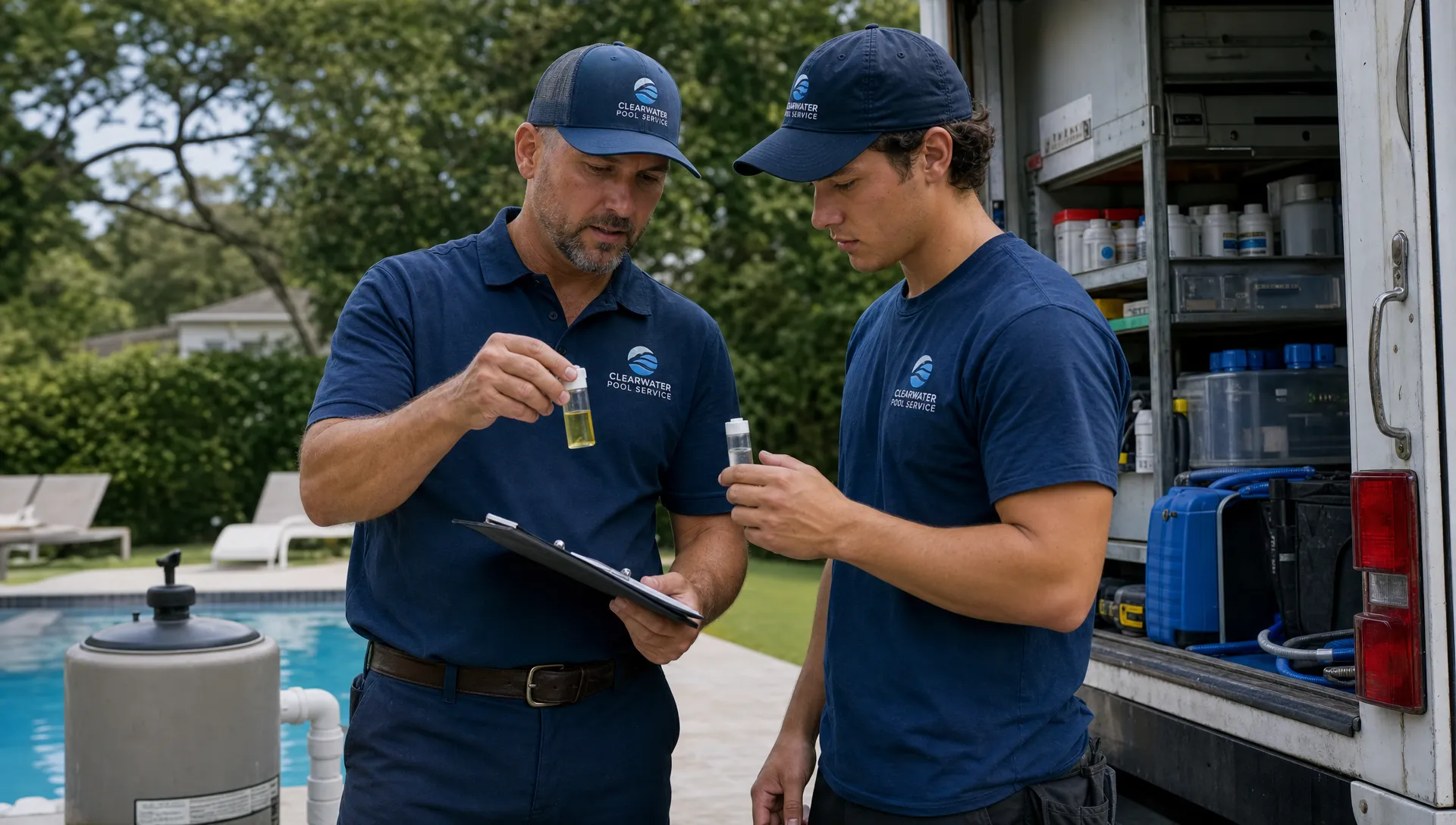
Hiring does not end when the candidate accepts. The first 90 days should teach your way of servicing pools, communicating with homeowners and documenting work. Without structure, the new hire copies whatever they see first, even if those habits are inconsistent.
A practical onboarding plan should move from observation to supervised work to independent responsibility.
| Time period | Training focus | What to measure |
|---|---|---|
| Week 1 | Shadow routes, safety basics, water testing process, app usage and customer expectations | Attendance, attitude, questions asked and ability to follow the service flow |
| Weeks 2 to 4 | Supervised stops, photos, chemistry logs, equipment observations and cleanup standards | Accuracy of notes, safe chemical handling and completion of assigned tasks |
| Days 31 to 60 | Partial route ownership with field lead review | On-time visits, complete logs, homeowner issues and callback patterns |
| Days 61 to 90 | Independent route with weekly coaching | Quality consistency, documentation, customer feedback and readiness for more stops |
Your systems should make good habits easy. Each property should have current notes, equipment details, service history and homeowner preferences. Each visit should have required fields for water-quality logs, photos and issues that need follow-up. If the new hire has to ask the owner for basic property information at every stop, the business is not ready to scale.
This is where operating software becomes part of the hiring plan, not just an office tool. Route scheduling, water-quality logging, equipment tracking, before and after photos, homeowner notifications and billing workflows help new employees work inside a clear process. For a deeper look at the operational side, see how pool service business software supports growth as companies add routes and technicians.
Retain technicians by designing a job people can succeed in
Recruiting is expensive, but turnover is also a management signal. If every new tech burns out, the job may be poorly designed. Pool service is physical, repetitive and seasonal in many markets. Strong employees stay longer when expectations are clear, routes are reasonable and managers coach instead of only reacting to mistakes.
Retention starts with basics: pay that matches your market, predictable scheduling where possible, safe chemical handling procedures, functioning equipment, clean route instructions and respectful communication. It also depends on whether employees can see a future. A technician who wants to learn repairs, become a field lead or move into dispatch should know what skills and behaviors get them there.
Technician scorecards can help if they are used for coaching. Track metrics that connect to service quality, such as completed logs, arrival reliability, callbacks, photo quality, missed tasks and homeowner complaints. Review patterns weekly or biweekly. The purpose is not to punish every error. It is to spot where a technician needs training, where a route is overloaded or where the company process is unclear.
Be careful about promoting your best technician into management without support. Great field performance does not automatically mean they know how to train, review routes, handle conflict or give feedback. If you need a field lead, define that role just like any other hire.
Know when to hire office help
Many pool care business owners assume growth means more trucks. Sometimes the next best hire is the person who keeps the trucks productive.
Office support becomes valuable when leads are going unanswered, homeowners are texting the owner directly, route changes are causing confusion, estimates are not being followed up or payments are delayed. A coordinator who manages the CRM, schedules, homeowner outreach and billing follow-up can free the owner and technicians to focus on field work.
This hire also reduces risk. When all customer information runs through the owner, every vacation, illness or busy day creates delays. When the office role owns the process, customers receive clearer updates and technicians arrive with better information.
For a growing team, the field and office should not operate in separate worlds. The technician's notes should inform homeowner communication. The office should see service photos, equipment problems and route updates. Billing should connect to completed work. That handoff is what keeps customers from feeling the company has become less personal as it grows.
Avoid the hiring mistakes that slow growth
Hiring problems usually show up as people problems, but the root cause is often a weak process. If you want the next hire to strengthen the company, avoid these common mistakes.
| Mistake | Why it hurts | Better approach |
|---|---|---|
| Hiring a friend without a written role | Personal trust replaces performance expectations | Use the same job description, scorecard and onboarding plan for everyone |
| Waiting for a perfect experienced technician | The route stays maxed out and the owner stays trapped | Hire for reliability and coachability, then train the pool-specific process |
| Skipping documentation because the tech seems smart | Knowledge stays in someone's head and quality becomes hard to verify | Require logs, photos and notes from day one |
| Adding customers before training is stable | New revenue creates callbacks and churn | Build route capacity and quality control together |
| Using software only after problems appear | Bad habits become harder to unwind | Put scheduling, CRM, water logs and billing workflows in place before the team gets larger |
The strongest hiring plan is boring in the best way. Everyone knows what the role is, what good work looks like, how to document it and how performance will be reviewed.
Frequently Asked Questions
When should a pool care business make its first hire? Make your first hire when recurring demand is strong, cash flow can support payroll during training and the work can be documented clearly enough for someone else to repeat it. If your schedule is chaotic or invoices are already delayed, fix the system before adding headcount.
Should I hire an experienced pool technician or train someone new? Experienced technicians can help you grow faster, but they may also bring habits that do not match your standards. Newer candidates can work well if they are reliable, coachable and trained through a clear process. Use a scorecard instead of choosing based on experience alone.
What is the best first role to hire for a growing pool care business? For many companies, the first field hire is a route service technician who can take recurring maintenance stops. If admin work is blocking growth, an office coordinator or dispatcher may be a better first hire because they free the owner to sell, train and manage quality.
How do I train pool technicians consistently? Use a 90-day plan that starts with shadowing, moves into supervised stops and ends with independent route ownership. Require water-quality logs, photos, equipment notes and issue reporting from the beginning so service quality is visible.
What systems should be in place before hiring? At minimum, you need a CRM, route schedule, property notes, service checklist, water-quality logging process, equipment history, homeowner communication workflow and billing process. The new hire should not have to rely on the owner's memory to do the job correctly.
Build a hiring system before your next hire
A growing pool care business does not just need more people. It needs a repeatable way for people to do great work. When your CRM, routes, service logs, equipment records, homeowner communication and billing all live in one workflow, new hires can contribute faster and managers can coach with better information.
SplashIQ helps pool service companies run that workflow across the office, field and homeowner experience, with tools for CRM, smart route scheduling, water-quality logs, equipment tracking, homeowner notifications, before and after photos, online payments and technician scorecards. If you are getting ready to hire, build the operating system first so every new employee strengthens the business instead of adding more chaos.