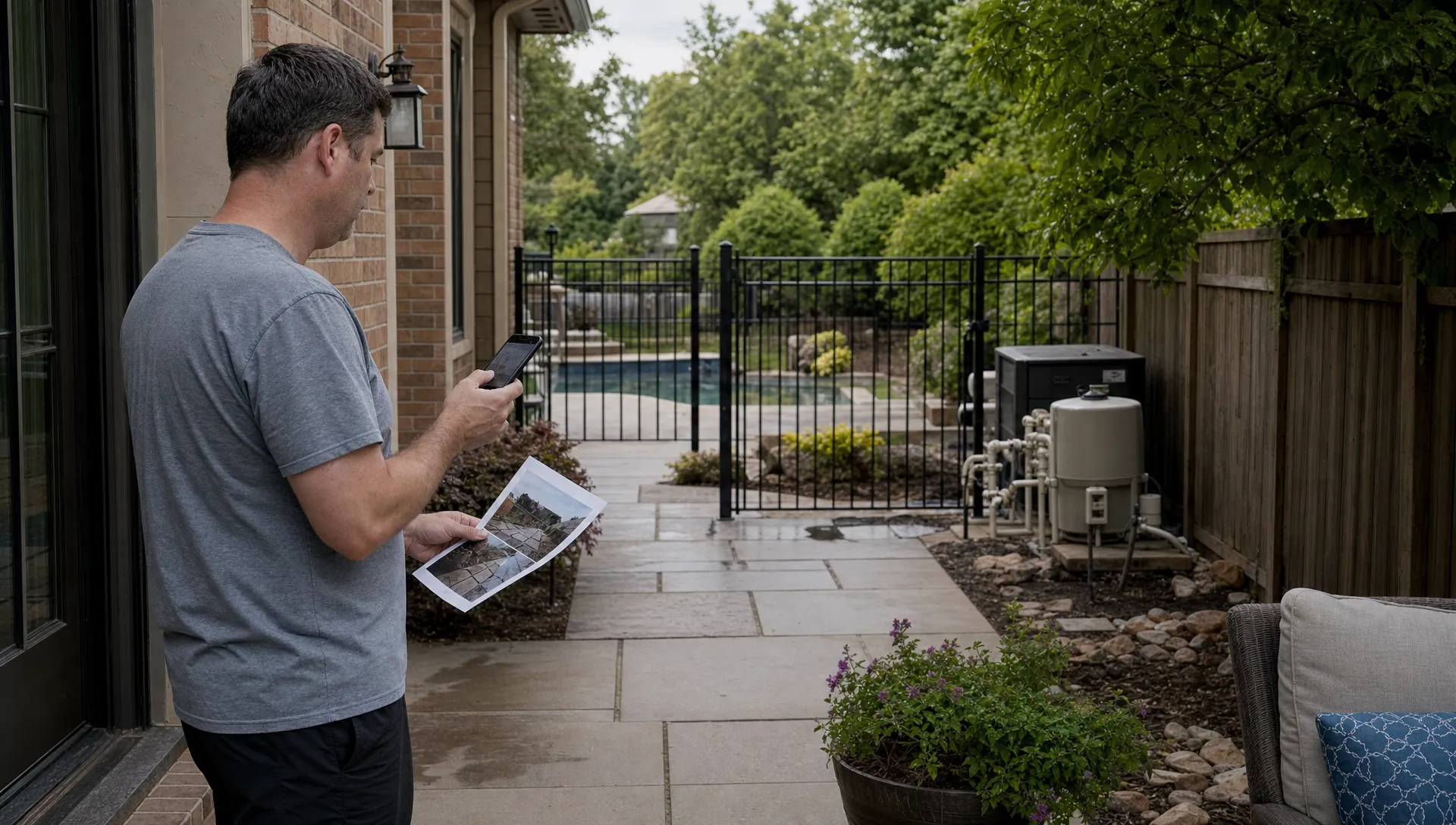
After a storm, searching for “pool repairs near me” is often the first reaction to a silent pump, muddy water or a damaged equipment pad. The safer first step is triage: identify hazards, prevent additional damage and decide which professional needs to respond.
For homeowners and pool service crews, the order matters. Electrical hazards come before cleanup. Possible structural damage comes before water replacement. A green pool may look urgent, but submerged electrical equipment deserves attention first.
Make the pool area safe before inspecting damage
Keep people and pets out of the pool until the area has been assessed. The National Weather Service’s lightning guidance recommends waiting at least 30 minutes after the last thunder before resuming outdoor activities.
Do not enter standing water near pumps, heaters, electrical panels or fallen wires. If someone is being shocked or a downed line creates an immediate danger, call 911 and the utility. Do not attempt a rescue by entering potentially energized water.
Only turn equipment off if its disconnect is safely reachable from a dry location. Otherwise, leave it alone and arrange qualified help. Do not reset tripped breakers or ground-fault protection to see whether equipment will restart.
Also check access barriers from a safe position. A fallen fence, broken gate or damaged cover creates an immediate access hazard, even when the pool itself looks normal. Keep the area secured without approaching unstable trees, damaged decking or electrical hazards.
How to prioritize “pool repairs near me” requests after a storm
Use observed conditions, not water color alone, to set the response order. These are triage categories, not remote diagnoses.
| Priority | What you observe | Appropriate next step |
|---|---|---|
| Immediate safety hazard | Fallen wires, suspected energized water, gas odor or an unstable structure | Keep clear and contact emergency services or the relevant utility |
| Urgent professional assessment | Submerged equipment, damaged wiring, rapid water loss, displaced coping or suspected contamination | Keep the pool closed and arrange the appropriate qualified professional |
| Equipment repair assessment | Pump will not prime, visible plumbing leaks, abnormal filter pressure or heater faults | Leave affected equipment off pending diagnosis |
| Cleanup and recovery | Leaves, surface debris or cloudy water without identified safety hazards | Schedule cleanup, equipment checks and measured water treatment |
A property can fall into several categories. An overflowing pool with a submerged pump is not merely a cleanup job. A broken gate remains a safety problem even after the water clears.
For contractors, record the highest-risk condition and any secondary problems separately. That prevents a dispatch note such as “storm cleanup” from hiding a need for electrical assessment or structural inspection.
Check equipment without creating another failure
When requesting “pool repairs near me” for equipment that stopped during a storm, describe what happened before the failure. A power outage, rising floodwater and a fallen branch suggest different inspection needs.
Pumps and electrical components
A pump that hums, trips protection or fails to move water needs diagnosis, not repeated restart attempts. Flood exposure can affect motors, controls and connections even after their exteriors appear dry. Have affected electrical equipment evaluated before it is energized again.
For an otherwise dry installation, a technician can investigate water level, suction restrictions, air leaks and equipment condition after establishing safe working conditions. Homeowners should not open electrical enclosures or reach into equipment to clear an obstruction.
Filters, plumbing and heaters
Look for visible cracks, displaced pipes, damaged supports and fresh leakage without touching compromised equipment. Do not loosen a filter clamp or lid. Filters can retain hazardous pressure, and opening one requires the manufacturer’s shutdown and pressure-release procedure.
Do not treat a heater fault code as proof that one replaceable part has failed. Water intrusion, debris, vent damage or supply problems may require different trades. If gas is suspected, leave the area and contact the gas utility or emergency services from a safe location without operating nearby switches.
Separate ordinary debris from possible contamination
A request for “pool repairs near me” should flag whether the pool received leaves and rainwater or actual floodwater. Those situations require different recovery decisions.
Leaves and windblown dirt can often be addressed through debris removal, filtration and water balancing once the equipment is safe. Floodwater may introduce sewage, fuel, pesticides or other contaminants. The CDC’s floodwater safety guidance explains why contact with floodwater can be hazardous.
Keep a pool closed when contamination is suspected. Do not assume a large chlorine dose will make every contamination problem safe, and do not use clear-looking water as proof that swimming can resume.
Record the likely source of incoming water, any unusual odor and whether nearby drains or sewer systems overflowed. Share those details with the service provider so they can determine whether additional public-health or environmental guidance is needed.
After safe circulation is restored, the technician should assess water chemistry and choose treatment based on measurements, pool volume and product directions. Never mix pool chemicals together. Keep cleanup chemicals away from flood-damaged containers or unidentified substances, and do not add products simply because the water still looks cloudy.
Treat water loss and structural changes as separate problems
When comparing providers for “pool repairs near me,” distinguish a visible plumbing leak from possible shell, liner or ground movement. Not every pool service company handles structural assessment or underground leak detection.
Photograph new cracks, shifted coping, torn liners, displaced equipment and changes around the deck from a stable position. Note whether water loss continues while equipment is off, but do not operate unsafe equipment to perform a comparison test.
A changing water level is not a diagnosis by itself. Rain, overflow, evaporation and leaks can overlap after a storm. A professional may need to isolate plumbing or perform leak testing before recommending a repair.
Do not drain a storm-affected pool without professional assessment. Saturated ground and groundwater pressure can damage or lift some pools when their internal water load is reduced. Removing water can also complicate liner and structural problems.
Avoid walking on undermined decking or approaching a pool edge that has shifted. Broken glass and sharp debris are additional reasons to keep swimmers out, even if filtration and sanitizer readings appear normal. Where structural movement is suspected, ask whether the assessment requires a structural specialist rather than a routine service visit.
Give the repair provider a usable scope
Search results for “pool repairs near me” are a starting point, not confirmation that a company can handle flood-exposed electrical systems, heaters or structural damage. Describe the hazard first, then ask whether the provider performs that work or coordinates with another licensed trade.
A useful initial message might read:
“Stormwater reached the equipment pad yesterday. The pump is off and has not been restarted. There is a visible crack in the return plumbing, and the gate no longer latches. We have photos taken from a dry location. Can you assess the pool equipment and advise whether an electrician is needed first?”
Include equipment model information only if it can be obtained safely. Ask about assessment fees, licensing where required, insurance and whether diagnosis is separate from the repair quote. SplashIQ’s guide to choosing a trustworthy pool service company explains those checks in more detail.
For homeowner perspectives, storm-damage discussions in Reddit’s r/pools community can help you identify questions to ask. Treat those discussions as anecdotal experiences, not electrical instructions or a diagnosis of your pool.
Save dated photos, estimates and receipts for any insurance inquiry. Coverage depends on the policy and cause of damage, so avoid assuming the repair will be reimbursed before speaking with the insurer.
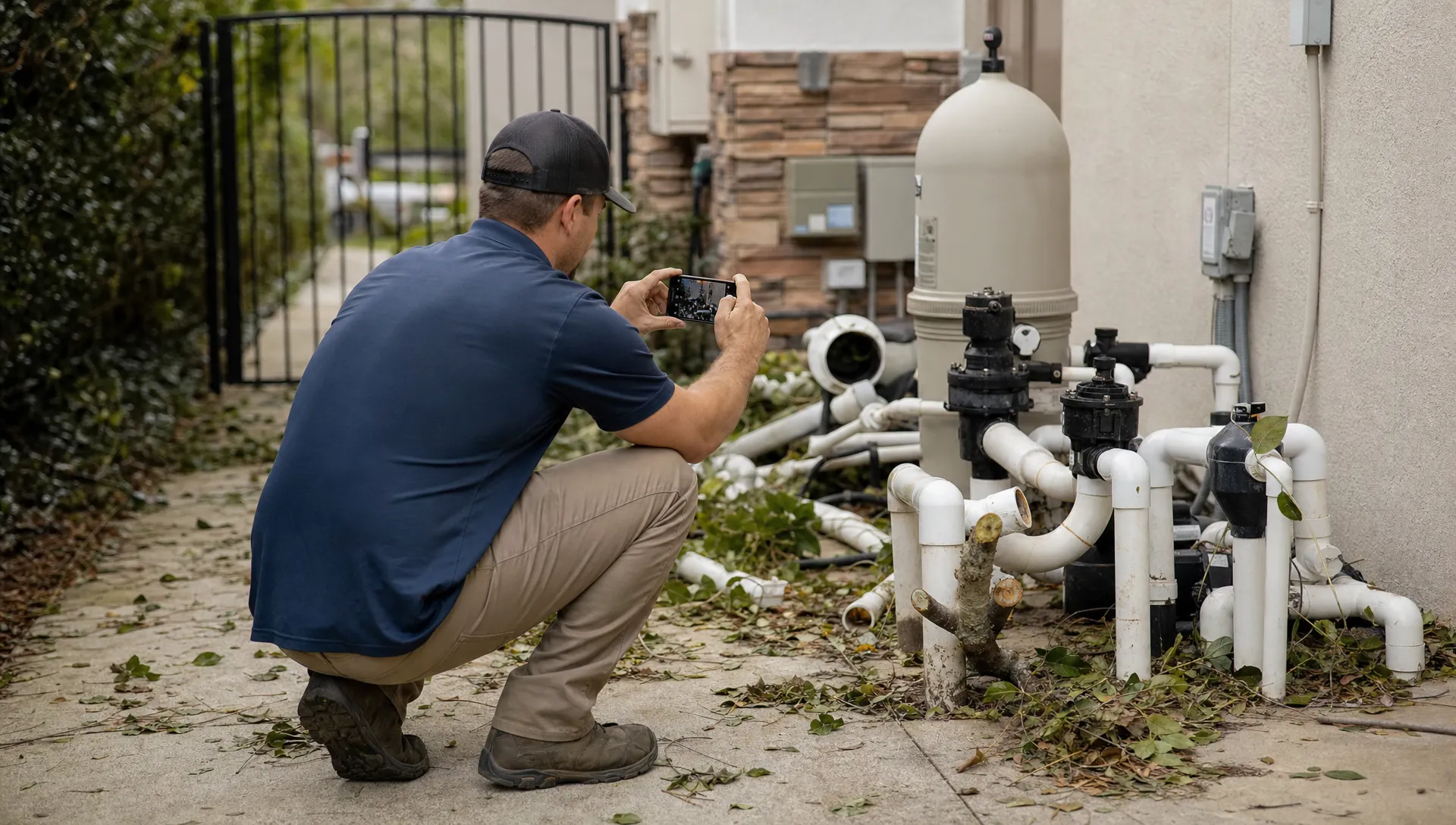
For contractors: keep triage attached to the job record
A surge in “pool repairs near me” inquiries can overwhelm a small office. The operational risk is not just a missed call. It is sending a cleanup crew to a property whose electrical hazards were never recorded.
Keep the homeowner’s observations separate from the technician’s confirmed findings. “Pump submerged, reported by homeowner” is more accurate than “motor failed” before inspection. Record exposure conditions, shutdown status, photos, access restrictions and the next responsible person in the same customer record.
Schedule by risk first, geography second
Route density matters after a storm, but it should not override safety dependencies. A technician cannot complete an equipment restart if electrical clearance is still pending. Likewise, a structural assessment may need to precede a cleanup plan involving water removal.
Give each visit a defined purpose: document conditions, diagnose equipment, complete an approved repair or verify recovery. That keeps an assessment appointment from becoming an implied promise to restore swimming that day.
Use CRM records to support controlled growth
Two contractor-focused articles explain how connected records support a growing operation. SplashIQ’s guide to managing pool service and repairs covers connecting customer history, scheduling and field documentation. Its article on forecasting repair revenue with CRM sales data addresses job readiness and technician capacity.
The practical lesson is to increase booked work only as fast as the team can diagnose, authorize and complete it. SplashIQ supports that workflow with customer CRM, smart route scheduling, equipment tracking, water-quality logs, before-and-after photos and an offline field app. Those records support coordination without replacing professional judgment.
Frequently asked questions
Will searching for “pool repairs near me” find the right emergency professional? Not necessarily. A pool company may handle circulation and filtration repairs but not damaged utility service, gas leaks or structural engineering. Describe the hazard before booking so the provider can confirm scope and any required trade coordination.
How much will storm-related pool repairs cost? A reliable estimate requires identifying the failure and checking for related damage. Debris removal, a broken pipe, submerged controls and structural movement involve very different scopes. Ask for assessment charges and a written repair scope rather than relying on a general price range.
Can I restart the pump when power returns? Restored utility power does not establish that pool equipment is safe. Do not restart flood-exposed equipment or repeatedly reset a tripping breaker. Have affected equipment evaluated first. Even without flood exposure, storm debris or plumbing damage can prevent safe circulation.
When can people swim again? Reopening requires more than clear water. Electrical and structural hazards must be resolved, barriers restored, sharp debris addressed and water quality brought into the appropriate operating range. Suspected sewage or chemical contamination requires additional professional guidance.
Should I remove extra water immediately? Do not drain the pool simply because it is dirty or unusually full. A qualified pool professional should consider groundwater conditions, pool construction and the cause of the elevated level before recommending water removal.
Make the next step a safe, documented one
Homeowners searching for “pool repairs near me” should send a clear description of storm exposure and visible damage, then confirm which professional should attend first. Do not restart equipment or drain the pool to make the problem easier to demonstrate.
For service companies, SplashIQ brings scheduling, customer records and field documentation into one app, helping the office and technicians work from the same repair history as jobs move toward completion.