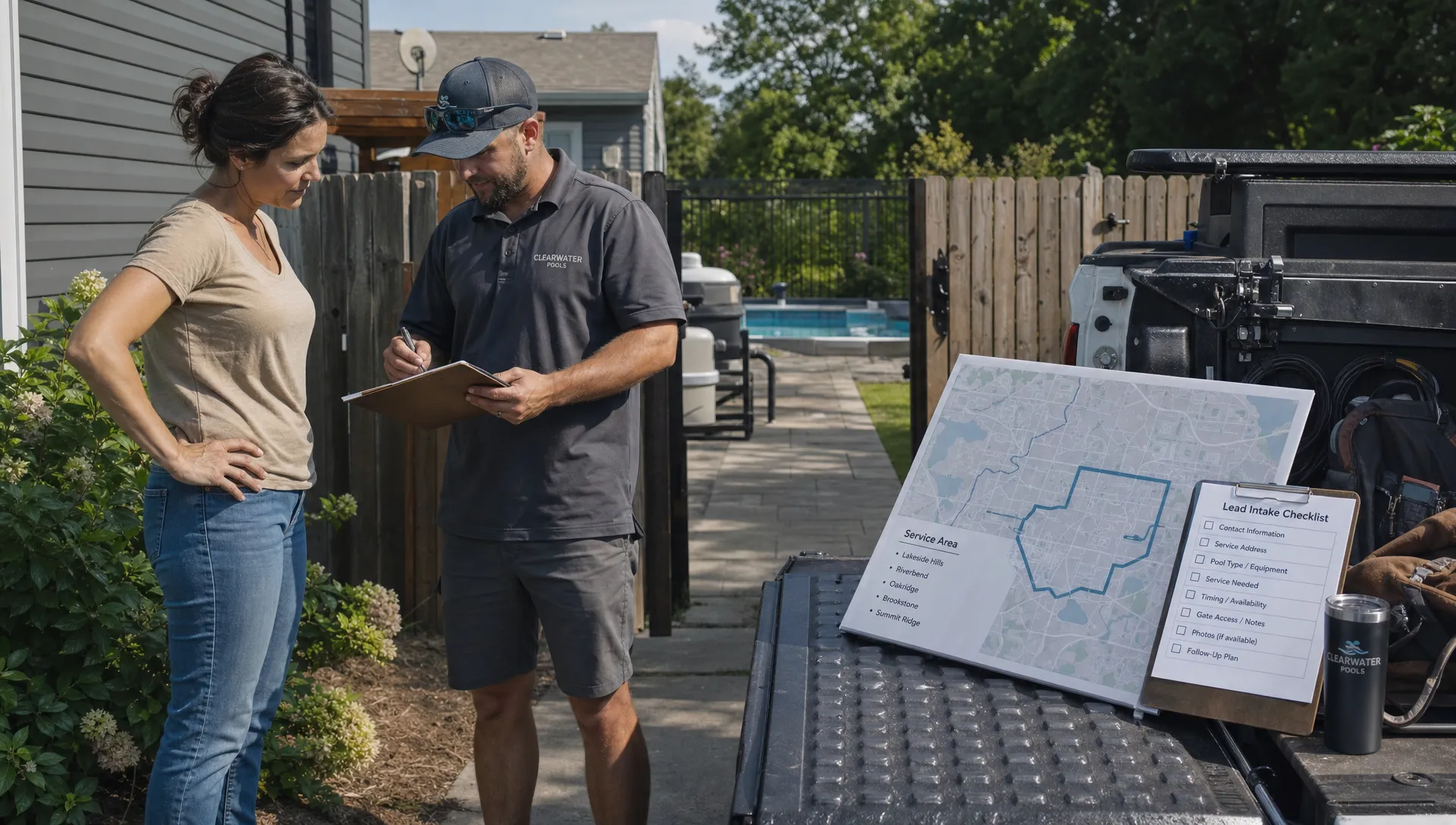
More pool service leads do not automatically create a stronger pool business. In many markets, the real constraint is not demand. It is finding homeowners who are a good fit for your routes, your pricing, your service standards, and your long-term growth plan.
A lead that turns into one emergency cleanup and disappears can still be useful. But the best pool service leads become recurring maintenance customers, approve needed repairs, pay on time, refer neighbors, and trust your team’s recommendations. That kind of customer does not happen by accident. It starts with how you attract, qualify, respond to, and onboard each inquiry.
This guide breaks down how pool service companies can generate better-fit leads and convert them into relationships that last beyond the first visit.
What makes a pool service lead worth pursuing?
A good pool service lead is not simply someone with a pool and a phone number. It is someone whose needs match your business model.
For example, a homeowner who wants weekly service in a neighborhood where you already have three stops is very different from a one-time price shopper 45 minutes outside your route. Both may be legitimate inquiries, but only one is likely to strengthen your operation over time.
Long-term customers usually share a few traits. They value consistency, understand that pool care is ongoing, and are willing to pay for professional maintenance rather than only calling when the water turns green. They also communicate clearly, give access information, and respond when repairs or approvals are needed.
| Lead type | Typical behavior | Long-term potential | Best response |
|---|---|---|---|
| Recurring service inquiry | Wants weekly or biweekly care | High | Qualify route fit and offer a maintenance start date |
| Green pool emergency | Needs immediate help | Medium | Solve the urgent problem, then present a prevention plan |
| Repair-only inquiry | Has pump, filter, heater, or automation issue | Medium to high | Document equipment and follow up with ongoing service option |
| Price shopper | Asks only for the lowest monthly rate | Low to medium | Explain value clearly and avoid racing to the bottom |
| Out-of-area inquiry | Located far from your current route | Usually low | Refer out or schedule only if it supports expansion |
The goal is not to ignore every imperfect lead. The goal is to know which leads deserve fast pursuit, which need education, and which may cost more than they are worth.
Start with the customers you actually want
Before improving lead generation, define what a great customer looks like for your company. This sounds basic, but many pool service businesses run ads, answer calls, and quote jobs without a clear target account profile.
A strong customer profile might include service area, pool type, property type, preferred service frequency, equipment complexity, and expected response standards. If your best accounts are weekly residential pools in three dense neighborhoods, your lead generation should not be built around distant one-off cleanups. If your margin is strongest on premium maintenance plus repair work, your messaging should attract homeowners who care about reliability, not only the lowest price.
Reddit can be surprisingly useful for this research. In r/pools, local city subreddits, and homeowner discussions, people often describe why they are unhappy with a pool company. Common themes include missed visits, poor communication, cloudy water that keeps coming back, unclear chemical notes, surprise repair costs, and not knowing whether a technician actually showed up. Those threads are not formal market research, but they reveal what homeowners say when they are frustrated.
Use that language in your website, ads, call scripts, and follow-up messages. If homeowners complain that “the last company never told me what they did,” emphasize service notes, photos, and clear updates. If they worry about green water returning, explain your process for routine chemistry checks and prevention.
Lead sources that tend to produce long-term pool customers
Not all lead sources behave the same way. Some produce fast volume but low loyalty. Others are slower but bring in customers who already trust you.
Referrals are often the strongest source because trust transfers from the existing customer to the new prospect. A neighbor who sees your truck every Thursday and hears good feedback is already partially sold before contacting you.
Local search is another high-intent channel. When someone searches for pool service near them, weekly pool maintenance, pool cleaning company, or pool repair in a specific city, they usually have an active need. The quality of these leads depends on your website, reviews, service area pages, and how quickly you respond.
Repair customers can also become recurring maintenance customers if the handoff is handled well. A homeowner who calls about a pump issue may not be thinking about weekly service yet. But after your team solves the problem, documents the equipment, and explains how routine care prevents future issues, the conversation can shift naturally.
Partnerships with real estate agents, property managers, builders, landscapers, and HOA contacts can produce steady demand as well. These partners want dependable vendors who make them look good. If your company communicates clearly and follows through, they may send multiple accounts over time.
Paid ads can work, but they need tight targeting. Broad campaigns often attract bargain hunters or out-of-area requests. Better campaigns focus on specific service areas, recurring maintenance intent, and urgent but profitable service categories.
Qualify leads before you quote
Many pool service companies lose margin because they quote too early. A homeowner asks, “How much for weekly pool service?” and the company gives a number before understanding the pool, access, route fit, condition, or expectations.
A better intake process protects both sides. It helps the homeowner feel heard, and it helps your team avoid underpricing or accepting accounts that do not fit.
Useful intake questions include:
- What neighborhood or ZIP code is the property in?
- Are you looking for weekly service, biweekly service, a repair, or a one-time cleanup?
- When was the pool last professionally serviced?
- Is the water currently clear, cloudy, green, or showing visible algae?
- What equipment is on site, such as pump, filter, heater, salt system, automation, or cleaner?
- Are there access details like gate codes, pets, locked yards, or preferred service days?
- Have you worked with another pool company recently, and what made you start looking?
- Are you the decision maker for service and repair approvals?
These questions do more than gather facts. They reveal urgency, expectations, and fit. A homeowner who gives complete answers and wants a reliable recurring plan is very different from someone who refuses to provide details and only asks for the cheapest rate.
If inquiries are coming in from calls, forms, texts, Facebook, Google Business Profile, and referrals, it is easy for details to get lost. That is where a structured system matters. SplashIQ has written more about preventing missed opportunities in its guide to CRM lead management tips for stopping pipeline leaks.
Respond quickly, but lead with confidence
Speed matters in home services. If a homeowner contacts three pool companies and only one responds clearly the same day, that company has an immediate advantage.
But speed alone is not enough. A rushed, vague reply can make your business look disorganized. The ideal response is fast, specific, and professional.
A strong first reply should confirm the service area, acknowledge the customer’s need, ask for any missing information, and set the next step. For example, instead of saying, “We can come look next week,” a better response might say, “We service your neighborhood on Tuesdays and Fridays. Based on the photos, we recommend an initial assessment before quoting weekly care. We can schedule that this Friday morning and send notes after the visit.”
This kind of reply does three important things. It shows that you know your routes, explains why you are not guessing at a price, and moves the lead toward a concrete appointment.
Make the first visit a trust-building event
The first visit is not just a service stop. It is the moment when the homeowner decides whether your company is organized, honest, and worth keeping.
Technicians play a major role here. They are not only cleaning a pool or checking equipment. They are gathering the facts that shape the customer relationship. Clear notes, water-quality logs, equipment details, and before-and-after photos help the office communicate professionally after the visit.
This is especially important for leads that start with a problem. If the pool is green, the pump is noisy, or the chemistry is far out of range, the homeowner may be anxious. A clear explanation builds trust. A vague “we treated it” does not.
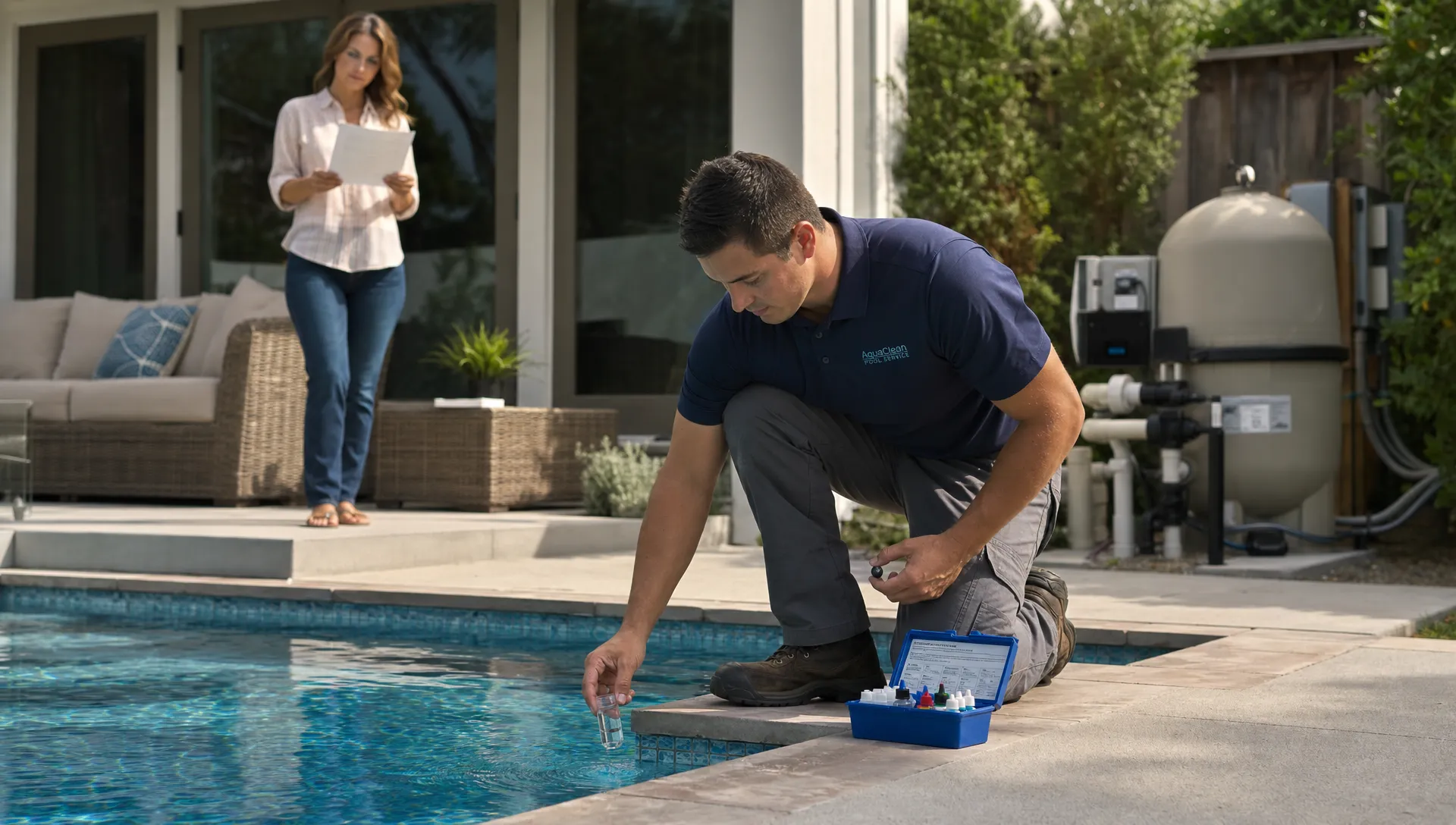
For long-term conversion, the follow-up after the first visit should connect the immediate issue to a recurring plan. If the customer called for a cleanup, explain what caused the condition and how routine service reduces the risk of repeat problems. If they called for equipment repair, document the equipment and recommend a maintenance cadence that keeps the system running properly.
Offer a next step, not just a price
Many pool service leads stall because the company sends a quote and waits. A better approach is to recommend the next logical step based on the customer’s situation.
For a clear pool in a dense route area, the next step may be a recurring service start date. For a neglected pool, it may be an initial recovery visit followed by weekly maintenance. For a repair lead, it may be diagnostic work first, then a maintenance proposal once the system is stable.
The offer should be simple enough for the homeowner to understand, but specific enough to protect your margin. Avoid bundling unlimited work into a vague monthly fee. Define what is included, what may require approval, and how repairs or specialty services are handled.
This is where pricing discipline matters. A lead is only valuable if it becomes profitable work. If your current quotes are inconsistent or based on guesswork, review SplashIQ’s article on pool service pricing models that protect margins before scaling lead generation.
Use follow-up to separate serious buyers from casual inquiries
Not every good lead converts on the first conversation. Homeowners get busy, compare options, talk with a spouse, or wait until the pool problem becomes more urgent. A simple follow-up process helps you win without sounding pushy.
| Timing | Follow-up goal | Example message angle |
|---|---|---|
| Same day | Confirm next step | “We can service your area on Thursday and need one more detail before scheduling.” |
| 24 hours later | Remove friction | “Do you want us to hold the Friday assessment window?” |
| 3 to 5 days later | Educate | “Based on what you described, waiting may make the cleanup more involved.” |
| 2 weeks later | Reopen conversation | “Are you still looking for help with weekly pool care this month?” |
| Seasonal reminder | Stay visible | “We are adding customers in your neighborhood before peak season routes fill up.” |
The key is to make follow-up useful. Share practical information, restate the value, and provide a clear next action. Do not simply ask, “Any update?” over and over.
A customer management system helps because the office can see lead status, service history, notes, invoices, and follow-ups in one place. That makes it easier to continue the conversation without forcing the homeowner to repeat themselves.
Avoid lead generation tactics that create bad customers
Some lead generation looks attractive because it creates volume quickly. But if the leads are poorly matched, they can damage your schedule, margins, and reputation.
Be cautious with generic lead marketplaces that sell the same inquiry to multiple companies. These can turn into price races where the fastest and cheapest provider wins. If you use them, track close rate, average job value, retention, and route impact carefully.
Introductory discounts can also backfire when they attract customers who leave as soon as the promotion ends. A better incentive is often convenience or confidence, such as a documented first visit, clear service plan, or easy online payment option.
If you hire an outside agency to help generate pool service leads, ask how they manage reporting, follow-up workflows, CRM hygiene, and campaign operations. Agencies with strong internal systems are more likely to deliver clean handoffs instead of messy lead spreadsheets. For example, an AI ops layer for B2B marketing agencies can help agencies streamline research, reporting, CRM, content, and social workflows, which matters when you are relying on them to keep lead generation organized.
The main point is simple: do not judge a channel by lead count alone. Judge it by the customers it creates.
Measure lead quality after the sale
The best pool companies track what happens after a lead converts. If a lead source brings in customers who cancel after two months, require excessive office time, or create route inefficiency, it may not be a good source even if the close rate looks strong.
Useful metrics include:
| Metric | What it tells you |
|---|---|
| Response time by lead source | Whether your team is engaging inquiries quickly enough |
| Close rate by source | Which channels produce serious buyers |
| First 90-day retention | Whether new customers are staying past the trial period |
| Average monthly revenue per new account | Whether leads match your pricing and service model |
| Route density impact | Whether new accounts make routes more efficient or more scattered |
| Callback rate | Whether onboarding and service quality are meeting expectations |
| Repair approval rate | Whether customers trust your recommendations |
| Referral rate | Whether new customers are satisfied enough to recommend you |
These numbers help you make better decisions. You may discover that referrals produce fewer leads but better customers. You may find that one neighborhood generates high retention while another creates constant scheduling issues. You may learn that repair leads convert well when they receive documented follow-up within 24 hours.
Lead quality becomes much easier to improve when customer records, properties, equipment, scheduling, field notes, payments, and communications are connected. That is the operational foundation behind sustainable growth.
Keep the customers your lead generation wins
A pool service lead only becomes a long-term customer if the service experience matches the promise that won them.
That means your onboarding process matters. New customers should know when service happens, what is included, how they receive updates, how repair approvals work, and how billing is handled. If the homeowner has to chase your office for basic information, trust erodes quickly.
Consistency is especially important during the first month. The customer is still deciding whether switching providers was the right move. Clear service notes, reliable arrival patterns, documented chemistry, and responsive communication all reinforce the decision to stay.
This is where software can support the relationship after the sale. SplashIQ brings together core workflows such as CRM, scheduling, water-quality logs, equipment tracking, field operations, customer communication, and payments for pool service companies. If your team is outgrowing spreadsheets and paper checklists, a connected platform like SplashIQ can help turn new accounts into customers your team can serve consistently.
Frequently Asked Questions
What are the best pool service leads for long-term growth? The best leads usually come from referrals, local search, dense neighborhoods, repair customers, and partners who already trust your work. The strongest fit is a homeowner who wants recurring service in an area your team can serve efficiently.
Should a pool service company buy leads? Buying leads can work in some markets, but it should be tested carefully. Track close rate, customer retention, average revenue, route impact, and callbacks. If purchased leads create low-margin work or price-shopping conversations, they may not support long-term growth.
How fast should I respond to a new pool service lead? Respond as quickly as your team can do so professionally. A same-day reply is important, and faster is better when the customer has an urgent problem. The response should confirm fit, ask the right questions, and set a clear next step.
How do I turn a one-time cleanup into a recurring customer? Use the cleanup to build trust. Document the pool condition, explain what caused the problem, show before-and-after results, and recommend a maintenance plan that prevents the issue from returning.
What should I ask before quoting weekly pool service? Ask about location, pool condition, service history, equipment, access details, desired frequency, and the reason they are looking for a new provider. These answers help you price accurately and avoid taking on accounts that do not fit your routes or standards.
Build a lead process that creates customers, not chaos
The most valuable pool service leads are not always the easiest ones to win. They are the ones that fit your routes, respect your process, trust your recommendations, and stay with your company over time.
To attract more of them, define your ideal customer, qualify before quoting, respond quickly, document the first visit, follow up with purpose, and measure what happens after the sale. When your lead process and service operations work together, growth becomes easier to manage and much more profitable.