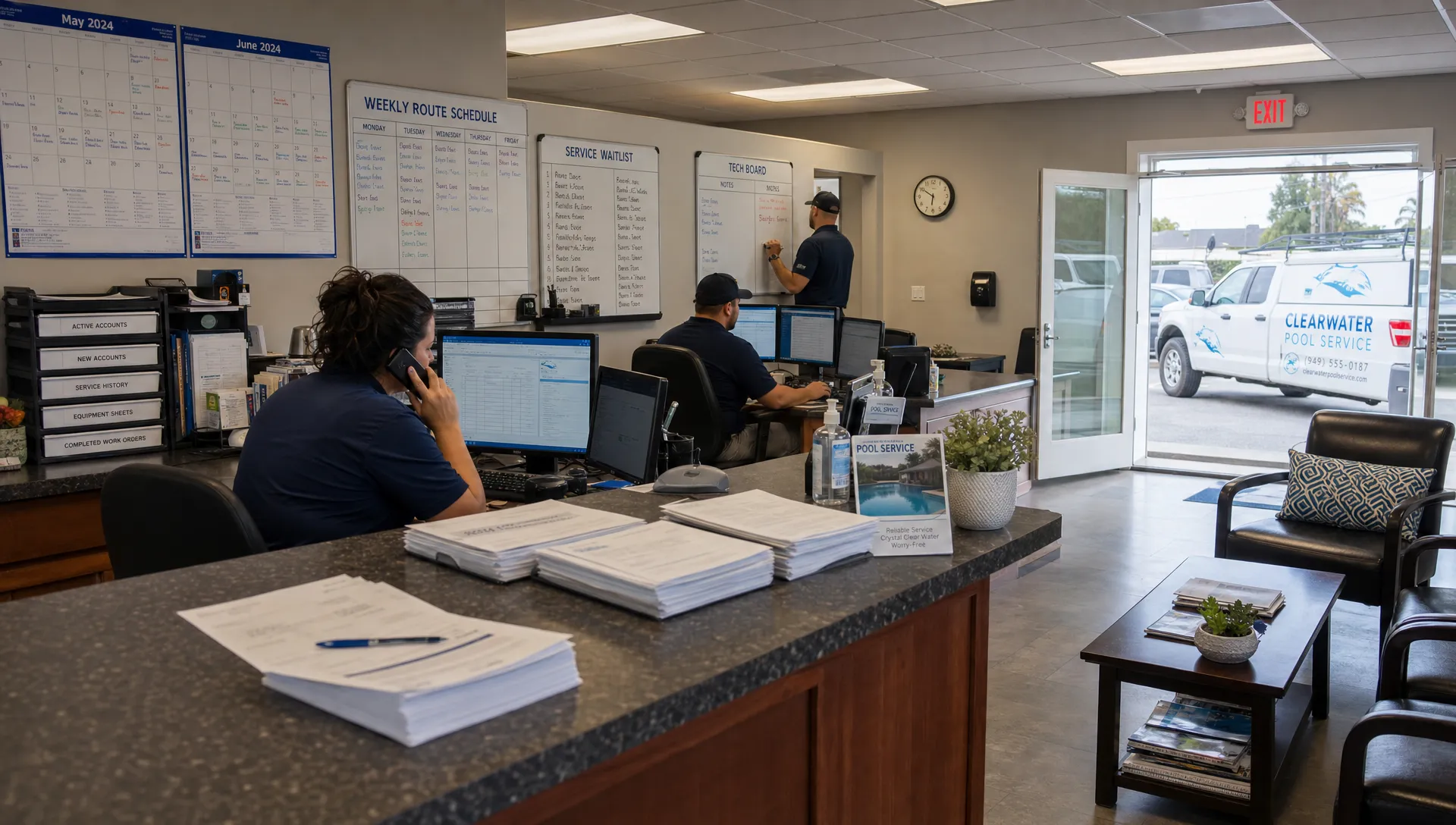
A homeowner searching for “pool opening near me” wants to know whether you serve their address and when you can arrive. When your spring calendar is full, a structured waitlist gives them an alternative to calling another company. For your office, it creates a qualified pool of customers who can fill cancellations, accept newly released dates or book when another crew becomes available.
The goal is not the longest list. It is a list you can turn into appointments without overpromising or adding unnecessary work for dispatch.
Define what joining the waitlist actually means
Separate a request for service from a confirmed appointment. Otherwise, a homeowner may arrange time off or plan a pool party around a date your team never promised.
Use clear distinctions throughout your intake and scheduling process:
| Status | What it means | What the homeowner should expect |
|---|---|---|
| Preseason request | Scheduling has not opened yet | An update when booking begins |
| Waitlisted | The request qualifies, but no suitable appointment is available | Contact when a matching opening appears |
| Appointment offered | A specific window is temporarily available | A stated deadline to accept |
| Confirmed | The homeowner has accepted and your office has booked the visit | Appointment details and preparation instructions |
For someone arriving through a “pool opening near me” search, your confirmation page should explicitly say that joining the list does not reserve a service date.
Also explain whether the list covers cancellations, additional crew capacity or future scheduling releases. If you collect a deposit, disclose its purpose and cancellation terms before payment. Do not describe a paid request as a confirmed appointment unless it actually is one.
Calculate capacity before collecting more requests
Start with the number of openings your crews can realistically complete, not the number your calendar can display.
For illustration, two crews completing three standard openings per day over five days would have 30 nominal appointments. If you reserve six for weather recovery, unusually difficult openings and operational flexibility, you have 24 bookable appointments. With 20 already confirmed, only four remain available to sell.
Those numbers are a planning example, not a recommended production rate. Use your own job history, travel time, crew skills and opening complexity. A mesh-cover opening with heavy debris may need a different allowance than a straightforward solid-cover removal.
Protect recurring maintenance commitments and existing repair obligations before releasing additional opening slots. Adding demand without protecting those hours simply moves the backlog elsewhere.
Review capacity by service zone and week. You might be full in one neighborhood but still have room on another route. Maintain separate estimates for immediately available work, cancellation-only opportunities and dates you have not yet released. Recalculate after staffing changes, equipment problems or weather disruptions rather than continuing to collect requests against an outdated schedule.
Turn “pool opening near me” traffic into qualified waitlist requests
Your local service page should identify the towns or ZIP codes you actually cover and clearly describe seasonal openings for private pools. That helps distinguish your offer from public swimming pool hours or general pool installation services.
Explain the opening scope before asking for contact details. State whether your service includes cover removal, equipment reassembly, startup checks, initial water testing or chemical treatment. Identify work quoted separately, such as repairs, extensive debris removal or follow-up cleanup. An opening visit does not necessarily mean the pool will be ready to swim in that day.
Keep the initial form focused on information that changes scheduling decisions:
- Service address and homeowner contact details
- Pool type, approximate size and cover type
- Preferred opening week and acceptable alternatives
- Known equipment issues or unusual water conditions
- Access restrictions and availability of stored opening equipment
- Permission to contact the homeowner about this request
Ask for photos only when they help estimate scope. Additional questions can follow after the request qualifies.
You can review r/pools discussions for homeowner questions about opening timing, service expectations and startup problems. Treat Reddit posts as qualitative research, not verified technical guidance or proof of demand in your service area. Use the questions to improve your page, not to make unsupported claims about other contractors.
Establish fair priority rules before offering appointments
A homeowner who found you through “pool opening near me” should understand how you select the next customer. “First come, first served” sounds simple, but it only works when requests are equally suitable for the available appointment.
First determine which requests match the opening. Consider service zone, expected job duration, required skills and property readiness. Then use request time to rank customers within that eligible group.
For example, a cancellation on a northern route may fit a nearby standard opening but not a complex equipment restart across town. Choosing the nearby job is sensible when your policy explains that offers depend on location and service requirements.
If existing maintenance customers receive priority, disclose that policy. Record homeowner flexibility as well: someone willing to accept any weekday may qualify for more opportunities than someone available only on Friday afternoons.
Keep the reason for each offer visible to the office. Consistent rules reduce disputes, prevent favoritism and make it easier for another dispatcher to cover the process. Avoid promising a fixed position unless everyone ahead of that customer is competing for the same type of appointment.
Keep each request in one working record
A shared inbox is useful for communication, but it is a poor source of truth for availability. One employee may offer a slot while another is still reading yesterday’s email.
Record the property, service requirements, flexibility, request timestamp, current status, last contact and next action in one controlled system. Assign an owner to each outstanding action. When a “pool opening near me” inquiry arrives by phone after an online submission, update the existing request rather than creating a second place in line.
Your process should also distinguish waitlisted customers from people who declined, booked elsewhere or stopped seeking service. Otherwise, staff waste valuable cancellation windows contacting stale leads.
SplashIQ’s guide to building a CRM process that prevents missed pool leads provides useful background on organizing customer and property information. For this workflow, focus specifically on request status, availability and the next promised update.
For a cross-trade perspective on contractors using CRM software as they scale, Forbes Advisor’s construction CRM comparison offers broader software-selection context. Evaluate tools against your actual handoffs rather than assuming a software purchase creates capacity. Your team still needs an agreed process for accepting requests, offering dates and closing out inactive records.
Offer available appointments with a clear acceptance deadline
When a slot opens, check the job requirements before contacting the customer. Confirm that the crew, travel allowance and expected duration fit. Then make a specific offer rather than asking whether they are “still interested.”
The urgency that drives a “pool opening near me” search does not disappear after someone joins your list. Give them enough information to make a decision in one reply.
A message might say:
We have a pool-opening window available Wednesday between 9 a.m. and noon at your address. Please reply YES by 3 p.m. today if you would like it. We will confirm the booking after your reply. If this window does not work, tell us whether you would like to remain on the waitlist.
Use a response deadline that fits the notice you are giving. A next-day cancellation may require a shorter window than an appointment two weeks away, but avoid deadlines that expire before a homeowner reasonably has time to respond.
Hold the slot for one household at a time, or clearly explain a first-confirmed booking policy. Do not imply that several customers each have an exclusive reservation. Once someone accepts, confirm the appointment and update the remaining requests promptly.
Communicate while customers wait, then prepare them to book
An acknowledgment should arrive promptly and include the service area, waitlist terms and next expected update. After that, communicate on a cadence your team can maintain. A weekly update during a busy opening period is one possible approach, not a universal requirement.
Keep updates useful. Explain whether availability has changed and ask homeowners to report new scheduling restrictions or withdraw if they have booked elsewhere. Someone who originally searched for “pool opening near me” may contact several companies, so silence should not be treated as continuing availability.
A simple update could say:
You are still on our opening waitlist for your requested week. We do not have a suitable appointment to offer yet. Please reply if your preferred dates have changed or you no longer need service. Our next update will arrive by Friday.
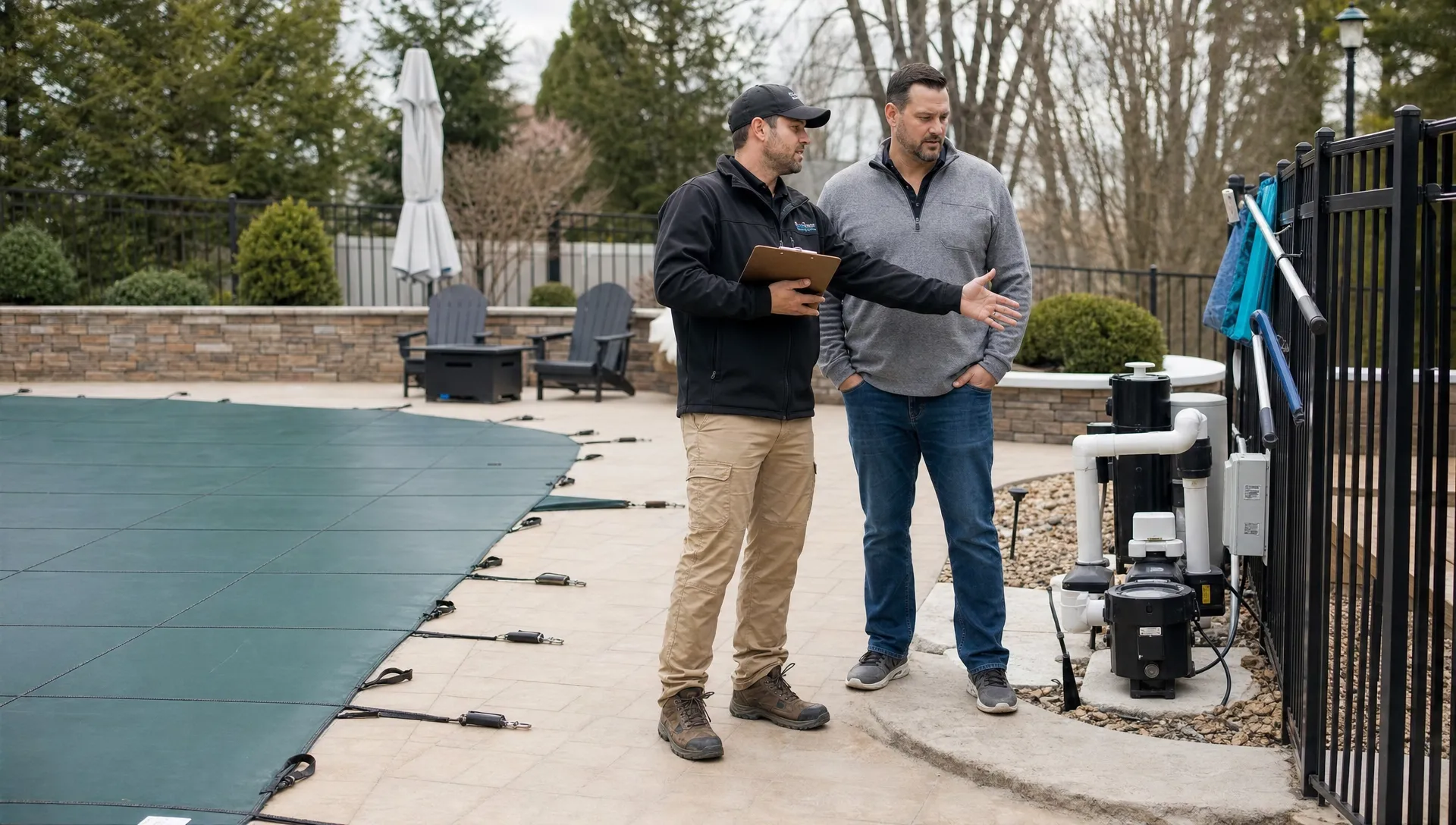
Once booked, switch from waitlist messaging to preparation instructions. Specify access requirements, where stored equipment should be placed and any property-specific steps your technician has approved. Do not ask homeowners to perform electrical work or unfamiliar equipment procedures.
Use digital pool-opening checklists to connect the promised scope with field execution. This keeps the appointment you sold aligned with the work your crew is prepared to perform.
Measure booked work, not just waitlist size
A growing list can hide poor availability, weak qualification or slow follow-up. Track what happens between the first request and the completed visit.
Start with eligible requests, appointment offers, accepted offers, completed openings and withdrawals. Record why customers leave, including booking elsewhere, an unsuitable date, an out-of-area address or a service requirement you cannot meet.
Calculate offer acceptance as accepted offers divided by total offers. Calculate waitlist conversion as confirmed bookings divided by qualified requests for a defined period or seasonal group. Keep those denominators consistent so comparisons mean something.
Tag acquisition sources where practical. Comparing “pool opening near me” search traffic with existing-customer outreach can show whether new local inquiries need different explanations, dates or qualification questions. Do not attribute every website request to search if you cannot verify its source.
Also track how quickly you fill canceled appointments and whether replacement jobs create excessive travel or overtime. Filling a gap is not automatically profitable if it disrupts the rest of the route.
Review the results weekly during peak season. If most customers reject dates because they need service sooner, adding more names will not solve the problem. Narrow the advertised availability, release realistic later dates or stop accepting requests for the affected period.
Frequently asked questions
Should a pool-opening waitlist be first come, first served? Use request time within groups that match the available appointment. Location, crew skills, job duration and property readiness can reasonably affect eligibility. Explain those factors upfront rather than advertising a strict queue you cannot maintain.
What should homeowners see before joining? Show your service area, opening scope, current availability limits and contact process. For visitors arriving from a “pool opening near me” search, make the distinction between joining a waitlist and booking an appointment especially clear.
Should we charge to join? A free waitlist avoids introducing payment and refund questions before a date exists. If you charge a deposit, explain exactly what it reserves, when it applies to service and what happens if you cannot offer an acceptable appointment. Check applicable local requirements.
When should we close the waitlist? Pause requests when you no longer expect to offer suitable appointments within the period you advertise. You can offer a later scheduling period or collect interest for the next release, but label that option accurately. Do not keep accepting urgent requests simply to increase lead counts.
Put the waitlist into your operating workflow
Before promoting the list, assign one owner, define your statuses and approve your customer messages. Test the process with a small group of requests, including a cancellation, an expired offer and a homeowner who declines but wants to remain eligible.
SplashIQ brings customer CRM, smart route scheduling, homeowner outreach and field operations into one platform for pool service businesses. Evaluate those capabilities against your waitlist process, including how requests will be tracked and handed off to scheduling. The objective is a reliable path from interested homeowner to confirmed opening, with no uncertainty about the next step.