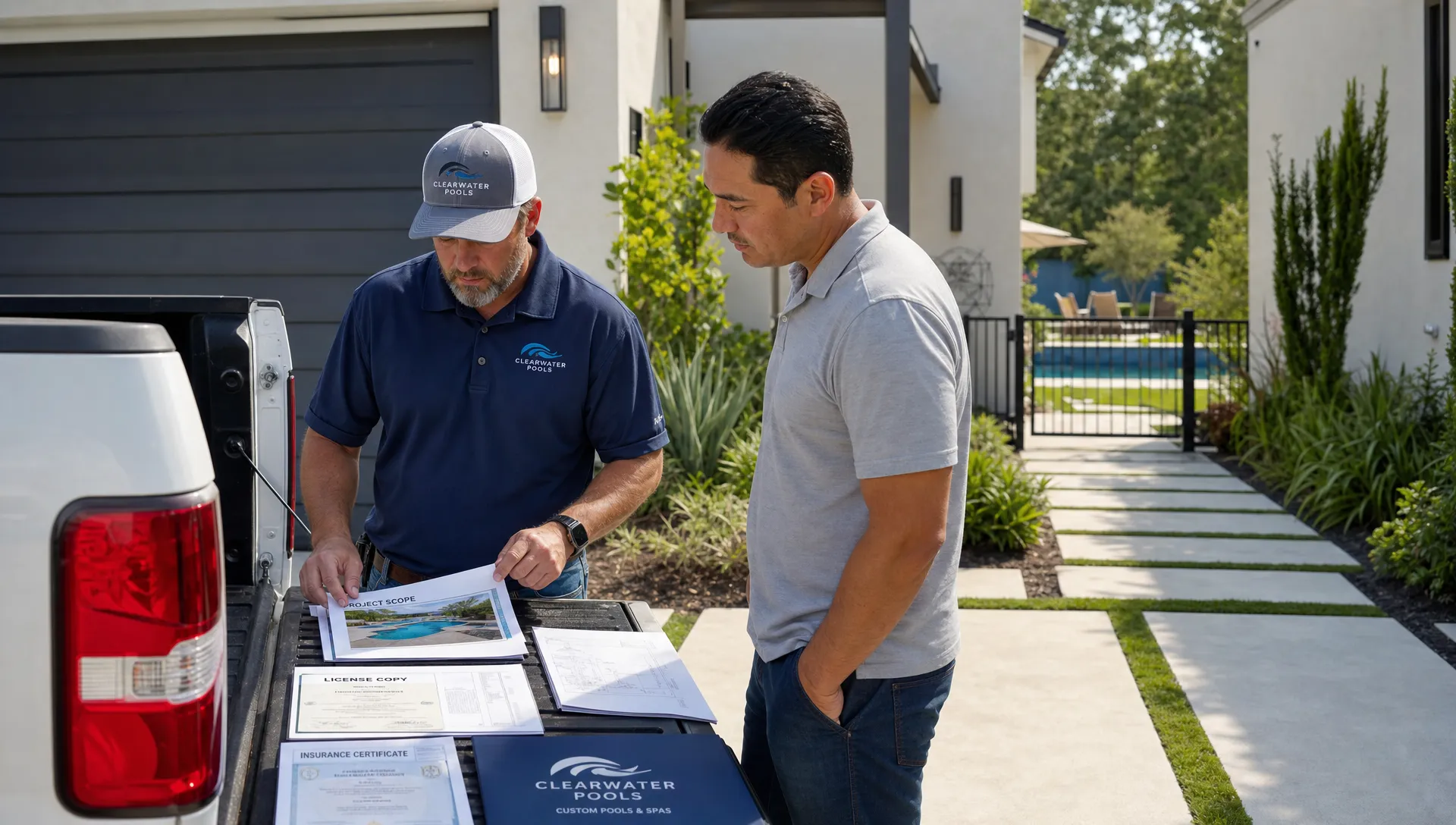
Searching for a pool contractor near me usually means you are close to making a costly, high-trust decision. Whether you are building a new pool, resurfacing an old one, replacing equipment or hiring a company for major repairs, the right contractor should make you feel informed rather than rushed.
Confidence does not come from a polished sales pitch alone. It comes from proof: licensing, insurance, clear scope, documented work, realistic scheduling and communication that continues after the deposit is paid. The goal is not to find the cheapest contractor. The goal is to find the one who can explain the work, manage the details and stand behind the result.
Use a pool contractor near me Search as Your Starting Point
Local search is useful because pool work is heavily influenced by climate, local code, permitting rules, soil conditions, utility access and the equipment brands common in your area. A contractor who understands your market can often spot risks that a less local company may miss.
Still, search results are only the beginning. Map rankings, ads and review counts can help you build an initial shortlist, but they should not decide the hire. Look beyond the first few listings and compare each company’s website, recent project photos, service area, response time and how clearly they explain their process.
Reddit can also help you understand what homeowners worry about after a project starts. Search communities like r/pools and r/HomeImprovement for terms such as “pool build quote,” “pool contractor delay,” “pool remodel issue” and your city or state. Treat Reddit posts as pattern recognition, not proof. A pool contractor near me should still be verified through licenses, references, contracts and direct communication.
Define the Job Before You Ask for Bids
Many bad contractor experiences start with a vague request. “I need pool work” can mean weekly maintenance, leak detection, automation repair, replastering, tile replacement, deck work, equipment installation or full construction. Each type of work requires different licenses, crews, materials and timelines.
Before you call anyone, write a short project brief. Include the type of pool, approximate age, known equipment, current problems, photos and the outcome you want. If you are resurfacing, note whether you are also considering tile, coping, lights or drains. If you are building, describe the desired size, shape, features and any site constraints.
The best pool contractor near me for a new gunite pool may not be the best fit for a quick pump replacement or a weekly service plan. Clear scope helps you compare bids fairly and prevents a contractor from filling in the blanks with assumptions that later become change orders.
If your need is ongoing cleaning and maintenance rather than construction or renovation, this guide on how to choose a pool service company you can trust covers service-specific checks such as water chemistry documentation and visit reliability.
Verify Licensing, Insurance and Permits
Pool work can involve excavation, electrical systems, plumbing, gas lines, structural work and chemical handling. That makes licensing and insurance non-negotiable. Ask for the contractor’s legal business name, license number and insurance certificate, then verify them through your state or local licensing board.
The Federal Trade Commission’s guidance on hiring a contractor recommends getting written estimates, checking references, reading contracts carefully and avoiding full payment upfront. Those basics apply directly to pool projects because mistakes can be expensive to uncover and slow to fix.
The right pool contractor near me will not act offended when you ask about credentials. A professional company should be able to explain what permits are required, who pulls them, what inspections occur and how code issues are handled if something unexpected is discovered.
Do not accept “we do this all the time” as a substitute for documentation. If permits are required in your area, they should be part of the plan before work begins.
Compare Bids Like a Contractor Would
A bid is not just a price. It is a description of how the contractor understands the job. Two proposals that look similar on the total line can be very different once you compare materials, labor assumptions, equipment, warranty terms and exclusions.
A credible pool contractor near me will welcome detailed comparison because it reduces misunderstandings. Be cautious of bids that are unusually low but missing specifics. That gap often reappears later as change orders, downgraded materials or rushed work.
| Bid item | What to look for | Why it matters |
|---|---|---|
| Scope of work | Specific tasks, surfaces, equipment and prep work | Prevents confusion about what is included |
| Materials | Brand names, model numbers, finish types and quantities | Makes bids easier to compare accurately |
| Timeline | Start window, estimated duration and known dependencies | Helps you plan around access, weather and inspections |
| Payment schedule | Deposits, progress payments and final payment terms | Protects cash flow without overexposing the homeowner |
| Warranty | Labor coverage, manufacturer warranty and exclusions | Clarifies who is responsible if something fails |
| Change orders | Written approval process before extra work begins | Prevents surprise invoices |
Ask every bidder to clarify exclusions in writing. Common exclusions can include electrical upgrades, hidden plumbing issues, drainage problems, landscape repair, deck repair or permit fees.
Look for Systems, Not Just Salesmanship
A contractor’s operational systems matter because pool projects involve many handoffs. Someone sells the job, someone schedules it, someone orders materials, technicians or crews complete the work, photos may need to be reviewed and the office has to invoice correctly. If those steps live only in text messages or one person’s memory, details get lost.
You can see the same theme in contractor CRM articles published by companies like Jobber, Buildertrend and ServiceTitan: as contractors scale, the bottleneck is rarely talent alone. Growth gets harder when customer records, approvals, schedules, job notes and billing are scattered across inboxes and spreadsheets.
For homeowners, the practical lesson is simple. Ask how the company tracks your project. A professional pool contractor near me should be able to tell you how they document job notes, photos, equipment information, approvals and payments. For pool companies evaluating their own systems, SplashIQ’s pool service software buyer checklist outlines the kinds of field workflows and homeowner communication tools that make operations more dependable.
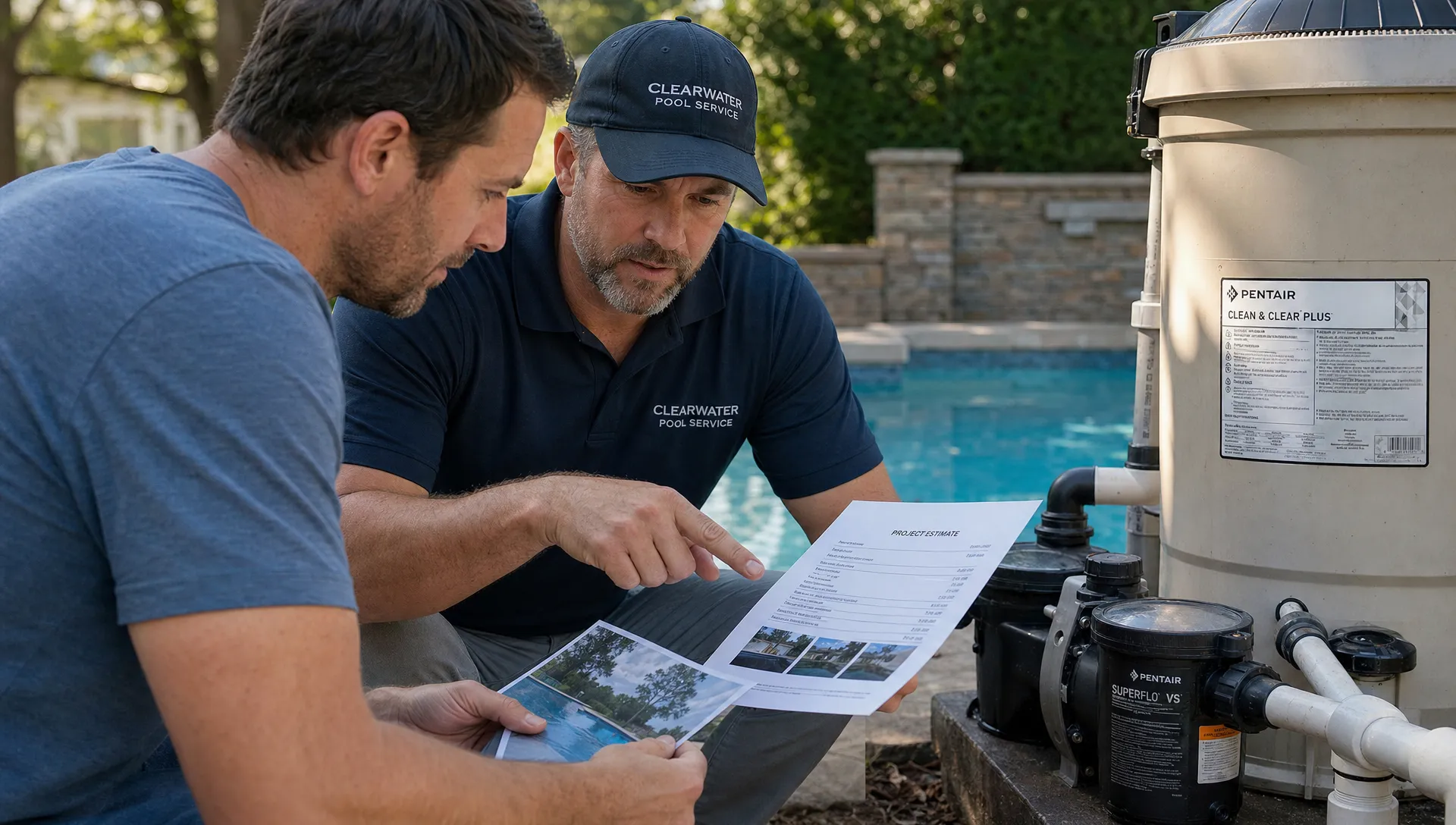
Ask Questions That Reveal How They Work
Good questions make it harder for a weak contractor to hide behind charm. You are not trying to interrogate someone. You are trying to learn whether their process is mature enough for the size and risk of the job.
Use direct questions and listen for specific answers:
- Who will be my main point of contact once work begins?
- What parts of this job are handled by employees and what parts are subcontracted?
- How do you document existing conditions before starting?
- What could change the price after work begins?
- How will I approve changes, repairs or added work?
- What happens if weather, inspections or material delays affect the schedule?
- What documentation will I receive when the job is complete?
The pool contractor near me you choose should answer without making you feel difficult. Clear questions are normal on a high-value home project. If answers are vague before the contract is signed, communication usually will not improve after work starts.
Use Photos, Logs and Communication as Trust Signals
Photos are one of the simplest ways to separate real documentation from vague reassurance. Before photos establish the condition of the pool or equipment. Progress photos show what was done. After photos confirm completion and help you understand work that may be hard to inspect yourself.
This is especially useful for repairs involving pumps, filters, heaters, automation panels, valves, plumbing, stains or surface damage. A dependable pool contractor near me uses photos and written notes to make the invisible parts of the job easier for a homeowner to trust.
If you want to understand why visual documentation matters so much in pool work, SplashIQ explains how before-and-after pool photos build homeowner trust. The same principle applies before you hire: companies that already document their work are often easier to hold accountable.
Communication matters too. Ask whether you will receive arrival notifications, service summaries, repair notes, water-quality information or payment links. In 2026, homeowners should expect more than a paper invoice and a vague “all set” text after significant pool work.
Watch for Red Flags Before You Sign
Some red flags are obvious, such as no license, no written contract or pressure to pay the full amount immediately. Others are subtler. A contractor may have good reviews but still be a poor fit if they cannot explain scheduling, communication or who is responsible for specific parts of the work.
If a pool contractor near me hesitates to put details in writing, slows down when you ask for proof or pushes you to decide before you can compare bids, pause the process. Urgency should come from a real scheduling constraint, not from pressure.
| Red flag | Why it should slow you down |
|---|---|
| Verbal-only estimate | You have little protection if scope or price changes |
| No license or insurance proof | You may carry financial risk if damage or injury occurs |
| Large cash discount | It can signal tax, warranty or accountability problems |
| No recent local references | You cannot verify current work quality |
| Vague material descriptions | You cannot compare the bid or confirm what was installed |
| No change order process | Extras may appear without clear approval |
One red flag does not always mean you should walk away, but it does mean you should ask more questions. A professional contractor will clarify. A risky one will deflect.
Make the Final Decision With a Paper Trail
Before you select a pool contractor near me, gather everything in one place: bid, scope, warranty, license verification, insurance certificate, payment schedule, expected timeline, permit plan and key messages. If something was promised verbally, ask for it to be added to the written agreement.
Your contract should identify the business, the property, the work, the materials, the payment terms and the process for changes. For larger projects, it should also describe cleanup, access, inspections, lien releases where relevant and what counts as completion.
Do not let a friendly relationship replace documentation. Good contractors benefit from clear paperwork too because it protects them from misunderstandings and helps their team execute the job the way it was sold.
The final choice is rarely about one factor. It is the contractor who combines proven credentials, a clear scope, realistic pricing, strong communication and operational discipline. When those pieces line up, you can move forward with confidence instead of hope.
Frequently Asked Questions
How many pool contractor bids should I get? Aim for at least two or three comparable bids for major construction, resurfacing or renovation work. For small repairs, one trusted contractor may be enough if they provide clear documentation, fair pricing and proof of credentials.
Should I choose the cheapest pool contractor? Not automatically. A very low bid can mean missing scope, cheaper materials, unrealistic labor assumptions or future change orders. Compare what is included before comparing the total price.
What should I ask for before paying a deposit? Ask for a written contract, license information, insurance proof, payment schedule, scope of work, warranty terms and an explanation of required permits. Large deposits without paperwork are a warning sign.
Are online reviews enough to trust a pool contractor? Reviews help, but they are not enough by themselves. Combine them with license verification, references, photos, written proposals and direct questions about communication and change orders.
How can I tell if a pool contractor is organized? Look for clear scheduling, documented estimates, before-and-after photos, written approvals, equipment records and easy payment processes. Organized companies usually make the homeowner experience feel calmer and more predictable.
For Pool Contractors: Make Confidence Easier to Earn
Homeowners choose the contractor who makes the job feel clear, documented and manageable. If your pool company still relies on spreadsheets, paper checklists, scattered texts and delayed invoices, even excellent work can look less professional than it is.
SplashIQ helps pool service companies run CRM, scheduling, homeowner outreach, water-quality logs, equipment tracking, before-and-after photos, billing and online payments in one operating system. When your team documents the work clearly, homeowners have more reasons to trust you before, during and after the job.