Reliable pool service is not built on heroic technicians remembering every detail at the end of a hot Friday route. It is built on a weekly operating rhythm that makes the right work easy to repeat: clear routes, documented visit standards, accurate water and equipment records, timely homeowner communication and a simple way to catch exceptions before they become callbacks.
For owners and managers, the goal is not to make every visit identical. Pools differ by size, usage, equipment, weather exposure and homeowner expectations. The goal is to make your process consistent enough that technicians can handle those differences without guessing.
Why Reliable Pool Service Breaks Down During Busy Weeks
Most reliability problems start as small coordination gaps. A route gets reshuffled, a gate code changes, a new technician inherits a pool with no equipment history or an office admin has to answer a homeowner question without seeing what happened in the field.
That is why dependable pool service is as much an operations problem as a technical one. The chemistry may be corrected during the visit, but the business still looks unreliable if the homeowner never receives a summary, the invoice is delayed or the same filter issue triggers another call next week.
Homeowner discussions on Reddit are useful voice-of-customer research here. In communities such as r/pools and broad Reddit search results for pool maintenance complaints, you will find recurring themes around missed visits, unclear notes, cloudy water after treatment and homeowners wondering what they are paying for. Reddit posts are anecdotal, not data, but they show the language customers use when service feels inconsistent.
Define “Done” Before the Technician Arrives
A weekly visit should have a definition of done that every technician understands. That does not mean forcing every pool into the same checklist. It means documenting the minimum standard for a completed visit, then giving technicians room to record exceptions.
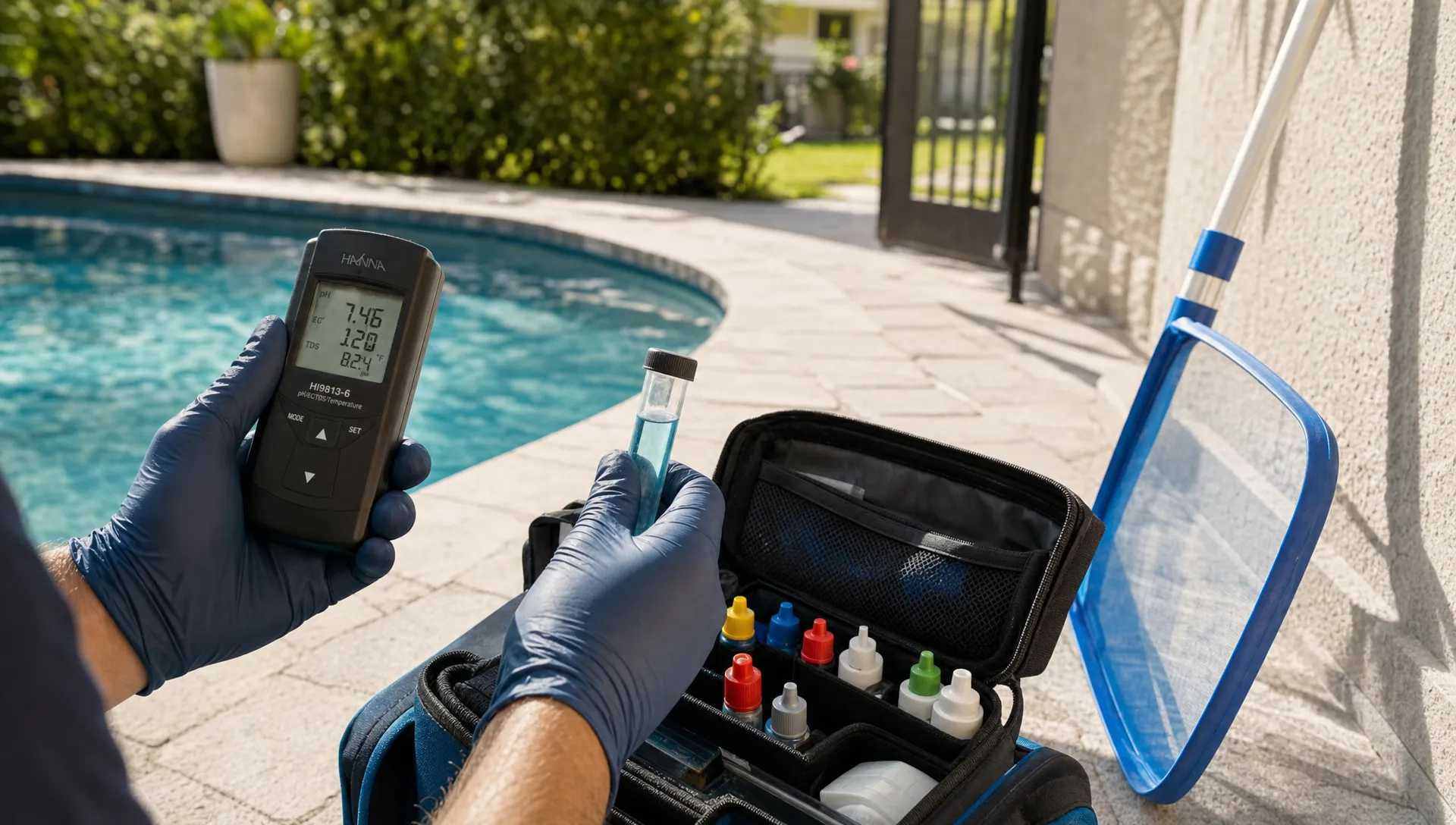
Your weekly pool service standard should cover the visible work, the measured work and the communication that proves the visit happened. A homeowner may notice the clean surface first, but your company needs the water readings, equipment observations and next-step notes to protect quality over time.
| Reliability risk | Process control that reduces it |
|---|---|
| Technician forgets a step | Standardized visit checklist |
| Homeowner questions whether work was completed | Arrival notifications, service summary and photos |
| Water issue repeats next week | Historical water-quality logs and treatment notes |
| Equipment problem gets missed | Equipment tracking and condition notes |
| Office cannot answer customer questions | Shared CRM record with visit history |
A strong standard also tells technicians what to do when the visit cannot be completed. Locked gate, aggressive dog, broken pump, low water level and unsafe conditions should all have documented next steps.
Route for Quality, Not Only Short Drive Time
Efficient routing matters, but the shortest route is not always the most reliable route. A route that looks efficient on a map can still fail if it overloads a technician with complex pools, pushes chemical-heavy stops too late in the day or ignores known access issues.
Better routing starts by grouping accounts with service quality in mind. Route density lowers drive time, but managers should also consider pool complexity, technician experience, repair follow-up needs, supply availability and realistic time windows.
Reliable pool service scheduling also needs room for the predictable surprises. Weather delays, green pool recovery, customer questions and quick equipment checks are not rare events. If your schedule only works when nothing goes wrong, your team will spend every week apologizing.
Smart route scheduling should help the office see the day clearly before trucks roll out. Which stops are routine? Which accounts have open repair notes? Which homeowners require arrival communication? Which pools had out-of-range readings last visit? The answers help managers build routes that protect both productivity and service quality.
Make Water Chemistry and Equipment History Visible
A technician can test and dose correctly during one visit and still struggle if last week’s records are missing. Water chemistry is trend-based. If your team cannot see prior readings, chemical additions, filter pressure notes and recent weather or usage context, every visit starts from scratch.
This is where many repeat visits come from. The issue is not always a lack of knowledge. It is often a weak feedback loop. A tech treats cloudy water but does not document enough context. Another tech returns the following week and repeats the same work without seeing the pattern.
A reliable pool service operation treats water-quality logs and equipment notes as shared infrastructure. Free chlorine, pH, alkalinity, stabilizer, salt, filter pressure and visible equipment conditions should be easy to review by account, not buried in paper forms or text messages.
For a deeper look at process gaps that create callbacks, SplashIQ’s guide to pool water chemistry mistakes that lead to repeat visits covers common testing and documentation issues that service companies can tighten.
Communicate Before Homeowners Start Wondering
Homeowners usually complain after uncertainty builds. They wonder if the technician arrived, whether the pool is safe to use, why the water looks different or whether a repair recommendation is urgent. When your team communicates consistently, many of those questions never reach the office.
A practical homeowner communication system should include arrival or service notifications, a short visit summary, before-and-after photos when useful and plain-language notes about any problem found. The goal is not to overwhelm homeowners with technical detail. It is to make the work visible enough that they trust the routine.
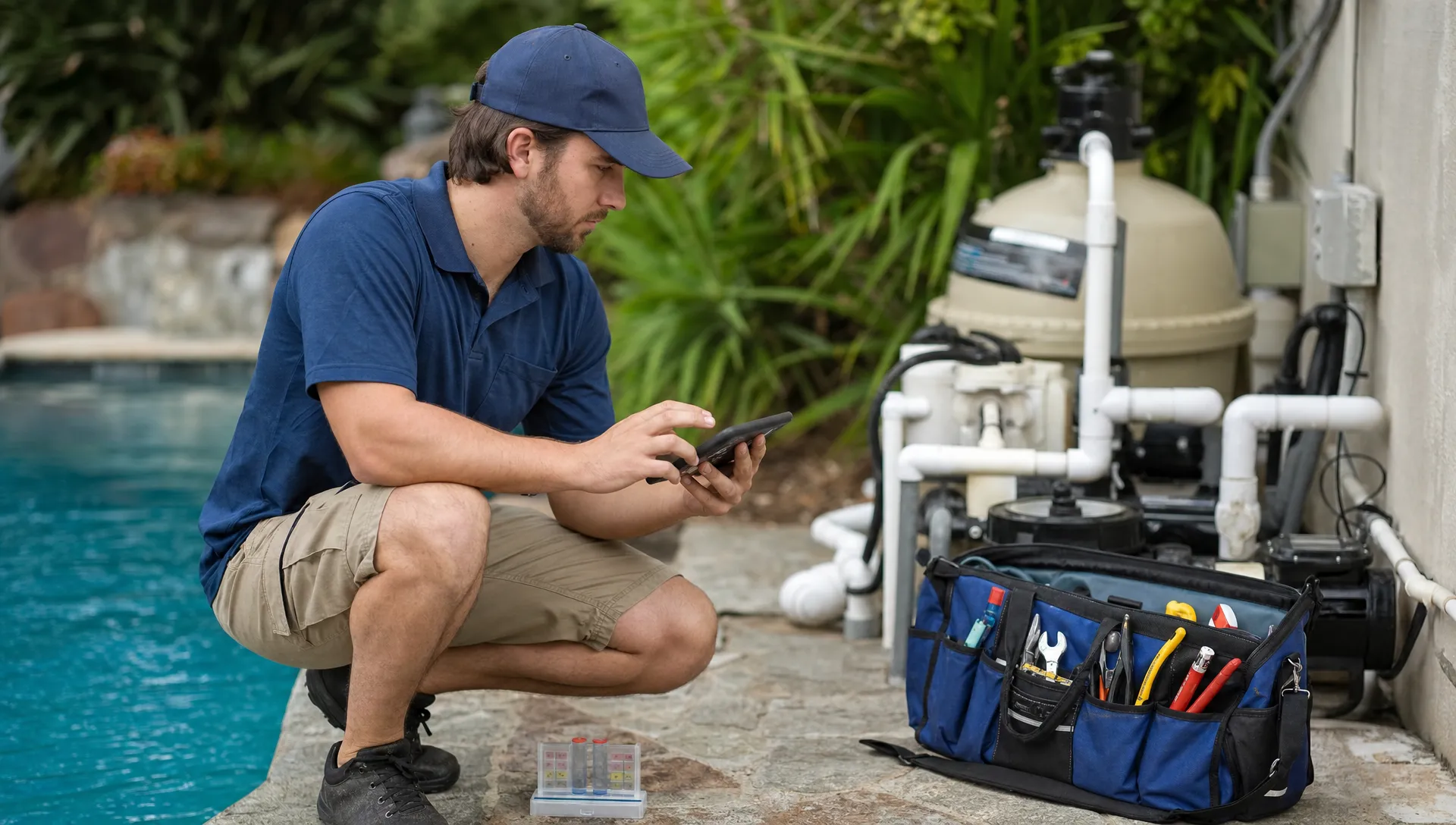
This matters even more when the visit uncovers a repair need. If the technician sees a leaking pump, rising filter pressure or damaged cleaner part, the homeowner should receive a clear note that explains what was found and what happens next. A reliable pool service experience connects the field observation to office follow-up without making the customer chase answers.
Coach Technician Consistency With Measurable Signals
Technician coaching works best when it is based on patterns, not one-off complaints. A manager should be able to see which visits were completed, which checklists were skipped, which accounts needed repeat attention and which technicians are consistently documenting strong notes.
In reliable pool service, scorecards are not about policing every move. They are a way to make quality visible. If one technician has repeated missing photos, another has frequent incomplete chemical logs and a third regularly creates well-documented repair opportunities, the manager has clear coaching topics.
Useful signals can include completed visit percentage, on-time route completion, missing required fields, callback frequency, homeowner feedback, repair notes created and chemical readings recorded. The point is not to reduce a technician to a number. The point is to replace vague feedback like “be more thorough” with specific coaching.
This also helps new hires ramp faster. A new technician who can follow a consistent checklist, review equipment history and see what good notes look like will become reliable sooner than one who has to learn every standard informally from different coworkers.
Borrow CRM Discipline From Contractors That Scale
Pool companies are not the only field businesses trying to grow without losing control. Contractor-focused software articles make a similar point: as service businesses scale, customer history, estimates, scheduling, job notes and follow-up cannot live in disconnected notebooks, inboxes and spreadsheets.
For example, Forbes Advisor’s construction CRM guide frames CRM software around managing contacts, pipelines and job-related communication. Software Advice’s construction CRM comparison also focuses on organizing customer and project information so teams can manage work more consistently. The categories differ, but the operating lesson applies to contractors, remodelers and pool companies alike.
For a pool service company, CRM discipline means every customer record should answer basic questions quickly. What plan are they on? Who approved the last repair? What equipment is installed? What was the latest water reading? When was the last visit? Are there unpaid invoices or open requests?
When that information is centralized, the business becomes less dependent on any one person’s memory. That is what allows a company to add technicians, routes and customers without letting reliability decline.
Run a Short Weekly Reliability Review
A weekly review does not need to be long. Twenty focused minutes can surface the operational issues that would otherwise show up as homeowner complaints later.
Weekly pool service reliability reviews should focus on exceptions, not every completed task. Managers can look at missed visits, incomplete checklists, accounts with repeated bad readings, open repair recommendations, blocked access, delayed invoices and homeowner messages that required extra follow-up.
A simple review agenda might include these items:
- Accounts that had service exceptions last week
- Routes that ran late or required reshuffling
- Pools with repeated chemistry or equipment issues
- Repair notes that still need homeowner approval
- Technicians who need coaching or recognition
- Process changes that should be made before the next route cycle
The most important part is assigning ownership. If three pools had locked gates, who updates access instructions? If a pump issue was noted twice with no quote sent, who follows up? If one route is always rushed, who adjusts the schedule?
Reliability improves when the same problems stop appearing week after week.
Use Software as an Operating System, Not a Digital Filing Cabinet
Software only improves reliability if it supports the way work actually moves through the company. A basic database may store customer names, but an operating system for a service business connects the office, the field and the homeowner experience.
SplashIQ is built for that connected workflow, with CRM, scheduling, water-quality logging, equipment tracking, homeowner outreach, an offline field app, before-and-after photos, online payments, financing support and technician scorecards. Used together, those tools help a pool service team standardize work without forcing managers to chase updates across texts, spreadsheets and paper checklists.
If you are evaluating the broader operational impact, SplashIQ’s article on how pool service business software supports growth explains how better systems reduce manual coordination as a company adds more customers and technicians.
The same principle applies to repairs. When service notes, equipment records, approvals and invoices are connected, repair work becomes easier to manage. SplashIQ’s guide to managing pool service and repairs covers that handoff in more detail.
A 30-Day Rollout Plan for More Reliable Weekly Service
Reliability improves faster when the rollout is narrow and practical. Instead of trying to redesign the whole business at once, choose a few operating habits and make them non-negotiable for 30 days.
| Time frame | Focus | What to implement |
|---|---|---|
| Week 1 | Visit standard | Define required checklist fields, service notes and exception categories |
| Week 2 | Route quality | Review route density, account complexity and recurring access issues |
| Week 3 | Homeowner communication | Standardize arrival notices, summaries, photos and repair follow-up language |
| Week 4 | Management review | Hold a weekly reliability meeting and coach from real visit data |
The best rollout starts with a small group of routes. Choose one experienced technician, one newer technician and a mix of easy and complex accounts. That gives you a realistic view of how the process works before you apply it across the company.
By the end of 30 days, your team should know whether the new standard is clear, whether the checklist is too long, whether homeowners are receiving the right information and whether managers can spot problems sooner. That is the foundation of more reliable pool service every week.
Frequently Asked Questions
How can a pool company make weekly service more reliable? Start by standardizing the visit checklist, improving route planning, documenting water and equipment history, sending consistent homeowner updates and reviewing exceptions every week. Reliable pool service depends on repeatable operating habits, not memory.
What should be included in a weekly visit checklist? A strong checklist usually includes arrival confirmation, visible cleaning tasks, water test results, chemical additions, equipment observations, filter pressure when relevant, photos, homeowner notes and any recommended follow-up.
How does CRM software help pool companies scale? CRM software keeps customer records, communication, service history and follow-up tasks in one shared system. That helps owners add routes and technicians without losing track of account details.
Should technicians take photos at every visit? Photos are most valuable when they prove completed work, document a before-and-after difference or support a repair recommendation. Many companies use them selectively, but the standard should be clear.
Why do repeat visits happen so often? Repeat visits often come from incomplete documentation, missed equipment issues, poor water chemistry tracking, unclear homeowner communication or routes that leave technicians too rushed to catch problems early.
Make Reliability Easier to Repeat
If your team is still relying on spreadsheets, paper checklists and scattered text messages, reliable growth becomes harder than it needs to be. SplashIQ gives pool companies one place to manage customers, schedules, field work, water logs, equipment, homeowner communication and payments.
To see how a connected operating system can support more dependable pool service week after week, visit SplashIQ and explore how it helps offices, technicians and homeowners stay aligned from first lead to final invoice.