
A reliable pool service checklist gives every technician the same standard for a weekly visit: inspect the property, clean the pool, test the water, check equipment and document what happened. It also makes unfinished work visible, so a blocked gate or failing pump does not disappear behind a checked box.
The checklist below is designed for residential pool service teams. Use it as a working template, then adapt it to each pool’s equipment, treatment program and service agreement. Weekly professional service does not replace necessary water testing and care between visits.
Define what the weekly visit includes
Before assigning a route, give the technician a property profile with access instructions, pool volume, sanitizer type, equipment details and the agreed service scope. Include known problems and any unresolved notes from the previous visit.
Separate routine service from conditional work. Emptying skimmer baskets may be part of every visit, while filter cleaning, salt-cell inspection and repairs depend on condition, manufacturer instructions and the customer’s agreement.
Use four task statuses: completed, not needed, blocked or follow-up required. A blank field should not mean “probably done.” Record the reason when work cannot be completed, along with who will handle the next step.
Copy this weekly visit checklist
Use this pool service checklist as the technician’s visit record, not just a list to keep in the truck. Complete each applicable row and document exceptions before closing the visit.
| Checkpoint | Weekly action | Record or exception |
|---|---|---|
| Access and safety | Confirm access, inspect the work area and note visible hazards | Access problems, damaged gates or unsafe conditions |
| Initial condition | Observe water clarity, debris, water level and visible algae | Arrival condition and unusual changes |
| Surface cleaning | Skim leaves, insects and floating debris | Heavy debris or continuing contamination |
| Baskets | Empty and inspect skimmer baskets; service the pump basket safely when applicable | Cracks, damage or unusual debris |
| Brushing and vacuuming | Brush appropriate surfaces and vacuum as required by condition and scope | Areas cleaned and anything left unfinished |
| Water testing | Measure sanitizer and pH; complete other tests due under the treatment plan | Actual readings, units and test method |
| Treatment | Calculate and apply any needed treatment according to product directions | Product, concentration, quantity and application time |
| Circulation and equipment | Observe pump operation, return flow, leaks and filter pressure | Pressure, operating conditions and abnormalities |
| Conditional maintenance | Complete filter, cleaner or salt-system work when indicated and authorized | Work completed or follow-up needed |
| Departure and communication | Store chemicals safely, remove tools, secure access and send a service summary | Final condition, photos and next steps |
Keep measured values separate from task checkmarks. “Water tested” cannot explain a changing sanitizer reading, and “equipment checked” cannot establish whether filter pressure is trending upward. The pool service checklist should preserve the observations behind each decision.
Arrival: inspect before starting work
Start with the previous service record. An unresolved leak, repeated low water level or unusually high sanitizer demand should influence today’s inspection rather than become another isolated note.
Walk the accessible work area and observe the pool before adding chemicals or disturbing debris. Look for cloudy water, visible algae, damaged access barriers, displaced drain covers and electrical concerns around the equipment pad. Document visible concerns without attempting work outside the technician’s training or authorization.
If water clarity prevents a clear view of the pool bottom, flag the condition promptly and advise the homeowner not to use the pool pending assessment. Do not describe the water as safe simply because one test result falls within its target range.
For a locked gate, aggressive animal or unsafe work area, record the blocked visit and notify the office. Never mark inaccessible tasks complete to keep the route moving. A useful pool service checklist distinguishes work performed from work that could not safely begin.
Cleaning: remove debris and inspect what you handle
Skim the surface and empty accessible baskets before tackling heavier cleaning. Inspect baskets for splits and missing parts while they are out, since damage can allow debris farther into the circulation system.
Brush surfaces with tools suitable for the pool finish, paying attention to steps, corners and areas with weak circulation. Vacuum where debris and the service scope require it. An automatic cleaner does not eliminate the need to inspect areas it misses.
Pump-basket service requires the correct shutdown and restart procedure for that system. Do not open equipment while it is running or pressurized. Follow manufacturer instructions and leave unfamiliar configurations for a qualified technician.
Treat filter cleaning as condition-based work, not an automatic weekly task. Compare pressure with the established clean-filter baseline under comparable operating conditions, including pump speed. Record weak return flow, leaks or unusual noise for follow-up. The pool service checklist should distinguish routine cleaning from equipment work requiring authorization or separate scheduling.
Water testing: record results before dosing
Take a representative water sample according to the test-kit instructions, away from return jets and chemical addition points. Keep testing supplies within their storage requirements and replace expired reagents.
Measure sanitizer and pH at every service visit. Test total alkalinity, calcium hardness, cyanuric acid and salt where applicable according to the pool’s treatment plan, recent changes and manufacturer requirements. Do not assume a reading from several weeks ago still describes a pool after heavy rain, refill water or substantial treatment.
For general backyard-pool care, the CDC’s home pool water-treatment and testing guidance recommends pH between 7.0 and 7.8 and testing chlorine and pH at least twice daily, with more frequent testing during heavy use. Agree with the homeowner on responsibility for between-visit checks.
The pool service checklist should capture readings before treatment and the actual treatment applied. Calculate additions using verified pool volume, current results, product strength and label directions. Never mix chemicals, and follow the label’s application, circulation and re-entry instructions.
Retest when the treatment procedure requires it. If a follow-up test must happen later, record the timing and responsible person rather than implying that dosing alone confirmed the result. For deeper troubleshooting, review these water chemistry mistakes that lead to repeat visits.
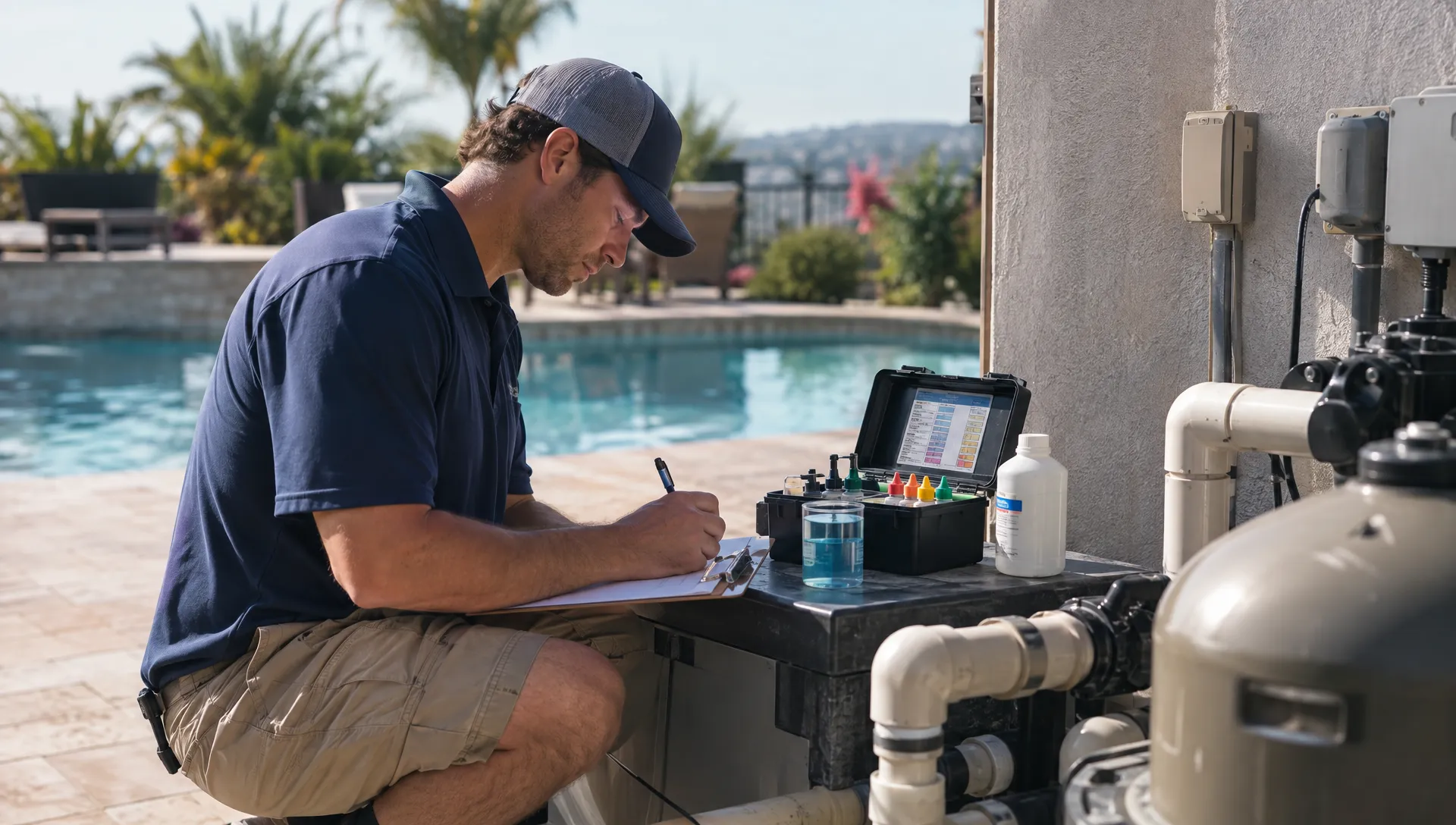
Finish the pool service checklist before you leave
Make a final visual pass around the pool and equipment area. Confirm the intended operating state after any authorized changes, collect tools and secure access according to the property instructions.
Take photos that explain the visit. A clear overall image can show the final condition, while a close-up can document a damaged basket, visible leak or other concern. Avoid including people or unnecessary views of private areas.
Send a short homeowner update that describes completed work, relevant readings, treatment and any limitations. Keep findings separate from diagnoses: “Water is dripping from the pump connection” is more precise than declaring that a component needs replacement without assessment.
Before closing the pool service checklist, assign every unresolved issue to someone who can act on it. A repair concern needs an owner and next step, not just a note buried in the visit history. These examples of homeowner updates after each visit can help keep the message clear without overwhelming the customer.
Handle exceptions without hiding unfinished work
A consistent process does not mean every property receives identical treatment. It means technicians use the same method to identify differences, document them and escalate appropriately.
| Situation | What the technician records | Next step |
|---|---|---|
| No property access | Time, access issue and contact attempt | Office coordinates access or rescheduling |
| Cloudy water or visible algae | Clarity, test results, photos and treatment performed | Escalate under the company’s remediation procedure |
| Rising filter pressure or weak flow | Pressure, pump setting and visible conditions | Assess against manufacturer guidance and service history |
| Suspected leak or repeated low water | Water level and visible evidence | Arrange assessment without promising a diagnosis |
| Treatment cannot be completed | Missing product, equipment problem or other limitation | Assign completion and any needed retesting |
Keep extra work visible even when the technician resolves it during the visit. Repeated debris loads or recurring equipment problems may require a scope discussion with the homeowner.
The pool service checklist should leave the next technician able to understand what changed, what remains unresolved and what must happen next. That is especially important when someone covers another technician’s route.
Use visit records to support a growing service business
As a company adds technicians, customer information needs to survive handoffs. Access details, treatment history and open concerns should not depend on one person’s memory or private text messages.
For further business reading, ServiceTitan’s contractor articles cover service-business operations and growth, while HubSpot’s article on CRM benefits explains the value of shared customer records and organized follow-up. For pool contractors, those ideas translate into connecting field observations with office action, customer communication and billing. They do not establish a guaranteed growth rate or return on software spending.
Use the pool service checklist as the common record across those handoffs. Supervisors can review missing readings, blocked tasks and unresolved concerns rather than judging visit quality by how many boxes were checked.
Reddit’s r/pools community is also a place to look for homeowner questions and peer discussions. Treat individual posts as anecdotal, not as treatment instructions or evidence that a particular workflow works everywhere. Verify technical advice against product labels, manufacturer guidance and applicable requirements.
Frequently asked questions
What belongs on every weekly pool service visit? Include access and safety checks, an initial condition assessment, routine cleaning, water testing, treatment when needed, equipment observations and a documented departure check. Add property-specific tasks based on the service agreement.
Should technicians clean the filter every week? Not automatically. Filter maintenance depends on the filter type, debris load, pressure and flow observations, manufacturer instructions and service scope. Record the reason for cleaning or deferring it.
Can homeowners use this checklist? A homeowner can use a pool service checklist to understand the visit and identify between-visit responsibilities. Equipment work and chemical handling should stay within the person’s training, with qualified help for unfamiliar or hazardous tasks.
How should a company review checklist quality? Look beyond completion rates. Sample records for actual measurements, clear treatment quantities, useful exception notes and follow-up ownership. A completed checklist should explain the visit, not merely confirm that a technician attended.
Put the checklist into your field workflow
Start with the template above, add each property’s requirements and test it on a representative route before rolling it out company-wide.
SplashIQ brings customer CRM, smart route scheduling, water-quality logs, equipment tracking, before/after photos and an offline field app into one platform for pool service businesses. Pair those tools with a defined visit procedure so the office, technician and homeowner share a clearer record of the work.