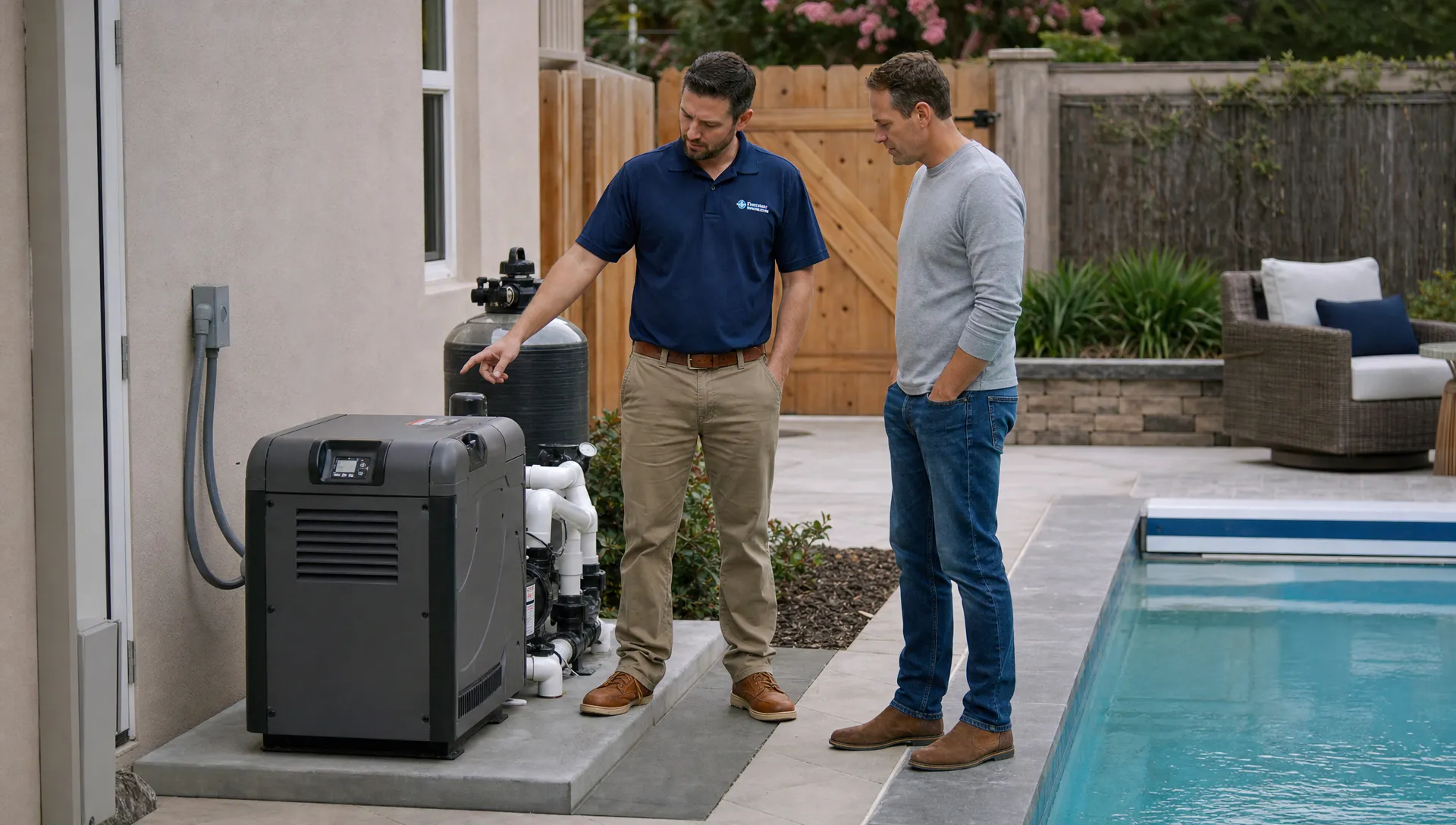
Plan to service pool heater equipment about four to six weeks before your area’s first expected cold spell, your planned pool closing or the start of regular fall heating. That is a practical scheduling buffer, not a universal manufacturer requirement: it creates room for diagnosis, parts and a return visit.
For pool service companies, the goal is to find problems while there is still time to fix them. For homeowners, it means knowing whether the system is ready to run, needs repair or should be winterized.
Build in time for diagnosis and parts
A heater inspection and a completed repair are not always the same appointment. The first visit may uncover a failed sensor, restricted water flow or a component that needs to be ordered. Booking immediately before a holiday gathering or forecast freeze leaves little room for that second step.
Start with the date the equipment must be ready, then work backward. Ask the service company about appointment availability, likely parts lead times and whether a specialist will be needed for gas, electrical or refrigeration work.
Follow the heater manufacturer’s maintenance schedule even when the unit seems to work normally. Arrange operating checks while circulation is available, before the equipment is winterized. If you are closing the pool, coordinate the heater appointment with your broader pool closing checklist rather than treating it as a separate last-minute job.
When should you service pool heater equipment?
Your local weather and operating plan matter more than a fixed calendar date. A pool that stays open through a mild winter needs a different plan from one that will be shut down before freezing temperatures arrive.
| Pool operating plan | Recommended timing | Main objective |
|---|---|---|
| Continue swimming into fall | Several weeks before regular heating begins | Verify reliable operation under heating demand |
| Close for winter | Before equipment winterization | Diagnose problems while the system can still be tested |
| Keep the pool open through winter | Before the local cold season | Confirm operating limits and a separate freeze-response plan |
| Restart a heater after months of inactivity | Before the first planned heated swim | Check for debris, deterioration and startup faults |
Heating and freeze protection are different jobs. A working heater does not guarantee protection for plumbing or equipment. Automated freeze-protection routines may depend on circulation and electricity, leaving the system vulnerable during a power outage.
Match the inspection to the heater type
Gas heaters: check combustion, venting and water flow
Qualified technicians who service pool heater combustion systems should inspect the gas supply, burner operation, ignition components and venting according to the model’s service instructions. They should also look for water leaks, corrosion and evidence of heat-exchanger damage.
For homeowners, visible soot, scorching or repeated ignition failures are reasons to stop using the heater and arrange professional evaluation. Do not keep resetting a unit that repeatedly locks out. Never bypass a pressure switch, temperature limit or other safety device to make it run.
Heat pumps: account for colder air
Heat pumps move heat from outdoor air into pool water, so colder conditions affect performance. The U.S. Department of Energy’s heat pump pool heater guidance explains that these units generally operate efficiently when outdoor temperatures remain above roughly 45°F to 50°F.
That range is not a universal shutdown temperature. Some models are designed for lower ambient temperatures, so check the specific unit’s published limits.
An inspection should address airflow, coil condition, fan operation, condensate drainage and water flow. Refrigerant diagnosis belongs to a qualified technician. Slower heating during a cold night is not, by itself, proof that the compressor has failed.
Solar systems: focus on circulation and freeze exposure
Contractors who service pool heater systems with solar collectors should evaluate collector condition, accessible connections, controls and the freeze-protection method specified for that installation.
Do not assume every solar system drains automatically or can remain filled through freezing weather. Roof layout, plumbing configuration and manufacturer instructions determine the correct procedure. Rooftop inspections and repairs also introduce fall hazards, so they are not suitable homeowner troubleshooting tasks.
For all three heater types, the service record should identify the model and serial number. An error code or maintenance procedure from a different model may not apply.
Separate safe homeowner checks from repair work
Before booking, gather information that can help the technician prepare. Photograph the equipment label and display, write down the full error code and note when the problem occurs. Include the outdoor temperature, pool temperature, desired temperature and whether the circulation pump is running.
Without opening equipment or changing unfamiliar settings, check that the heater is enabled, the temperature setting calls for heat and the pump schedule allows operation. Observe filter pressure relative to the system’s established clean baseline. Restricted circulation can prevent heating even when the heater itself is functional.
With the unit off and cooled, remove loose debris around the exterior without opening panels or disturbing components. Leave electrical testing, gas adjustments, refrigerant work and internal cleaning to qualified professionals.
Homeowner discussions on Reddit’s r/pools can help you formulate questions, but another owner’s repair is not a diagnosis for your equipment. Match advice to the exact model and confirm it against manufacturer instructions.
Move the appointment forward when warning signs appear
Do not wait for the seasonal appointment to service pool heater equipment if it repeatedly locks out, develops a leak or stops maintaining temperature under conditions it previously handled.
Other concerns include unusual banging, visible corrosion, damaged wiring, persistent heat-pump icing outside normal defrost operation or a breaker that trips repeatedly. A small water leak deserves attention before it becomes damage to surrounding equipment.
A gas smell requires a different response: leave the area, avoid ignition sources and electrical switches, then contact the gas utility or emergency services from a safe location. Do not attempt another startup. Soot or scorching also warrants shutting the heater down pending professional inspection.
Keep the circumstances with the service request. “Failed twice during startup at 52°F, with this exact code” is more useful than “heater broken.” Clear observations help the office assign the right technician, although they cannot guarantee a one-visit repair.
Ask for a documented inspection, not just a startup
The technician assigned to service pool heater equipment should leave findings that support the next decision, not simply mark the unit “working.” A successful startup alone does not establish that the heater is safe, efficient or ready for freezing conditions.
The scope depends on the model, but a useful service record includes:
- Equipment identification, visit date and the homeowner’s reported symptoms.
- Relevant operating conditions, readings and fault history available from the unit.
- Inspection results for water flow, visible leaks, corrosion and applicable safety controls.
- Work completed, parts used and photos of conditions requiring attention.
- Remaining recommendations, operating restrictions and the winterization plan where applicable.
Not every visit includes every diagnostic test. Ask what the quoted inspection covers and which findings would require additional authorization.
For service companies, retaining these records prevents the next technician from starting over. It also helps distinguish a recurring equipment fault from a new flow restriction, changed setting or weather-related performance limitation. Explain unresolved findings to the homeowner before leaving, especially if the equipment should remain off.
Compare estimates before approving a repair
Before authorizing someone to service pool heater components, request an itemized estimate. A low advertised visit fee may not include diagnosis, specialist labor or a return trip after parts arrive.
| Estimate item | What to clarify |
|---|---|
| Diagnostic and travel charges | What is included, and is any amount credited toward the repair? |
| Parts | Which components are proposed, and are they available? |
| Labor and return visits | Does the estimate cover installation, testing and a second trip? |
| Warranty | Are parts, labor or both covered, and what documentation is required? |
Confirm insurance and the licenses required locally for the proposed scope. Pool equipment experience does not automatically establish authorization for gas or electrical work. For regulated refrigerant work on heat pumps, verify the required EPA Section 608 certification. If warranty coverage may apply, ask whether manufacturer authorization is necessary before work begins.
Repair can make sense when the fault is isolated and the remaining equipment is sound. Major corrosion, repeated failures or unavailable parts can shift the decision toward replacement. Ask the contractor to explain the failed component and the condition of the rest of the unit rather than relying on age alone.
Make fall heater service a repeatable business workflow
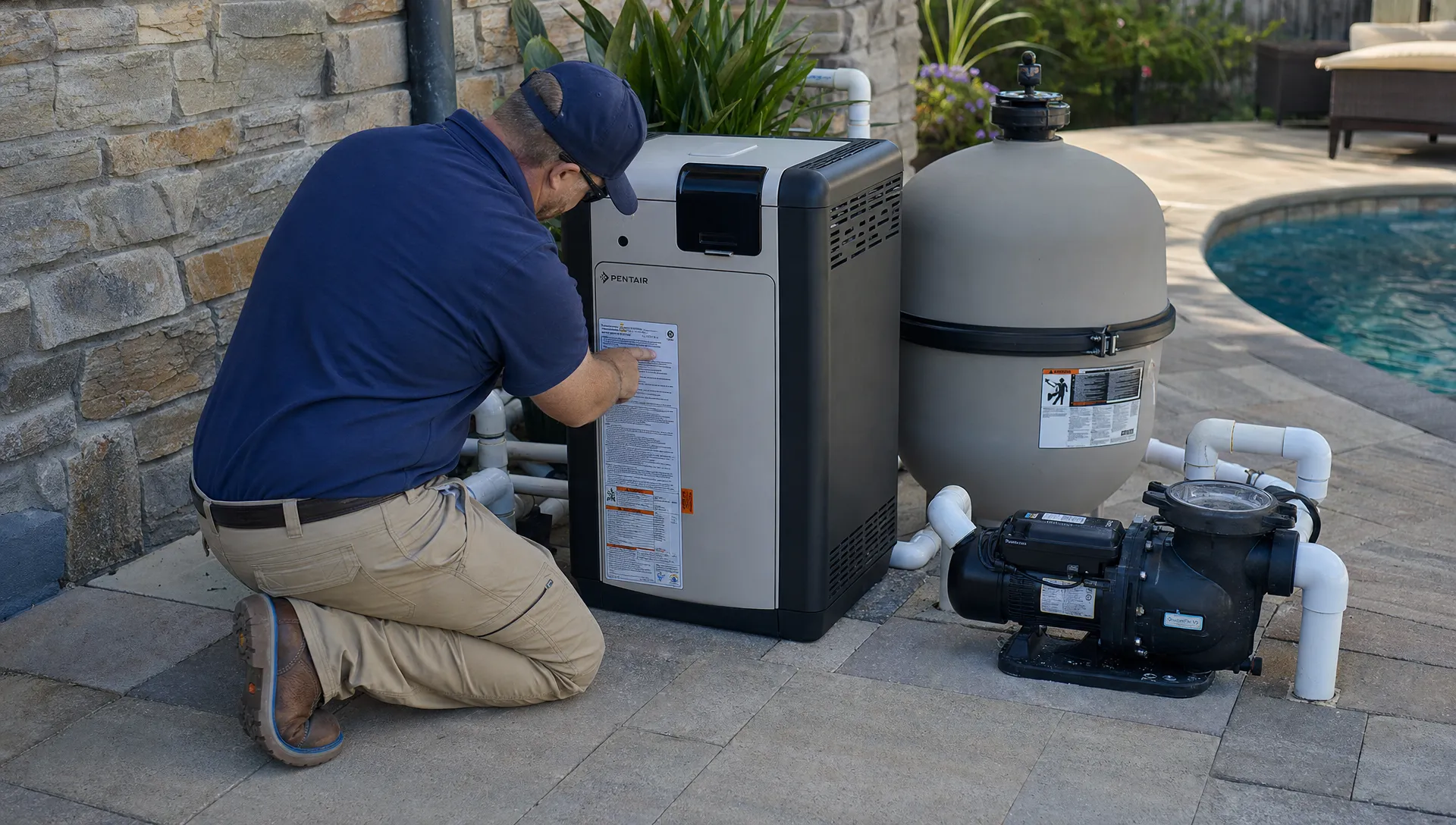
For pool companies, cold-weather preparation becomes easier when equipment history stays with the customer record. Record heater type, model, serial number, installation information when known and previous repair findings. Keep the homeowner’s seasonal operating plan alongside those details.
Use that information to identify which customers need pre-heating inspections, closing coordination or specialist referrals. Group appointments geographically where practical, but leave room for diagnostic work. A heater evaluation should not be squeezed into a routine cleaning visit without allowing for its scope.
This is one part of building operating systems that support a growing pool company. For broader examples of contractors using CRM and field-service software while growing their businesses, ServiceTitan’s contractor case studies provide vendor-published accounts. Use them to examine workflow changes, not as proof that software alone produces growth.
When your team is scheduled to service pool heater equipment, make the handoff clear: who is attending, what the customer reported, which work is authorized and how follow-up will be communicated. Afterward, retain the findings and any outstanding repair recommendation with the equipment history.
That process helps the office answer homeowner questions without relying on a technician’s memory or searching through disconnected messages. It also gives the next visit a clear starting point.
Frequently asked questions
How often should a pool heater be serviced? Follow the maintenance schedule for the exact model. Many owners arrange a professional inspection before their main heating season, but usage, environmental exposure and manufacturer requirements determine the appropriate interval. Faults and visible damage need attention regardless of the calendar.
Can I wait until the first freeze to book service? Waiting leaves little room for diagnosis or parts. Arrange the appointment to service pool heater equipment several weeks before your weather deadline where possible. If a freeze is imminent, ask a qualified pool professional about immediate equipment protection rather than assuming the heater will prevent damage.
Should I call a plumber or a pool heater specialist? Start with a company that specifically services your heater type and brand. Depending on the repair and local rules, the work may require a licensed gas contractor, electrician or refrigeration technician. A household water-heater service company may not work on pool equipment.
Does servicing the heater replace winterization? No. Servicing assesses condition and operation; winterization protects equipment that will be shut down and exposed to freezing. Follow the manufacturer’s procedure and coordinate the heater with the rest of the pool system.
Keep the appointment and equipment history connected
Choose your cold-weather deadline now, confirm the inspection scope and leave time for any follow-up repair.
For pool service teams, SplashIQ brings customer CRM, smart route scheduling, equipment tracking, water-quality logs and before/after photos into one platform. Those records help connect the homeowner’s concern with the field visit and subsequent communication. The technical work still belongs with a qualified professional, supported by a clear record of what was found and what happens next.