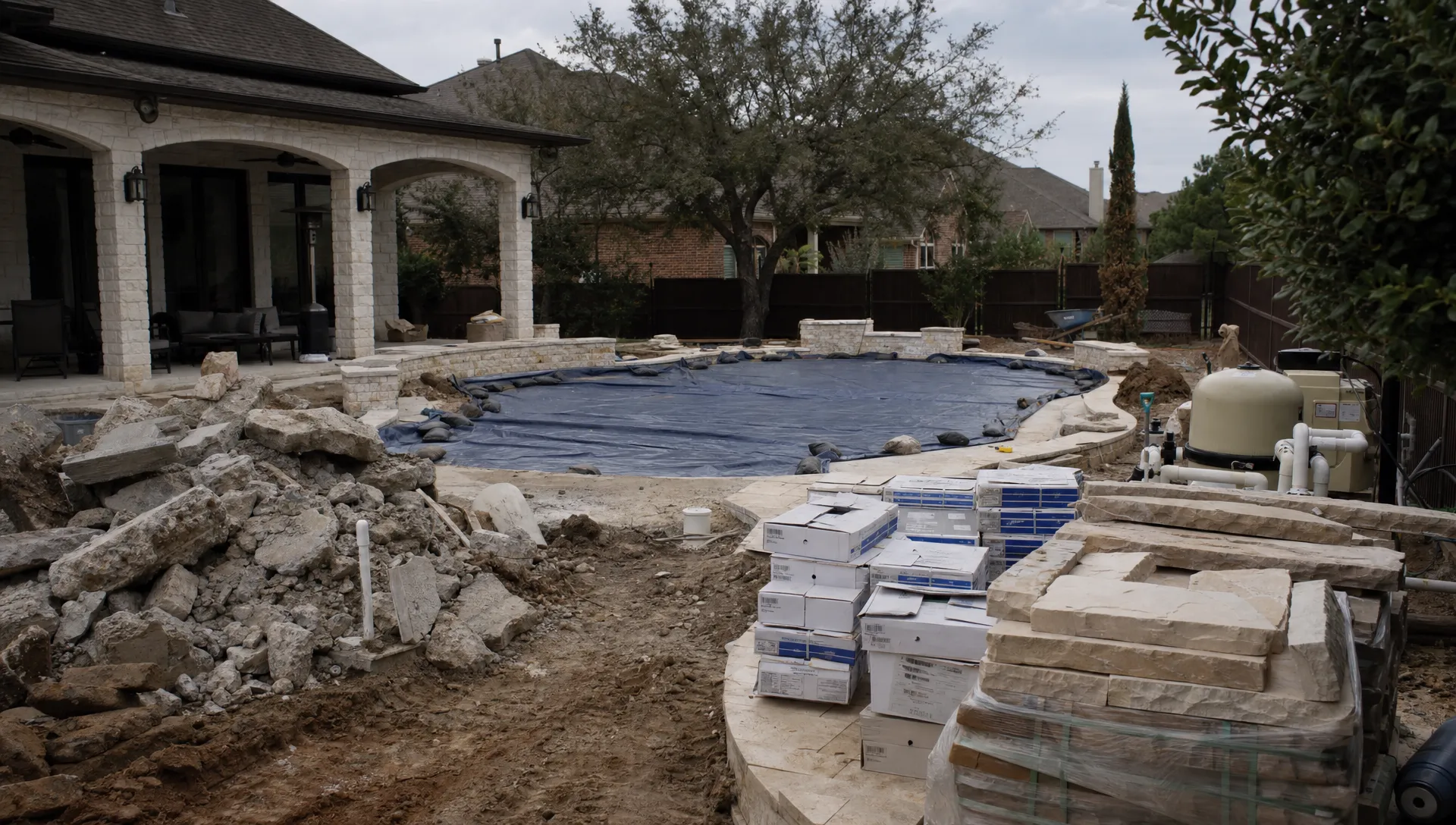
Complex pool renovations create a different kind of operational pressure than weekly maintenance. For complex pool renovations, CRM and project management need to work together because the customer relationship, property history, job scope, crew schedule, field documentation and payment plan all affect each other. If those pieces live in separate spreadsheets, texts and notebooks, the office loses visibility and the homeowner loses confidence.
A renovation can include demolition, tile, coping, surface prep, plaster, equipment upgrades, startup chemistry and multiple return visits. It may also involve designers, subcontractors, inspectors, financing questions and a homeowner who wants frequent updates. The job is too complex for a sales CRM alone, but it is also too relationship-heavy for a generic task board.
Why CRM and project management get harder in pool renovations
Pool service companies already manage recurring complexity: routes, access notes, water readings, equipment issues and billing preferences. Renovations add a second layer. Instead of one technician visiting a property for maintenance, a renovation may require several crews across several weeks with dependencies that change when weather, materials or homeowner approvals shift.
The problem is not only task management. A project can be on schedule and still feel chaotic if the homeowner does not know what happens next. A lead can convert cleanly and still become unprofitable if scope notes, surface measurements or equipment photos never make it from sales to operations.
That is why CRM and project management should be treated as one workflow for renovation work. The CRM side protects the relationship and property record. The project management side protects the sequence, accountability and job margin.
Start with the property, not just the person
A pool renovation is tied to a physical asset. The homeowner matters, but the property is where the real operational detail lives: pool size, surface type, equipment pad layout, access constraints, gate codes, decking condition, past repairs and known hazards.
If your database still begins with only a name and phone number, SplashIQ’s guide to CRM contact management for every pool property and owner explains why property-based records matter for pool companies. In renovation work, that structure becomes even more valuable because the estimate, schedule, materials and future service relationship all depend on accurate property context.
What the renovation record should contain
The renovation record should give the office and field team one reliable view of the job. At minimum, it should connect the homeowner, property, estimate details, approved scope, photos, equipment notes, scheduled visits, field updates, billing status and communication history.
The first job of CRM and project management is to remove translation work between departments. Sales should not have to re-explain the job in a group text. The scheduler should not have to guess whether the homeowner approved a color selection. The technician should not arrive without knowing which equipment is staying, which is being replaced and what was promised during the estimate.
What homeowners complain about when renovation communication breaks
Reddit is not a project management textbook, but it is a useful place to hear unfiltered homeowner frustration. Searches in r/pools for pool renovation contractor discussions commonly bring up the same concerns: long gaps without updates, confusion about timelines, uncertainty around startup instructions and frustration when crews arrive without clear context.
Those complaints are not always caused by bad workmanship. Many are caused by missing communication infrastructure. A contractor may be doing quality work, but if the homeowner only hears from the company when something goes wrong, the project feels risky.
Contractor-focused software articles make a similar point outside the pool industry. Jobber Academy’s guide to CRM for contractors and Buildertrend’s overview of construction CRM both frame customer history and job communication as operating infrastructure for companies that want to grow beyond owner-led coordination. Pool renovators face the same scaling problem, with the added challenge of water chemistry, equipment history and ongoing service opportunities.
Map the renovation from lead to final invoice
The best renovation systems follow the job from first inquiry through the final payment. That does not mean every company needs a complicated process. It means every step should create useful information for the next step.
A simple renovation workflow might look like this:
| Phase | What needs to be captured | Why it matters |
|---|---|---|
| Lead intake | Homeowner details, property address, renovation type and urgency | Prevents lost leads and improves follow-up |
| Site visit | Photos, measurements, access notes and equipment condition | Gives estimating and operations the same facts |
| Scope approval | Selected materials, exclusions, timeline expectations and payment terms | Reduces misunderstandings before work begins |
| Scheduling | Crew assignments, phase dates and dependencies | Keeps office and field teams aligned |
| Field execution | Before and after photos, notes, issues and completion status | Protects quality control and documentation |
| Startup and closeout | Water-quality logs, equipment notes, punch list and billing status | Supports a clean handoff to service or warranty follow-up |
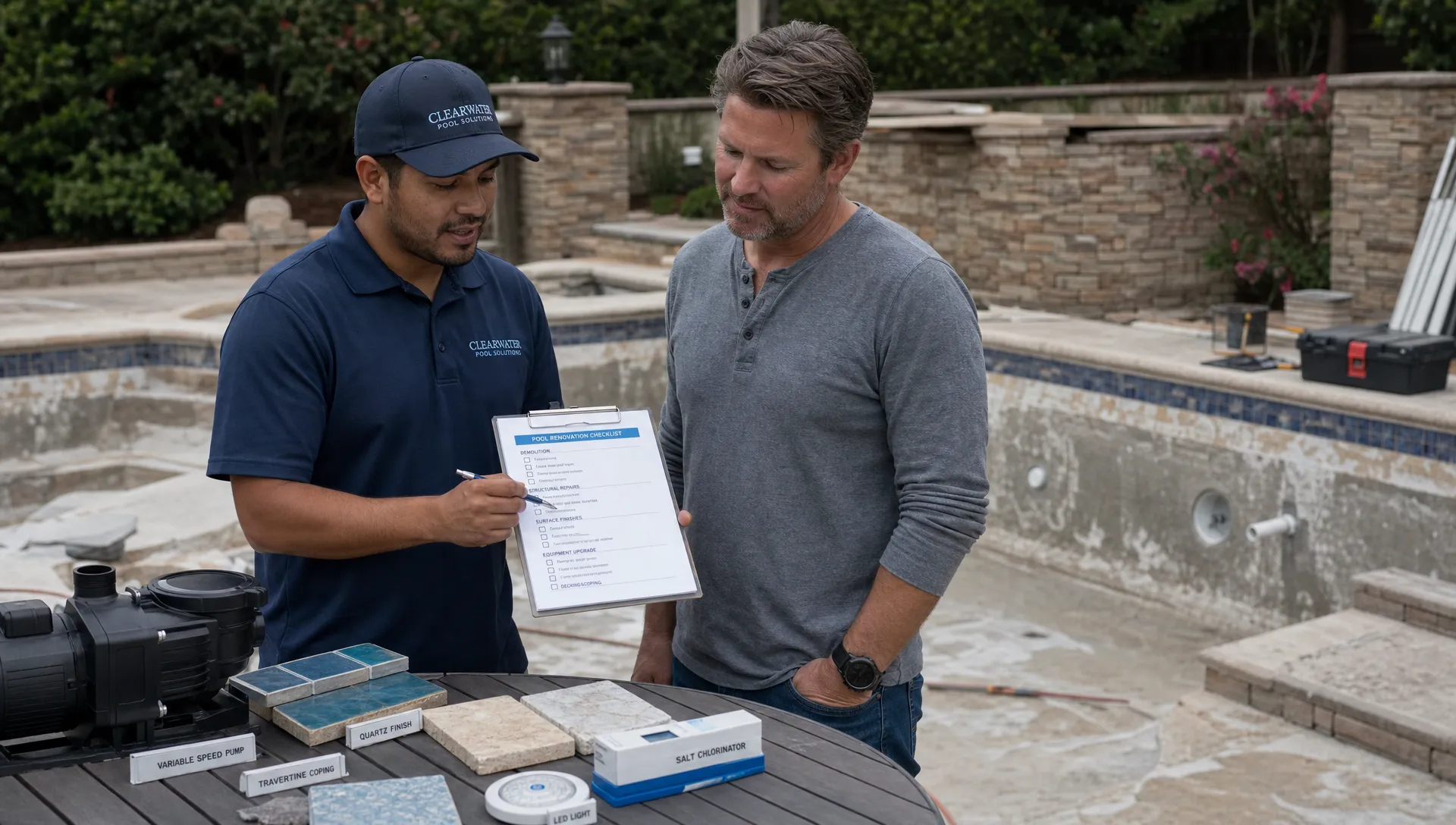
This structure also helps owners see where profit leaks happen. If jobs are delayed because selections are missing, that is a pre-construction process issue. If crews arrive without equipment notes, that is a documentation issue. If invoices go out late, that is a billing workflow issue.
Field documentation protects margin and trust
Renovation jobs create plenty of moments where documentation matters. A cracked fitting, unexpected hollow spot, changed material choice or access issue can all affect cost and schedule. When those details are captured in the field record, the office can respond quickly and the homeowner receives a clearer explanation.
Good CRM and project management for pool renovations should make documentation part of the work, not a separate admin burden after the crew gets home. Before and after photos, equipment tracking, water-quality logs and technician notes give everyone a shared record of what happened on site.
For pool renovators, startup is one of the most documentation-sensitive stages. Fresh plaster and new finishes require careful water balancing, and the homeowner may not understand why the startup process matters. Water-quality logs help prove that the company followed a process and give future service teams the information they need if the account becomes recurring maintenance.
Use technician scorecards without turning them into blame
Technician scorecards can help owners measure consistency across crews, but they should be used carefully. The goal is not to punish one technician for a difficult job. The goal is to see patterns: missing photos, incomplete notes, late status updates, callbacks or repeated handoff problems.
When a scorecard points to a recurring issue, the company can improve training and workflow design. For example, if several crews skip equipment photos during renovation closeout, the fix may be a required field checklist rather than another reminder in a morning meeting.
Scheduling is where renovation profit gets won or lost
Pool renovation scheduling is difficult because the calendar is full of dependencies. A surface crew cannot start before prep is complete. Startup visits depend on fill timing. A homeowner’s travel schedule may affect access. Rain can push one job into another job’s slot.
For scheduling, CRM and project management should connect the calendar to the actual property record. That allows the scheduler to see who the homeowner is, what phase the job is in, what equipment or materials are involved and what the field team reported last time.
Smart route scheduling matters here, even though renovation work is not always a standard weekly route. If a company can group visits by geography, match the right technician to the job and avoid unnecessary drive time, it protects margin. This becomes more important as the renovation department grows beyond a few projects managed directly by the owner.
Homeowner communication should be automatic where possible
Complex jobs need proactive communication. Homeowners do not need a novel every day, but they do need to know when crews are coming, what was completed, what happens next and whether anything has changed.
A homeowner notification engine can reduce the volume of manual calls while improving the customer experience. Arrival messages, service updates and closeout notes give the homeowner confidence that the job is moving. A homeowner portal can also give customers a place to view updates, photos, invoices and payment options without calling the office for every question.
This is especially helpful when the buyer is not the only person affected. A spouse, property manager or seasonal homeowner may need visibility too. The CRM record should reflect the real relationship around the property, not just the person who first filled out the form.
Billing, financing and change control need the same record
Renovation billing is not the same as a monthly service invoice. Larger tickets often involve deposits, progress payments, financing questions, material choices and approvals. If billing sits outside the renovation workflow, the company can complete excellent work and still struggle with cash flow.
A connected process makes it easier to see whether a deposit has been paid, whether a homeowner has received the invoice and whether online payment is available. When homeowner financing is part of the company’s offer, the office also needs a clear way to coordinate that option with the sales and project timeline.
Change control is another reason to connect the relationship record with the job record. If a homeowner adds equipment, changes finish selections or asks for extra work, the approved scope should be updated before the field team proceeds. CRM and project management help prevent verbal approvals from becoming disputed invoices later.
How to choose a system for renovation operations
A platform for CRM and project management should match the way pool renovation work actually happens. Generic sales tools can help with follow-up, and generic project boards can track tasks, but complex pool jobs need property details, field documentation, scheduling, communication and billing to sit close together.
When evaluating software, ask practical questions:
- Can we connect every homeowner to the correct property and equipment history?
- Can sales notes, photos and approved scope flow into the field workflow?
- Can technicians work when connectivity is poor using an offline field app?
- Can homeowners receive arrival and service notifications without extra manual work?
- Can we capture before and after photos, water-quality logs and equipment updates in one place?
- Can billing, online payments and financing options connect to the job record?
If you are preparing for a rollout, use a phased approach instead of trying to rebuild the entire business in one week. SplashIQ’s CRM implementation checklist for pool service companies is a useful starting point for mapping goals, cleaning records and piloting the system before full adoption.
Where SplashIQ fits for pool renovators
SplashIQ is built for pool service businesses that need one operating system for the office, technicians and homeowners. For renovation teams, that means the same app can support lead management, homeowner outreach, CRM records, smart route scheduling, field operations, water-quality logs, equipment tracking, before and after photos, homeowner billing, online payments and homeowner financing.
It also helps companies replace the fragile mix of spreadsheets, paper checklists, text threads and memory. For owners trying to grow a renovation division, that matters because scale exposes every weak handoff. A process that works when one person remembers everything usually breaks when several coordinators, salespeople and technicians are involved.
For companies with unique workflows, it can help to think through what should be standardized and what should remain flexible. SplashIQ’s article on how a customizable CRM fits real pool service workflows offers a broader framework for adapting CRM structure to real pool operations.
Frequently Asked Questions
Do pool renovation companies need both CRM and project management software? Yes. A CRM helps manage the relationship, property details, follow-up and communication history. Project management helps manage tasks, phases, schedules and accountability. Complex renovations usually need both functions connected.
What is the biggest operational risk in pool renovation projects? The biggest risk is usually handoff failure. Details from sales, site visits, scheduling, field work and billing can get separated, which leads to rework, delays, missed expectations and disputed charges.
How can a CRM improve homeowner communication during a renovation? A CRM can keep homeowner preferences, contact history, property notes and project updates in one place. When paired with notifications and a homeowner portal, it helps the company communicate before the homeowner has to ask for an update.
What should be documented during a pool renovation? Teams should document site conditions, measurements, equipment, access notes, scope approvals, before and after photos, field issues, completion status, water-quality logs and billing milestones.
Can CRM and project management help a pool company scale renovations? Yes. When processes are documented and connected, owners do not have to personally coordinate every detail. That makes it easier to add crews, train coordinators, maintain quality and protect the customer experience.
Bring renovation work into one operating system
Complex pool renovations are too valuable to manage through scattered notes and disconnected apps. When the customer record, property details, schedule, field documentation and billing workflow live together, the company can move faster without losing control.
If your renovation team is outgrowing spreadsheets, explore SplashIQ and see how a pool-focused operating system can help connect the office, technicians and homeowners from first lead to final invoice.