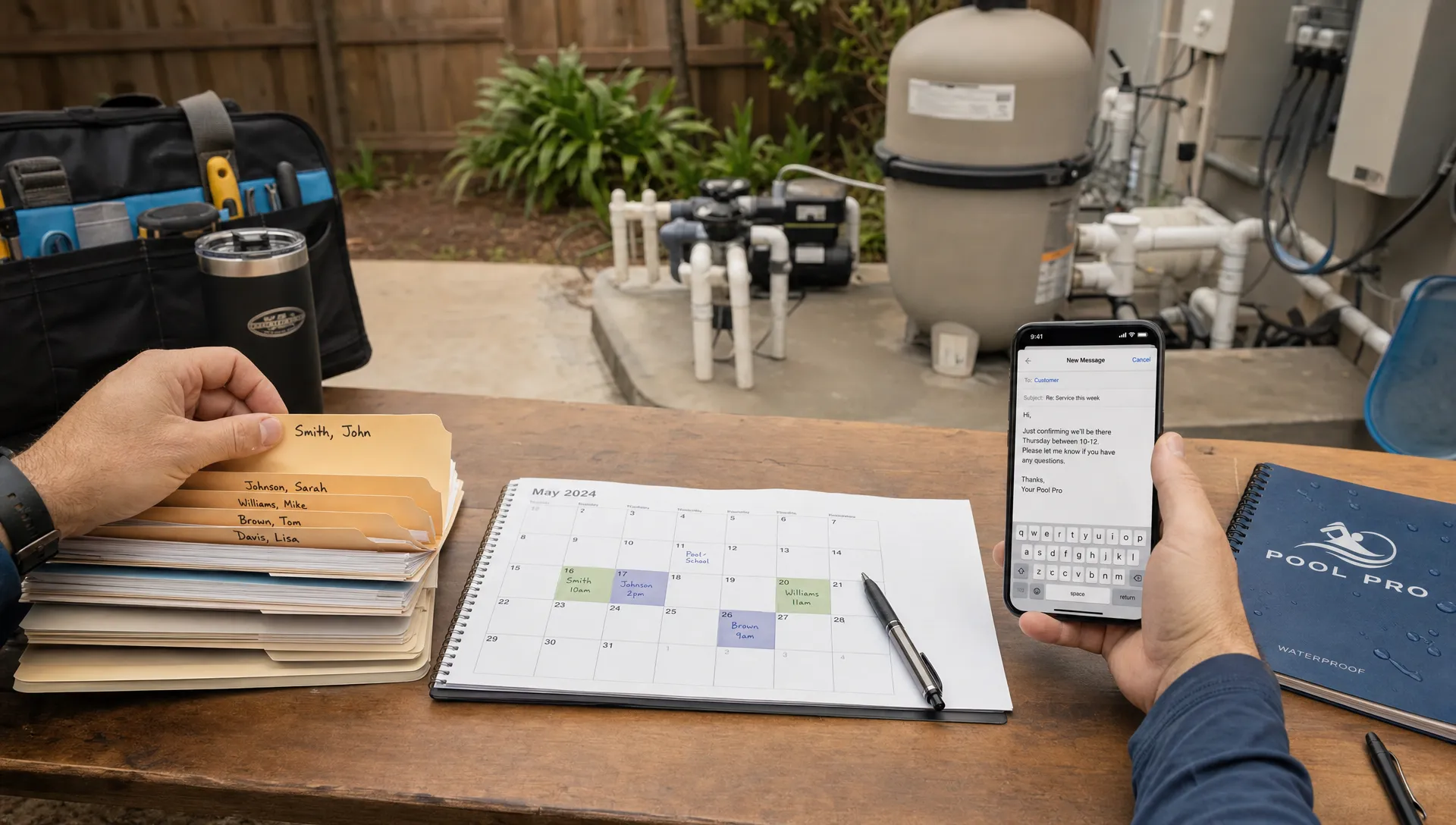
Seasonal customers are not lost customers. They are homeowners who need the right reminder at the right moment, with enough context to trust you again. For pool service companies, CRM email marketing works best when it uses service history, property details, route timing and homeowner behavior to bring people back before they start comparing other providers.
The challenge is that seasonal work has a short window. Pool openings, cleanups, repairs, inspections and closings cluster around weather changes, school calendars, vacations and local habits. If your reminders go out too late, the homeowner may already be booked with someone else. If they go out too early or sound generic, they get ignored.
A basic newsletter can announce availability. A CRM-powered campaign can do more: it can segment past customers, reference the exact pool or equipment you serviced, trigger follow-up after no response and keep the office from overbooking the same technician on the same day.
Why CRM Email Marketing Works for Seasonal Pool Customers
Seasonal pool customers need continuity. They may not remember the last invoice amount, the exact chemical issue from last spring or the model of their filter, but they do remember whether your company made the season easier. That memory is strongest when your outreach feels specific rather than mass-produced.
For a pool service company, CRM email marketing should connect the customer record to the marketing message. A homeowner who used you for a green-to-clean service last May should not receive the same email as a year-round maintenance customer who simply needs a spring opening appointment. The first person may need reassurance, photos of past results and a limited booking window. The second may only need a scheduling confirmation and an easy way to approve the visit.
Reddit can be useful for understanding how homeowners talk about these needs in their own words. Threads in communities like r/pools often surface seasonal concerns such as algae, pump problems, opening timing and frustration with unreliable service providers. In r/smallbusiness, contractors regularly discuss follow-up systems, CRM adoption and the pain of managing leads from memory. These are not substitutes for your own data, but they can sharpen your email language.
Build the Customer Record Before You Send the Campaign
A seasonal winback campaign is only as good as the information behind it. If your CRM only stores a name and email address, every message will sound flat. If it stores property details, pool type, equipment, last service, route zone, billing status and communication history, the campaign can feel timely and useful.
This is where CRM email marketing becomes operational, not just promotional. You are not simply asking, “Do you want service again?” You are saying, “It is almost time to reopen the same pool we serviced last season, and we still have your equipment and access notes on file.”
Useful fields for seasonal pool outreach include:
- Last service date and service category
- Pool opening or closing history
- Equipment type and known issues
- Preferred service day or route area
- Email engagement and prior response status
- Outstanding balance or payment status
- Customer type, such as seasonal, year-round or one-time repair
If you need a deeper framework for organizing homeowners, properties, contacts and billing relationships, SplashIQ’s guide to CRM contact management for every pool property and owner covers the foundation that makes this type of campaign easier to run.
Segment Seasonal Customers by What They Actually Need
Seasonal customers do not all return for the same reason. Some need routine openings. Others wait until the water turns green. Some want a repair estimate before deciding whether to restart weekly service. Sending one message to all of them forces the homeowner to do the sorting.
The best CRM email marketing campaigns divide seasonal contacts into practical groups that match the next action you want them to take. The segmentation does not need to be complicated. Start with the services that create the most repeat revenue and the customer situations that require the most follow-up.
| Segment | Trigger | Message angle | Best call to action |
|---|---|---|---|
| Previous opening customers | 60 to 90 days before local opening season | Reserve your preferred opening window | Book opening service |
| Past green pool customers | Before warm weather accelerates algae growth | Avoid another emergency cleanup | Request seasonal cleanup |
| Equipment repair leads | 30 to 60 days after estimate or before peak season | Fix pump, filter or heater issues before demand spikes | Approve repair follow-up |
| Closing-only customers | Late summer or early fall | Protect the pool before freezing weather | Schedule pool closing |
| Dormant weekly-service customers | Before route planning for the season | Rejoin service before route slots fill | Restart weekly service |
| New homeowners in CRM | First seasonal change after inquiry | Get the pool assessed before heavy use | Schedule inspection |
Segmentation also protects your routes. If too many customers say yes at once, the office needs to know which route zones, technicians and appointment types can actually absorb the work.
Time the Campaign Around the Seasonal Decision Window
A seasonal customer usually decides before they contact you. They notice warmer weather, a dirty cover, guests coming to town or a pool that is not clearing. Your campaign should arrive during that decision window, not after it closes.
Strong CRM email marketing follows a cadence. The first email gives the homeowner a reason to plan early. The second makes booking easy. The third adds urgency without sounding desperate. After that, nonresponders can move into a lower-frequency nurture campaign rather than receiving the same reminder again.
A practical pool service cadence might look like this:
| Timing | Goal | Example message |
|---|---|---|
| 90 days before peak season | Wake up the customer record | “We are planning spring openings in your area.” |
| 60 days before peak season | Drive early bookings | “Choose your preferred opening week before the schedule fills.” |
| 30 days before peak season | Convert undecided customers | “Your pool was serviced by us last season, and we can get you back on the calendar.” |
| 7 to 10 days after no response | Catch busy homeowners | “Do you still want us to hold a seasonal service spot?” |
| After the season starts | Shift the offer | “Need cleanup, balancing or equipment help before your next swim?” |
The tone should stay service-oriented. Homeowners already receive plenty of promotions. What they need from a pool company is confidence that the job will be done on time and documented clearly.
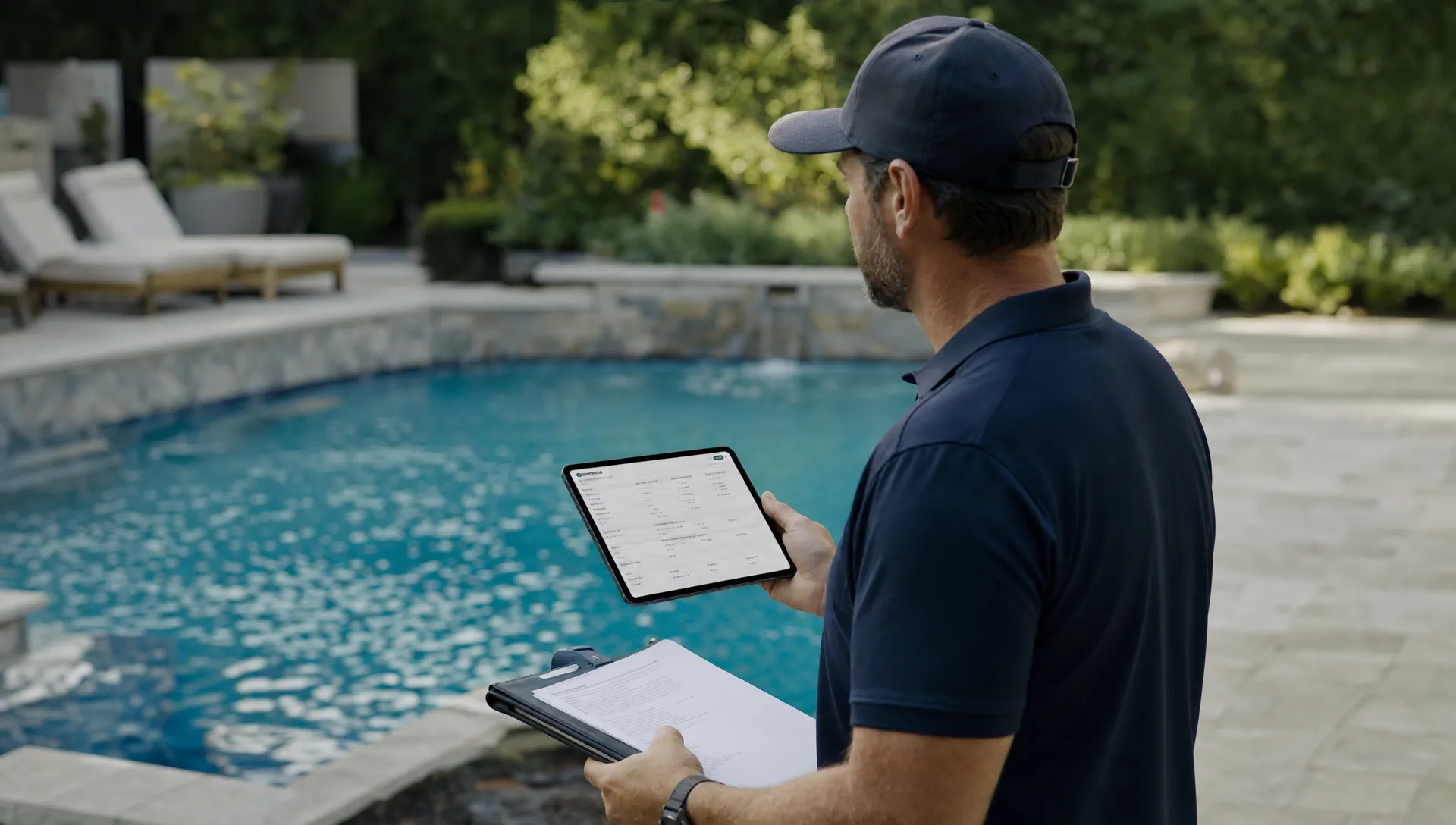
Write Emails That Sound Like a Service Reminder, Not a Blast
Your seasonal emails should be short, specific and easy to act on. The homeowner does not need your full company history. They need to know why you are contacting them, what you remember about their pool and what to do next.
Use CRM email marketing to merge in useful details only when they improve trust. A line such as “We serviced your pool last spring” is helpful. A messy email packed with every field in the CRM feels automated in the worst way.
Template 1: Early Pool Opening Reminder
Subject: Ready to plan your pool opening?
Hi {{First Name}},
We are starting to schedule spring pool openings in {{Service Area}}. Since we serviced your pool last season, we wanted to give you an early chance to reserve a preferred week before the calendar gets tight.
If you would like us to reopen the pool, balance the water and check the equipment, reply to this email or use the booking link below.
Thanks,
{{Company Name}}
Template 2: Dormant Customer Winback
Subject: Want to restart pool service this season?
Hi {{First Name}},
We noticed your pool has not been on our regular service route recently. If you are planning to use the pool this season, we can review your previous service notes and help get you back on the schedule.
We are currently building routes for {{Season or Month}}, so this is a good time to let us know whether you want weekly service, a one-time cleanup or an equipment check.
Thanks,
{{Company Name}}
Template 3: Repair or Equipment Follow-Up
Subject: Should we revisit the pool equipment before peak season?
Hi {{First Name}},
Last season, we had notes about {{Equipment or Issue}} at your property. Before pool season gets busy, we can take another look and help you decide whether any repair or replacement work should happen now.
If you want us to schedule a visit, reply here and we will send available times.
Thanks,
{{Company Name}}
Connect Email Responses to Scheduling and Billing
The biggest mistake in seasonal reactivation is treating marketing as separate from operations. If the email campaign works but the office has to manually copy responses into a spreadsheet, the process breaks exactly when demand increases.
When CRM email marketing is connected to scheduling, every positive reply can become a routed job, estimate follow-up or billing action. The office should be able to see who responded, what service they requested, which property is involved and where that job fits geographically.
This is especially important for contractors trying to scale. SplashIQ has covered this broader topic in articles such as CRM benefits that matter most to growing contractors and CRM tools that help contractors scale without chaos. The same principle applies here: growth gets easier when sales, scheduling, field work and customer communication are not scattered across separate systems.
For pool companies, that connection should include technician availability, route density, homeowner notifications, water-quality logs, before and after photos, online payments and service history. A winback email is valuable, but the real profit comes when that response turns into a well-documented visit and a paid invoice.
Use Seasonal Campaigns to Build Better Routes
Seasonal customers can either strengthen your route density or create scattered, low-margin work. The difference is whether the CRM helps you target the right customers in the right neighborhoods at the right time.
Instead of emailing every dormant customer at once, group outreach by route zone. If Tuesday’s north-side route has room for three more openings, your campaign should prioritize past customers near that route. If a technician already handles weekly service in one subdivision, target seasonal opening and closing customers nearby before marketing to distant neighborhoods.
This is where CRM email marketing supports profitability, not just revenue. A full calendar is not automatically a healthy calendar. Long drive times, awkward gaps and isolated jobs can eat the margin from seasonal work.
SplashIQ’s article on CRM marketing tactics for filling gaps in pool routes goes deeper on using customer data to fill route openings. For seasonal reactivation, the same idea applies: bring back customers who fit the route you want to build, not only the ones who happen to respond first.
Measure the Campaign Beyond Open Rates
Open rates can be useful, but they do not tell you whether the campaign improved the business. A seasonal email that gets modest engagement but fills profitable route gaps can be more valuable than a flashy promotion that creates scattered one-off jobs.
A practical CRM email marketing scorecard should connect marketing activity to operational outcomes. Look at how many customers booked, which service categories they chose, how quickly the office followed up and whether the jobs were completed profitably.
| Metric | Why it matters | What to improve |
|---|---|---|
| Reactivation rate | Shows how many dormant or seasonal customers returned | Segment quality and timing |
| Booking conversion | Shows whether emails led to scheduled work | Call to action and follow-up speed |
| Route fit | Shows whether jobs improved density | Geographic targeting |
| Revenue per reactivated customer | Shows the value of each returned account | Offer mix and service packaging |
| No-response rate | Shows where the list may be stale | Data hygiene and subject lines |
| Payment completion | Shows whether the job turned into cash | Billing workflow and payment options |
Review these numbers by segment. If opening customers return at a high rate but repair leads stall, the repair email may need clearer next steps. If one neighborhood responds well but creates scheduling strain, the route plan may need adjustment before the next send.
Avoid the Mistakes That Make Seasonal Customers Ignore You
Seasonal reactivation fails when emails sound generic, arrive too late or create friction after the homeowner replies. Customers do not want to explain their pool history again if they hired you last year. They also do not want to wait three days for someone to confirm whether an appointment is available.
The most common CRM email marketing mistakes are easy to prevent. Keep your customer records clean. Suppress people with unresolved billing issues until the office reviews them. Do not promise appointment windows the schedule cannot support. Make sure replies go to someone who can act, not an unmonitored inbox.
Also watch your frequency. Seasonal urgency is real, but too many reminders can train homeowners to ignore you. A short campaign with clear timing usually performs better than a long series of repetitive emails.
Finally, use plain language. Homeowners respond to practical outcomes: open the pool, clear the water, fix the pump, close before cold weather and restart weekly service. Clever copy is less important than relevance.
Frequently Asked Questions
How early should a pool company start emailing seasonal customers? Most companies should start 60 to 90 days before their local peak season. In markets with short opening windows or heavy demand, earlier planning gives the office more control over scheduling.
What makes CRM email marketing different from a normal email newsletter? A newsletter sends the same message to a broad list. CRM email marketing uses customer records, service history, route data and behavior to send more relevant reminders and follow-ups.
Should seasonal winback emails include discounts? Not always. Many homeowners care more about availability, reliability and convenience than a small discount. Use discounts carefully so you do not train good customers to wait for promotions.
Can pool companies use Reddit for campaign ideas? Yes, but use it as qualitative research. Reddit threads can reveal homeowner frustrations and wording around pool openings, algae, repairs and unreliable contractors, but your own CRM data should guide who receives each campaign.
What should happen after a customer replies to a seasonal email? The reply should trigger a clear next step: schedule a visit, send an estimate, update the customer record or collect payment. If the response sits in an inbox, the campaign loses momentum.
Bring Seasonal Customers Back With Less Manual Follow-Up
Seasonal revenue should not depend on memory, spreadsheets or last-minute reminder blasts. When your CRM, scheduling, field operations and homeowner communication work together, you can bring back better-fit customers before peak demand hits.
SplashIQ helps pool service companies manage the workflow from first lead to final invoice, including CRM records, smart route scheduling, homeowner outreach, service notifications, water-quality logs, equipment tracking, photos, online payments and a field app for technicians. If your seasonal customers are sitting in old spreadsheets or scattered inboxes, now is the time to turn that history into booked work.