A pool service website has one job before it has any design job: help the right homeowner decide, “This company can handle my pool, in my area, without making me chase them.”
That sounds simple, but most pool company websites still behave like digital business cards. They list services, show a phone number and hope the homeowner reaches out with enough detail to make the next step obvious. Better lead generation comes from a different approach. Your site should qualify the property, set expectations, build trust and send clean information into your follow-up process.
The result is not just more form fills. It is fewer tire-kickers, faster estimates, better route density and more recurring service customers.
What “better leads” means for a pool service company
A better lead is not always the homeowner who fills out the shortest form or calls first. For a pool service business, a better lead usually has context attached.
You want to know where the property is, what type of pool it has, what the homeowner needs, whether there is an urgent issue and whether the job fits your routes or service model. A one-line message that says “How much for pool service?” creates work before it creates revenue. A lead that includes ZIP code, pool type, photos, equipment details and preferred service frequency is much easier to price, schedule and convert.
This is why your website should not be judged only by lead volume. It should be judged by how many inquiries become profitable work. If you are trying to improve the full journey after a visitor submits a form, SplashIQ has a deeper guide on how to attract pool service leads that become long-term customers.
For this article, we will focus on the front door: the website features that bring in better-fit leads before your team ever responds.
Start with the questions homeowners ask before they contact you
Homeowners usually land on a pool service website with a practical concern. They may need weekly maintenance, a green pool cleanup, a pump repair, seasonal opening or help understanding why their water is cloudy. Their first questions are rarely complicated:
- Do you serve my neighborhood?
- Can you handle my type of pool and equipment?
- How fast will you respond?
- Will I know when the technician comes?
- Can I trust you around my home?
- What happens after I request service?
If your website does not answer these questions, the homeowner may still submit the form, but the lead is weaker. They are less certain, more likely to shop around and more likely to disappear when your office follows up.
Reddit is useful for understanding this homeowner mindset. If you browse discussions in communities like r/pools or r/HomeImprovement, you will see recurring homeowner concerns around missed visits, unclear chemical readings, surprise repair costs and whether a service company is doing what it promised. Those posts are not formal market research, but they are excellent voice-of-customer material. They show the trust gaps your website can close before the first call.
Feature 1: Clear local positioning on every important page
Pool service is local, route-based and operationally constrained. Your website should make that obvious.
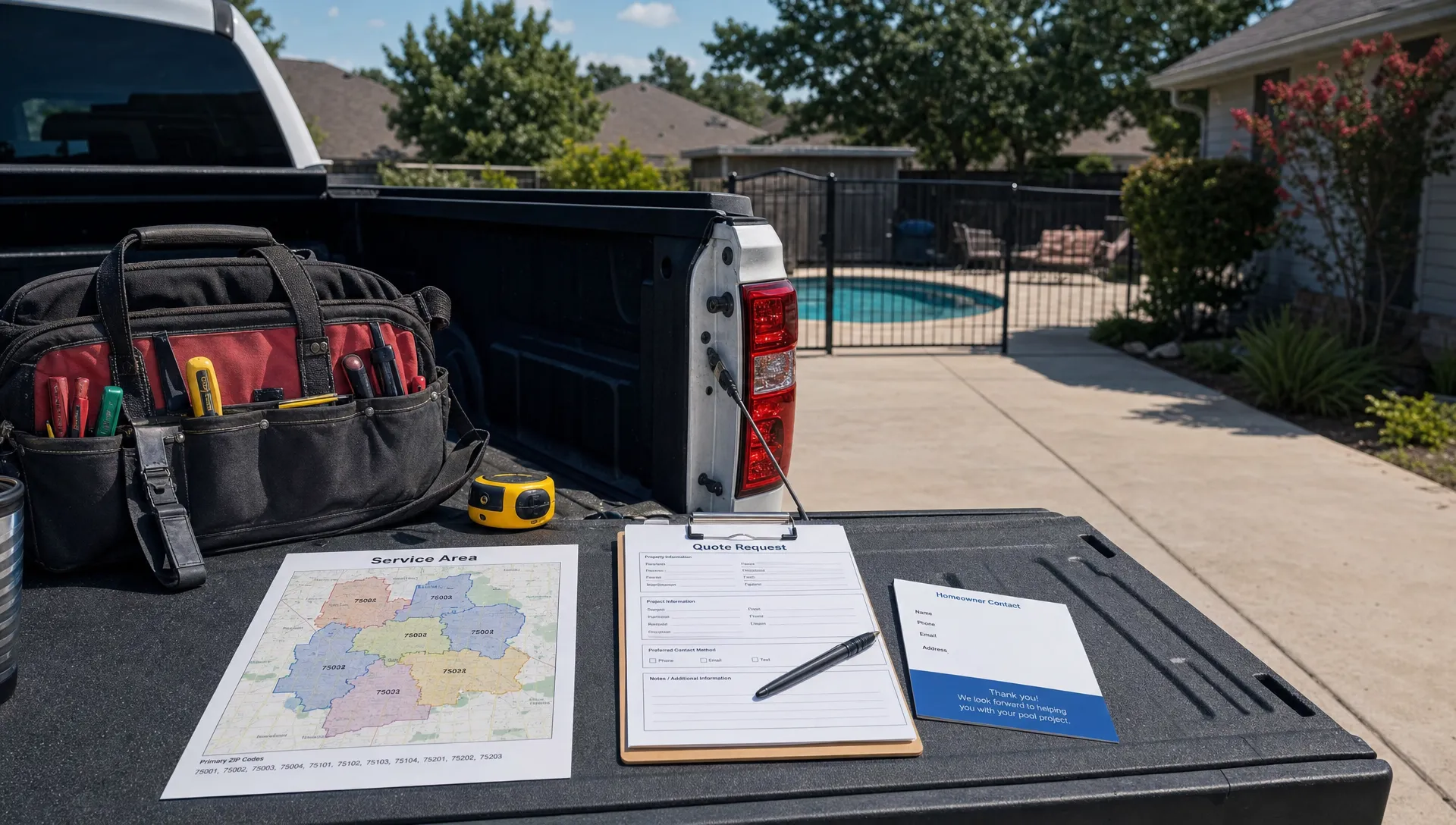
A strong pool service website does not simply say “serving the area.” It names the cities, neighborhoods or ZIP codes that matter most to the business. This helps search engines understand local relevance, but it also helps homeowners self-qualify. If someone sees their neighborhood listed, the friction drops. If they are outside your service area, they can move on without wasting your office’s time.
Service area pages can also support route density. Instead of treating every town as equal, build pages around the areas where you want more work. A page for a high-priority neighborhood can mention common pool types, seasonal issues, typical services and the kinds of properties your team already handles nearby.
Good local positioning should appear in:
- The homepage headline or subheadline
- Main service pages
- Contact and quote request pages
- Google Business Profile landing pages
- Paid ad landing pages
- Seasonal campaign pages
The goal is to make the visitor feel, “They already work near me.” That confidence often matters more than clever website copy.
Feature 2: Mobile speed and tap-friendly calls to action
Many pool service searches happen from a phone, often when a homeowner is standing outside looking at a cloudy pool, a noisy pump or an algae problem. If your site loads slowly or buries the contact button, you lose good leads before they read anything.
Google has long reported that mobile users abandon slow pages at high rates, including its widely cited finding that the probability of bounce rises sharply as page load time increases from one to several seconds. You do not need a perfect technical site to win local leads, but you do need the basics: fast loading, readable text, compressed images and buttons that are easy to tap.
For pool companies, the most important mobile calls to action are usually:
- Request weekly service
- Get a repair estimate
- Schedule pool opening or closing
- Ask about green pool cleanup
- Call now
Avoid making every button say the same thing. A homeowner looking for weekly maintenance and a homeowner with a failed pump are not in the same mindset. Matching the CTA to the page improves lead quality because it tells you what the person actually wants.
Feature 3: A quote form that qualifies without feeling like homework
The best lead forms collect enough information to make follow-up productive, but not so much that homeowners abandon them. For pool service, the form should be short, structured and property-specific.
Useful fields include name, phone, email, service address or ZIP code, pool type, requested service, urgency and an optional photo upload. If you handle repairs, add equipment type and a short description field. If you sell recurring service, ask whether the homeowner wants weekly maintenance, one-time service or seasonal care.
The key is to avoid vague open-ended forms. “How can we help?” seems friendly, but it produces messy data. A dropdown for “weekly service,” “repair,” “green pool,” “opening or closing” and “not sure” gives your team a clearer starting point.
You can still include a notes box. Just do not make it the only way homeowners communicate the job.
Feature 4: Photo upload for pools, equipment and problem areas
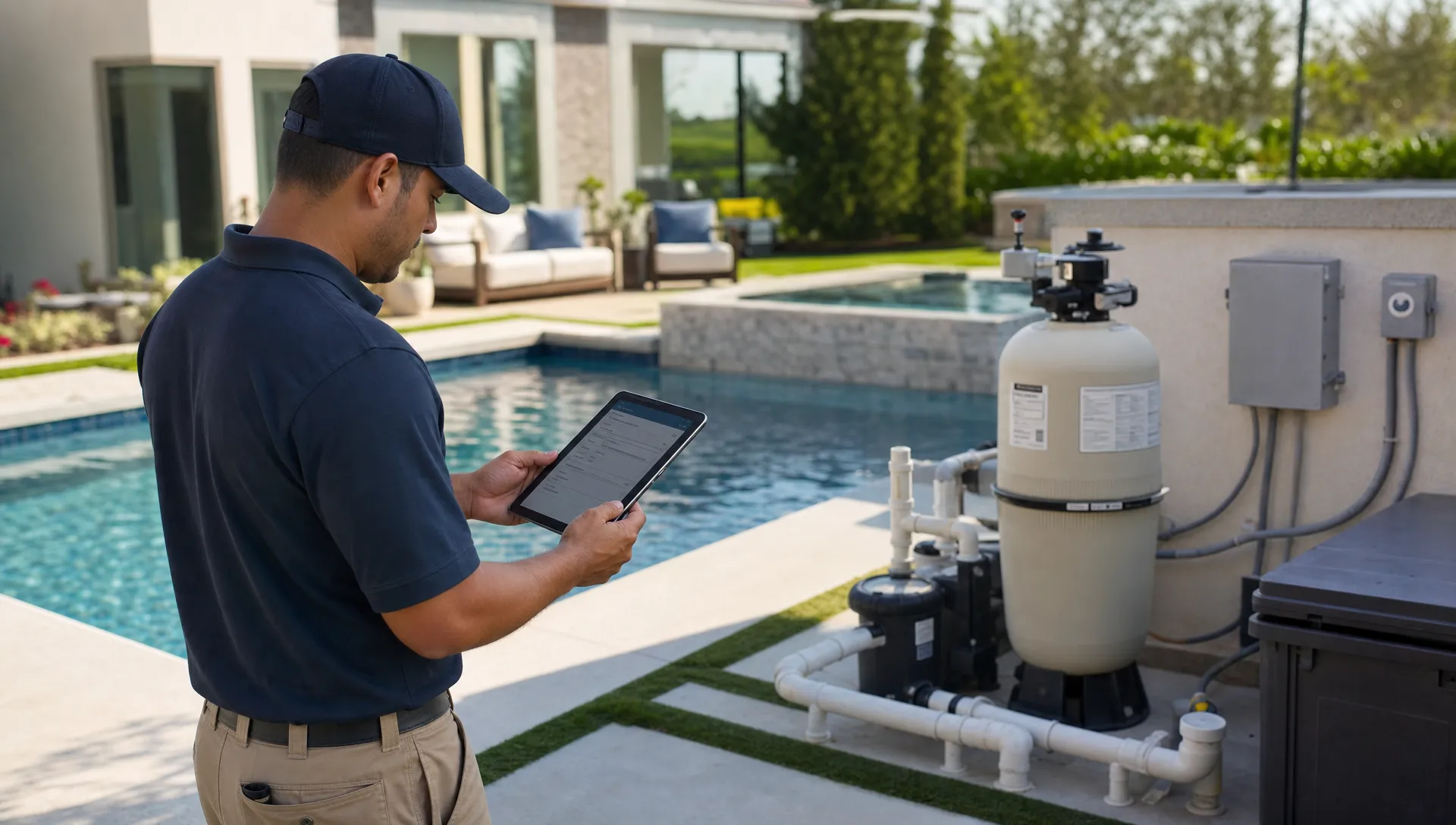
Photo upload is one of the most useful website features for better pool service leads. A homeowner may not know the model of their pump, the type of filter or the severity of algae growth, but they can take pictures.
Photos help your office triage the inquiry. They can also prevent wasted trips. A repair lead with a clear image of the equipment pad is more valuable than a vague message about “something leaking.” A green pool lead with photos helps your team set expectations and decide whether the job needs a cleanup plan instead of a standard maintenance quote.
Before-and-after photos also work on the marketing side. A gallery of real transformations shows proof, especially for green pool recovery, tile cleaning and neglected pool cleanups. Keep the photos realistic. Homeowners are more likely to trust clear job-site images than overly polished stock photography.
Feature 5: Service pages that separate recurring maintenance from repairs
Many pool websites lump all services onto one page. That is easy to build, but it creates weak intent signals.
A homeowner searching for weekly pool service has a different buying journey than someone searching for pool pump repair. Weekly maintenance is about reliability, communication, water quality and long-term trust. Repair work is about diagnosis, speed, parts, approvals and cost clarity.
Separate service pages let you speak to each intent. They also help your forms capture the right information. A maintenance page can ask about pool size, service frequency and access instructions. A repair page can ask for equipment photos, symptoms and whether the system is currently running.
This structure also supports marketing campaigns. If you run ads or email outreach for openings, green pool cleanups or equipment upgrades, each campaign should send homeowners to a page that matches the promise of the ad.
Feature 6: Trust signals that reduce “will they show up?” anxiety
Homeowners are not only buying clean water. They are giving a company recurring access to their backyard, gate codes, equipment and sometimes pets or family schedules. Your website needs to reduce that trust barrier.
Strong trust signals include reviews, technician photos, service process explanations, insurance or licensing details where relevant, recognizable local references and clear communication standards. You do not need to overdo it. A simple “what to expect” section can be more persuasive than a wall of badges.
For pool service, communication-specific trust signals are especially powerful. If you send arrival notifications, service summaries, water-quality logs or photos after each visit, say so on the website. This speaks directly to one of the most common homeowner frustrations: not knowing whether the service happened or what was done.
That is also where a homeowner portal can become a lead-generation asset, not just a customer retention tool. When prospects understand that they will be able to see visit history, photos, invoices and service details, the company feels more organized before the relationship starts. SplashIQ has a separate breakdown of homeowner portal features customers actually want if you want to build that expectation into your sales process.
| Website feature | Why it improves lead quality | What your team should capture |
|---|---|---|
| Local service area pages | Attracts homeowners in routes you actually want | City, neighborhood or ZIP code |
| Service-specific CTAs | Separates maintenance, repair and seasonal intent | Requested service type |
| Structured quote form | Reduces vague inquiries and speeds up follow-up | Pool type, urgency and contact details |
| Photo upload | Helps triage repairs, cleanups and equipment issues | Pool, equipment and problem images |
| Communication promise | Builds trust before the first visit | Notification and service summary preferences |
| CRM-connected lead capture | Prevents inquiries from getting lost | Lead source, stage, owner and next step |
Feature 7: A visible process from request to first visit
A website that explains the next step converts better because it removes uncertainty. After the homeowner submits a request, what happens?
A simple process section can do a lot of work:
“Tell us about your pool. We review your location, service needs and any photos you upload. Our team follows up with the next available options. Once scheduled, you receive visit details and service updates.”
That kind of copy sets expectations without locking you into promises you cannot always control. It also positions your company as organized. In a market where many homeowners have dealt with missed calls and loose scheduling, operational clarity is a selling point.
This is especially important for repair leads. If a pump, heater or automation system is down, the homeowner wants to know whether you diagnose first, quote first, charge a service call or require approval before parts are ordered. You do not have to publish every pricing detail, but you should explain the workflow.
Feature 8: Lead source tracking tied to your CRM
A website can generate better leads only if you know which pages and campaigns are producing them. This is where the website has to connect to your sales and operations system.
A lead should not land in a generic inbox with no owner, no source and no next step. It should create a record that includes where the inquiry came from, what service the homeowner requested, who is responsible for follow-up and what stage the lead is in.
This is not just a pool industry issue. Contractor CRM articles from companies such as Jobber and ServiceTitan make a similar point for home service businesses: scaling gets harder when estimates, customer details, follow-up tasks and schedules are scattered across inboxes, spreadsheets and text messages. For pool service, the data model has to go even further because every customer is tied to a property, access notes, equipment, water history and recurring route considerations.
If your team is still copying website form submissions into a spreadsheet, you are adding delay and risk. A CRM-connected website helps you respond faster and makes it easier to measure which marketing channels produce route-worthy customers. For a deeper operational view, SplashIQ explains how to build a CRM system for sales that never misses a pool lead.
Feature 9: Educational content that filters for fit
Not every blog post or guide needs to target a high-volume keyword. Some of the best pool service website content answers the questions your ideal customers ask right before they hire.
Good educational topics might include how weekly pool service works, what causes recurring algae, when a pump repair becomes a replacement, how professional water testing differs from strips and what homeowners should expect after a green pool cleanup. These topics attract visitors with real problems, but they also filter for people who value professional service.
Educational content can also reduce bad-fit leads. If your company does not offer one-time chemical advice, your content can steer homeowners toward the services you do provide. If you focus on full-service maintenance, your pages can explain why consistent visits, water-quality logs and equipment checks matter.
The point is not to give away every detail. It is to show competence before the homeowner asks for a quote.
Feature 10: Online payment and financing cues where they affect conversion
For routine maintenance, online payments reduce friction after the sale. For repairs, upgrades or equipment replacement, payment options can influence whether a homeowner moves forward.
Your website does not need to turn into a pricing catalog, but it should tell prospects how billing works in plain language. If customers can pay online, say so. If financing is available for larger approved projects, mention it in the right context. This is most relevant on repair, equipment replacement and renovation-related pages.
Clear payment expectations can improve lead quality because homeowners self-select. Someone who understands the approval and payment process before contacting you is more likely to be ready for a professional quote.
How to measure whether your website is generating better leads
Lead quality is measurable. You do not need a complex dashboard at first, but you should track more than form submissions.
Useful metrics include form conversion rate, percentage of leads inside your service area, percentage of leads that match your target services, response time, estimate-to-win rate, recurring service conversion rate and revenue by lead source. For route-based companies, you should also track whether new customers improve or weaken route density.
A simple monthly review can reveal patterns. Maybe repair leads convert well but come from areas too far away. Maybe weekly service inquiries are strong in one neighborhood but weak in another. Maybe your green pool cleanup page produces a lot of forms but few profitable jobs. These findings should shape website copy, ad spend and service area priorities.
The best pool service website is not static. It improves as your CRM data teaches you which leads become good customers.
Frequently Asked Questions
What is the most important feature on a pool service website? The most important feature is a clear, mobile-friendly request form that captures service area, pool type, requested service and contact details. Without clean lead capture, even a good-looking website can create extra office work.
Should a pool service website show prices? It depends on your business model. Many companies avoid exact pricing because pool size, condition, access, equipment and route location affect cost. However, explaining what affects pricing can improve trust and reduce unqualified inquiries.
Do pool companies need separate pages for each service? Yes, if those services represent different buyer intent. Weekly maintenance, green pool cleanup, equipment repair and seasonal openings should usually have separate pages because homeowners need different information before contacting you.
How can a pool service website generate better recurring customers? Focus on local service area pages, recurring maintenance benefits, communication standards, service reports, water-quality logging and easy quote requests. These features attract homeowners who value reliability instead of only the lowest price.
Why should website leads connect to a CRM? CRM-connected leads are easier to assign, track and follow up. They also help you see which pages, campaigns and neighborhoods produce customers that fit your routes and service model.
Turn your pool service website into an operating system for growth
A website can bring in the inquiry, but your systems determine whether that inquiry becomes a scheduled visit, a paid invoice and a long-term customer. Better lead quality comes from the connection between marketing, CRM, scheduling, field work, homeowner communication and billing.
SplashIQ helps pool service companies replace scattered spreadsheets and paper checklists with one app for offices, technicians and homeowners. From CRM and smart route scheduling to water-quality logs, equipment tracking, homeowner notifications, photos, online payments and field operations, SplashIQ is built to support the full workflow after a website lead comes in.
If your website is producing interest but your team is still chasing details, losing follow-ups or manually coordinating the next step, it may be time to connect your lead generation to the system that runs the business.