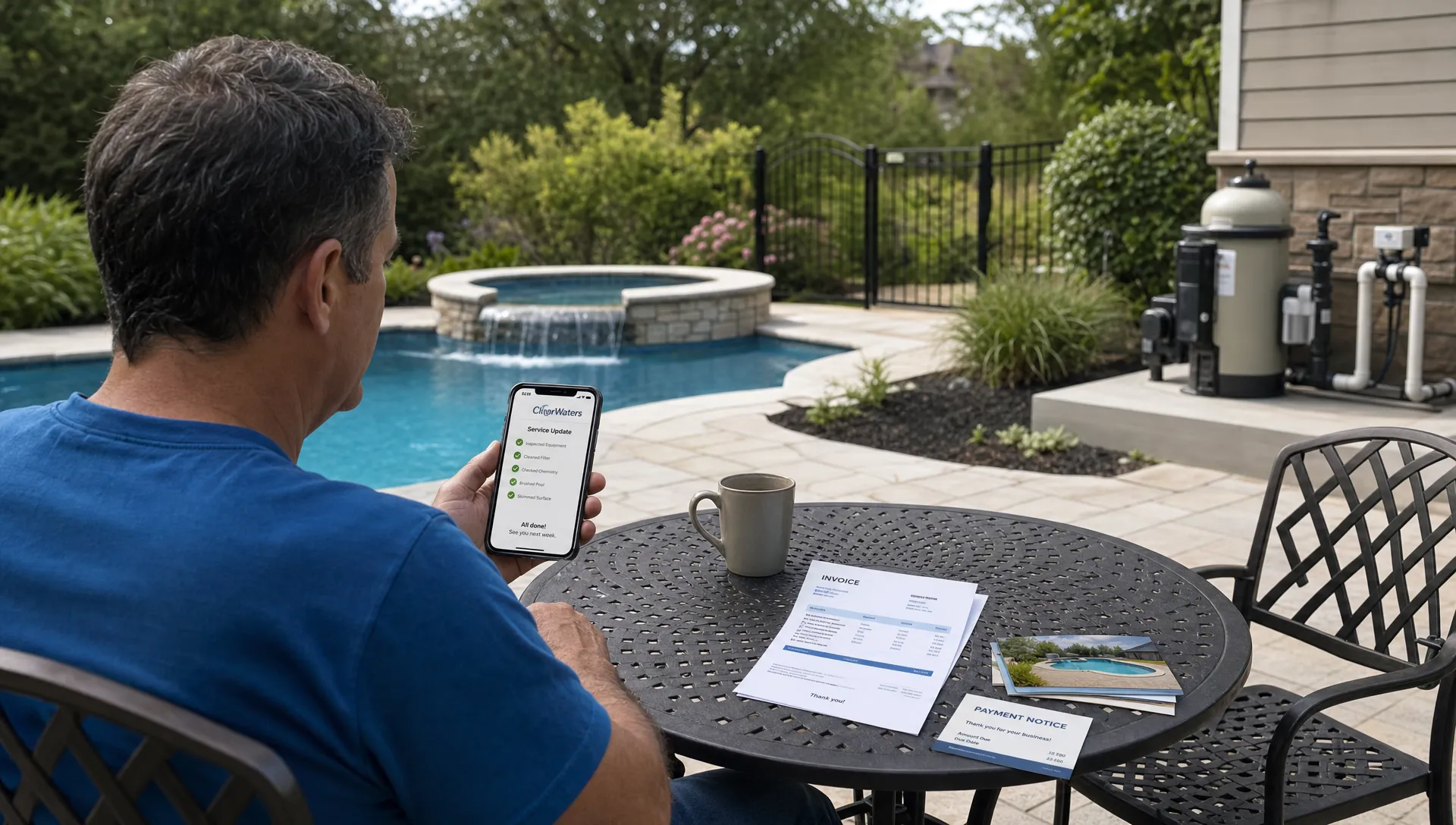
Reddit is not a clean research lab. It is messy, blunt and full of one-off opinions. That is exactly why it can be useful for contractors trying to scale service teams.
When pool service owners, HVAC operators, landscapers, cleaners and remodelers talk about CRM software on Reddit, they rarely start with polished feature matrices. They talk about missed appointments, technicians who hate typing notes, customers asking for updates, invoices that lag behind completed jobs and owners who cannot tell what happened in the field until days later.
That language is valuable. It reveals the operational pressure points that show up when a contractor moves from a founder-led route to multiple technicians, office staff and a growing customer base. The real lesson is simple: a CRM only helps a contractor scale if it becomes part of the daily service workflow, not just a place to store contacts.
Why Reddit is useful for contractor CRM research
If you read Reddit discussions around CRM for contractors or field service software, you will notice a pattern. Contractors do not usually ask for CRM in abstract business software terms. They ask how to stop losing job details, how to keep crews aligned, how to follow up with leads faster and how to know whether a technician actually completed the work correctly.
That makes Reddit useful as voice-of-customer research. It is not a substitute for product demos, references or implementation planning, but it can help service business owners spot the adoption risks before buying software.
Contractor CRM articles outside Reddit often point in the same direction. Case-study and growth content from field service software companies such as Jobber, Housecall Pro, ServiceTitan and Buildertrend tends to show the same broad storyline: a contractor outgrows whiteboards, spreadsheets and text messages, then scales by standardizing the way leads, jobs, field notes, invoices and customer communication move through the business.
For pool service companies, the stakes are even more specific. A useful CRM should connect the homeowner, property, pool equipment, water-quality history, technician notes, photos, schedule and billing record. If those pieces live in separate systems, the team grows but the operation becomes harder to manage.
| What contractors complain about on Reddit | What the CRM needs to solve | Why it matters when scaling |
|---|---|---|
| Techs forget notes or skip paperwork | Fast mobile field logging | Managers need service history without chasing people |
| Customers ask for status updates | Automated homeowner notifications | Office staff should not manually text every stop |
| Routes change constantly | Scheduling tied to field reality | Missed visits and wasted drive time hurt margins |
| Leads fall through the cracks | CRM follow-up stages | More demand does not help if response time slips |
| Invoices are delayed | Service completion connected to billing | Cash flow depends on clean handoffs |
| Quality varies by technician | Photos, checklists and scorecards | Owners need coaching data, not guesses |
Lesson 1: Adoption beats feature count
A recurring Reddit theme is frustration with software that looks powerful in a demo but fails in the field. Contractors often describe buying a system, setting it up with good intentions, then watching technicians revert to texts, paper notes or memory because the app feels too slow during a busy route.
That is the first lesson for scaling service teams: adoption beats feature count.
A CRM that requires a technician to complete a long administrative ritual at every stop will lose. The field workflow has to be simple enough to survive heat, rain, poor signal, gate codes, impatient homeowners and a schedule that is already behind by 10 a.m.
For pool service businesses, field adoption usually depends on a few practical details. Technicians need to see the day’s route clearly, access the customer and equipment history, record water readings, attach before and after photos and mark the job complete without calling the office. If service details can be captured in the natural flow of the visit, the data becomes reliable enough for managers to use.
This is also why generic CRM software often disappoints field teams. Many CRMs were designed around salespeople working from desks. Contractors need sales visibility, but they also need jobsite execution. The CRM has to work where revenue is actually earned.
Lesson 2: A contractor CRM should be built around the jobsite, not just the contact
Traditional CRM systems organize the world around people and companies. That makes sense for many sales teams, but it is incomplete for contractors. A pool service customer is not just a name, phone number and email address. The property matters. The pool matters. The equipment pad matters. The history of chemicals, repairs, complaints and photos matters.
Reddit discussions about service software often surface this gap indirectly. A contractor may say the software is fine for leads but terrible for ongoing service, or that the customer record does not capture what techs need to know onsite. That usually means the CRM is too contact-centered and not operational enough.
For scaling pool service teams, records should make it easy to answer questions such as:
- What equipment is installed at this property?
- What was the last water-quality reading?
- Were there photos from the previous visit?
- Has the homeowner reported a recurring issue?
- Is there a gate code, pet warning or access note?
- Has billing been completed for recent service?
When those answers are easy to find, new technicians can serve accounts with less tribal knowledge. That is the real scaling advantage. The business becomes less dependent on one owner or dispatcher remembering every exception.
SplashIQ takes this operational view of CRM for pool service companies by connecting customer records with scheduling, field operations, water-quality logs, equipment tracking, homeowner communication and payments. If you want a deeper breakdown of this field-team requirement, the SplashIQ guide to CRM software for small businesses with field teams covers why office-only CRMs usually fall short.
Lesson 3: Scheduling is where CRM promises get tested
Contractors rarely scale in a straight line. One more technician means new routes. New routes mean more opportunities for missed stops, inefficient drive time and communication breakdowns. The CRM might hold the customer record, but scheduling determines whether the service promise is kept.
On Reddit, owners often describe scheduling pain as a people problem. The dispatcher is overwhelmed. The owner is still moving jobs manually. Techs call in for updates. Customers ask when someone will arrive. Underneath those symptoms is usually a system problem: the schedule, service history and customer communication are not connected.
A scaling contractor needs scheduling that reflects real field operations. For a pool service company, that can include recurring maintenance routes, one-off repair visits, weather-related changes, chemical follow-ups and technician capacity. The schedule should not be a static calendar that lives apart from the CRM. It should be the operational layer that turns customer commitments into assigned work.
Smart route scheduling also affects hiring. When a business adds technicians without route visibility, it may feel busier without becoming more profitable. Better scheduling helps owners see whether routes are balanced, whether certain service areas are dragging down productivity and whether callbacks are creating hidden labor costs.
Lesson 4: Homeowner communication cannot depend on memory
Another Reddit pattern is the gap between what contractors think they communicated and what customers remember receiving. Homeowners want to know when the technician is coming, what was done, what issues were found and whether payment is needed. If that communication depends on manual texts, it becomes inconsistent as the team grows.
For small teams, the owner may personally know every homeowner. That does not scale. Once there are multiple technicians and office staff, communication needs to be standardized without becoming robotic.
A strong CRM for contractors should support communication at key service moments: appointment reminders, arrival notifications, visit summaries, photos, follow-up notes and payment links. In pool service, this is especially important because much of the work happens when the homeowner is not outside watching. A clear service summary builds trust and reduces the number of inbound calls asking what happened.
This is where CRM becomes more than internal software. It becomes part of the customer experience. The homeowner does not care whether the company uses a CRM, route planner, accounting tool or field app. They care that the service is reliable, documented and easy to pay for.
Lesson 5: Scaling requires quality control that does not feel like micromanagement
Many contractor owners are understandably cautious about monitoring field teams. Nobody wants to create a culture where technicians feel watched for the sake of being watched. At the same time, scaling without visibility leads to uneven service quality, avoidable callbacks and hard conversations based on anecdotes.
Reddit threads often show both sides. Owners want accountability. Technicians want software that does not slow them down or make every job feel like a compliance exercise. The best CRM workflows respect both realities.
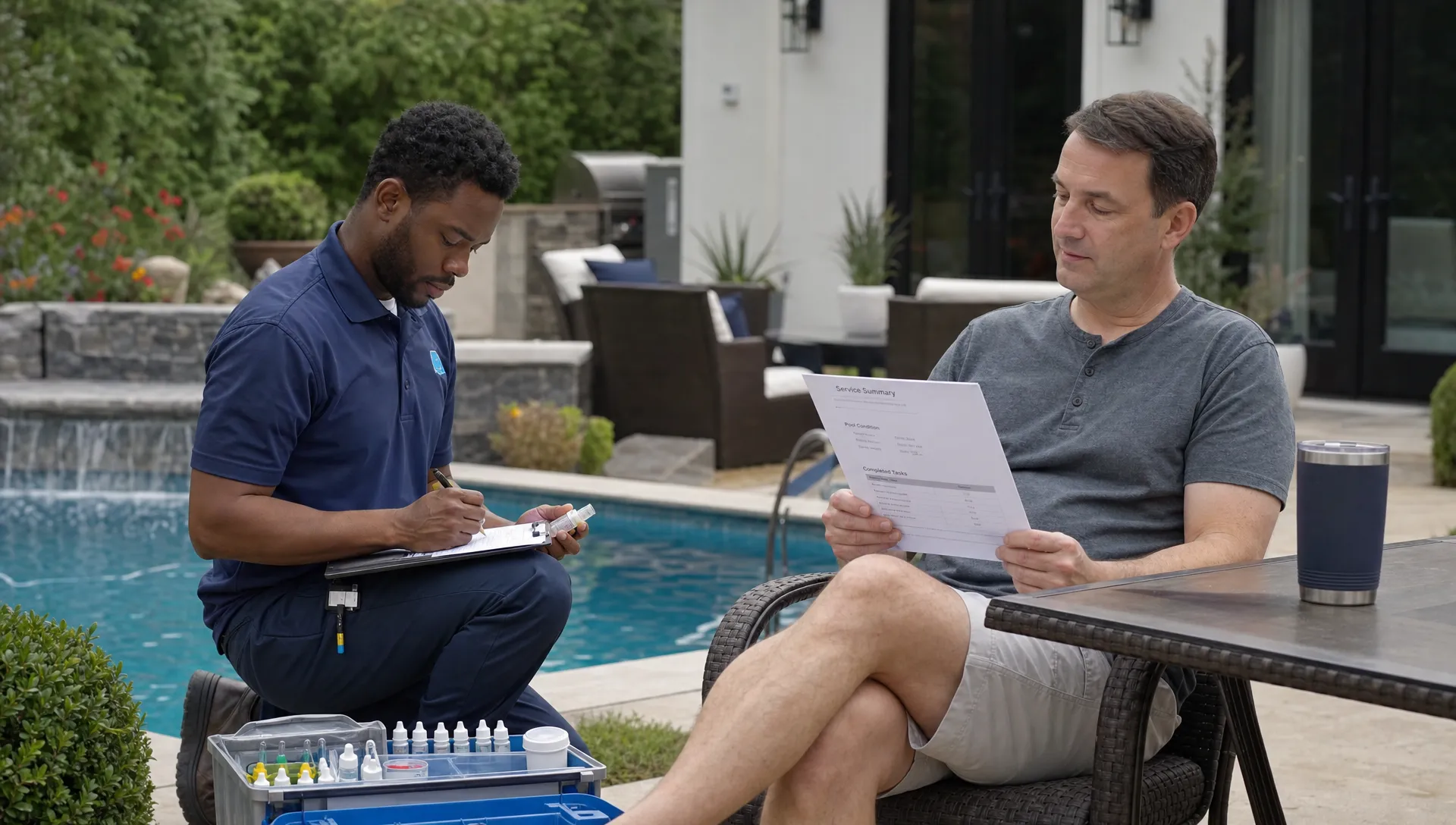
For pool service companies, quality control can be built around objective service documentation: water readings, equipment notes, photos, completed tasks and customer feedback. Technician scorecards can then be used for coaching, routing decisions and training, not just discipline.
The point is not to collect data for its own sake. The point is to make quality visible enough that managers can support the team. If one technician has more callbacks on a certain type of repair, that may reveal a training gap. If a route consistently runs long, that may reveal poor route design rather than poor performance.
Lesson 6: Mobile workflow is not optional for service teams
A contractor CRM that works only at a desk is incomplete. Service teams live on phones and tablets. They need to check schedules, update jobs, capture photos and sync information from the field. In areas with weak connectivity, offline access can be the difference between reliable records and missing data.
This is one reason Reddit users often warn against choosing software based only on back-office features. The mobile experience determines whether technicians use the system all day or only when someone reminds them.
If your company is evaluating a custom technician app or a lightweight MVP around a very specific workflow, working with a mobile app developer for iOS and Android MVPs can help you understand the effort required before building something from scratch. For most service businesses, though, the more practical path is to choose a platform where the CRM, schedule, field app, customer communication and payments already work together.
For pool service companies, that connected workflow matters because the technician’s update is often the trigger for the next office action. A completed visit may need to generate a homeowner notification, billing step, repair recommendation or follow-up task. If mobile field data is delayed or incomplete, the rest of the operation slows down.
Lesson 7: CRM and billing should not be treated as separate worlds
Contractors often focus on CRM as a sales or customer management tool, then treat invoicing as a separate administrative process. That separation becomes painful during growth. Jobs get completed but not billed. Repairs are discussed but not quoted. Payment links are sent late. Office staff spend hours reconciling field notes with invoices.
Reddit posts about contractor operations frequently describe this as cash-flow stress, but the root cause is often workflow fragmentation. The CRM knows the customer. The technician knows the work was done. The billing system needs clean information from both.
A better approach is to connect the service lifecycle from lead to invoice. The customer record should support the sales conversation, the schedule should assign the work, the field app should document completion and billing should follow without retyping the same information. That reduces missed revenue and gives homeowners a cleaner payment experience.
SplashIQ’s perspective on why contractors need CRM and accounting in one workflow is especially relevant for owners who feel busy but still struggle to keep invoicing current.
What contractor CRM articles and Reddit agree on
Reddit is anecdotal, but it often points to the same conclusions found in more formal contractor CRM articles and software case studies. The language is different, but the operational pattern is consistent.
Public articles about contractors using CRM software to scale usually highlight better lead follow-up, fewer missed jobs, cleaner scheduling and faster invoicing. Reddit discussions highlight the same needs through complaints: lost notes, frustrated customers, scattered messages and owners who cannot step away from daily dispatching.
The overlap is where contractors should pay attention. Software does not scale a service business by itself. It gives the team a shared operating system, but only if the process is clear.
| Scaling goal | Weak CRM approach | Strong CRM approach |
|---|---|---|
| Add more technicians | Give everyone a login and hope they use it | Design a field workflow techs can complete quickly |
| Improve customer experience | Let each tech text customers manually | Automate arrival, completion and follow-up communication |
| Reduce owner dependency | Keep exceptions in the owner’s head | Store property, equipment and service history in the CRM |
| Protect cash flow | Invoice from memory at the end of the week | Connect completed work to billing and online payments |
| Improve service quality | React to complaints after they happen | Track photos, readings, notes and callback patterns |
If you are comparing systems now, SplashIQ’s CRM software comparison for contractors ready to scale can help you evaluate options through a field-service lens rather than a generic sales-software checklist.
How to apply these lessons before choosing a CRM
Before booking demos or importing customer data, contractors should map the real workflow. This does not need to be complicated. Start with the path from first inquiry to final payment, then identify every place information gets lost or repeated.
For a pool service company, that workflow often includes lead capture, estimate or service setup, route scheduling, homeowner notification, field visit, water-quality logging, equipment notes, photos, follow-up recommendation, invoice and payment. If any step depends on memory, a personal phone, a spreadsheet or a paper checklist, that is a scaling risk.
Use Reddit as a warning system. When many contractors complain about the same thing, such as low technician adoption or poor mobile usability, treat it as a question to ask during demos. Do not ask only whether the software has a feature. Ask how the feature works during a real service day.
Good demo questions include:
- How fast can a technician complete a routine service stop in the mobile app?
- Can field notes, photos and readings be attached to the customer and property record?
- What happens when there is no signal?
- Can homeowners receive automatic arrival and completion notifications?
- How does a completed job become an invoice or payment request?
- Can managers see route performance, callbacks and technician activity without exporting spreadsheets?
The answers will tell you whether the CRM is built for service operations or only for contact management.
Frequently Asked Questions
What is the biggest CRM lesson contractors can learn from Reddit? The biggest lesson is that adoption matters more than feature count. If technicians and office staff will not use the CRM during real work, the system will not improve scheduling, documentation, billing or customer communication.
Why do generic CRMs fail for contractors? Many generic CRMs are built for desk-based sales teams. Contractors need customer records connected to jobsites, schedules, field notes, photos, equipment details, invoices and payments.
Should a pool service company use a CRM or field service software? A growing pool service company usually needs both capabilities in one workflow. The CRM should manage homeowners and leads, while the field service layer handles routes, technician updates, water-quality logs, photos and billing handoffs.
How can contractors use Reddit when evaluating CRM software? Search for real contractor discussions, note recurring complaints and turn them into demo questions. Reddit is most useful for spotting adoption risks, mobile workflow problems and gaps between sales promises and field reality.
When should a contractor replace spreadsheets with CRM software? Spreadsheets become risky when multiple people need the same information at the same time, especially across scheduling, field work, customer communication and invoicing. That is usually the point where a shared CRM workflow becomes necessary.
Build a service operation your team can actually run
Scaling a contractor business is not only about adding more leads or hiring more technicians. It is about creating a workflow that keeps customer information, routes, field documentation, communication and payments connected as the team grows.
For pool service companies, SplashIQ brings those pieces into one operating system for the office, technicians and homeowners. If your current process depends on spreadsheets, paper checklists and scattered text messages, visit SplashIQ to see how a connected CRM and field service workflow can help your team scale with less chaos.