Pool service loyalty is built in small moments: the arrival message before the gate opens, the service summary after the visit, the clean invoice that matches what the homeowner expected and the follow-up when a repair is recommended. Most cancellations do not begin with a dramatic failure. They start when a client feels unsure whether the visit happened, why the pool still looks off or what they are paying for.
That is why a customer success platform for pool service companies has to do more than store names and phone numbers. It needs to help the whole business deliver the outcome clients hired you for: a clean, safe, swim-ready pool with fewer surprises.
Retention also has hard financial value. Harvard Business Review has long pointed out that acquiring a new customer can cost far more than keeping the right existing customer. For a pool service company, that math is even clearer because recurring routes, add-on repairs and referrals compound over time.
What customer success means in pool service
In software, customer success often means onboarding, usage, support tickets and renewal management. In pool service, the same idea is more physical. The client is not renewing because they love a dashboard. They stay because your team shows up on schedule, communicates clearly and makes the pool easier to own.
A pool client judges success through questions like these:
- Did the technician arrive when expected?
- Can I see what was done during the visit?
- Are water readings, chemical adjustments and photos documented?
- Do repair recommendations make sense based on equipment history?
- Is billing easy to understand and pay?
Reddit is a useful place to hear this in plain language. Threads in communities like r/pools and r/HomeImprovement often show homeowners asking whether a pool service visit was done properly, whether chemical readings make sense or how to deal with unclear contractor communication. These posts are anecdotal, not formal research, but they reveal the concerns that make clients lose trust.
The broader contractor software market tells a similar story. Articles and case studies from contractor CRM publishers such as Jobber Academy and ServiceTitan often come back to the same operational point: contractors scale more reliably when customer history, scheduling, field notes, estimates and billing stop living in separate places. For pool companies, that connected workflow is what turns customer success from a good intention into a repeatable process.
The loyalty features that matter most
A strong customer success platform should help pool companies prevent avoidable churn, not just react after a homeowner complains. These features are the ones that most directly affect whether clients feel informed, valued and confident in your service.
1. A customer CRM that keeps the full property story in one place
Pool service relationships are property-specific. One homeowner may have a salt system, aging heater, plaster concerns, seasonal algae issues and a history of repair approvals. If that context sits across paper notes, text threads and technician memory, every interaction becomes fragile.
A customer CRM gives office staff and field teams a shared view of the relationship. The best setup connects homeowner details, service history, equipment, billing status, communications and visit records so the next person who speaks with the client does not have to start from scratch.
This matters most when something goes wrong. If a homeowner calls about cloudy water after a storm, the office can see recent visits, water-quality logs, photos and technician notes before responding. That kind of informed answer feels professional because it is professional.
SplashIQ covers this with a customer CRM built for pool service workflows. If you are still evaluating how CRM fits your team, SplashIQ also explains how a customer CRM improves every homeowner interaction across service, billing and communication.
2. Arrival and service notifications that reduce uncertainty
Homeowners do not want to chase routine updates. They want to know when you are coming, when you arrived and what happened after the visit. A homeowner notification engine turns those moments into automatic touchpoints.
For pool companies, this is not just a convenience feature. It reduces inbound calls, protects your team from disputes and gives the client confidence that recurring service is happening consistently. When a technician arrives, the client gets confirmation. When the visit is complete, they receive a record of the work.
The tone matters. Automated messages should feel useful, not robotic. Good customer experience automation uses real service context, such as visit timing, photos, work completed and next steps. SplashIQ has a deeper article on customer experience automation that feels personal, which is a key distinction for high-retention service businesses.
3. Water-quality logs that make service visible
Pool care is invisible when it is done well. The water looks clear, the system runs and the homeowner does not notice the small decisions that kept problems away. That is good for the pool but risky for retention because the value of your work can feel abstract.
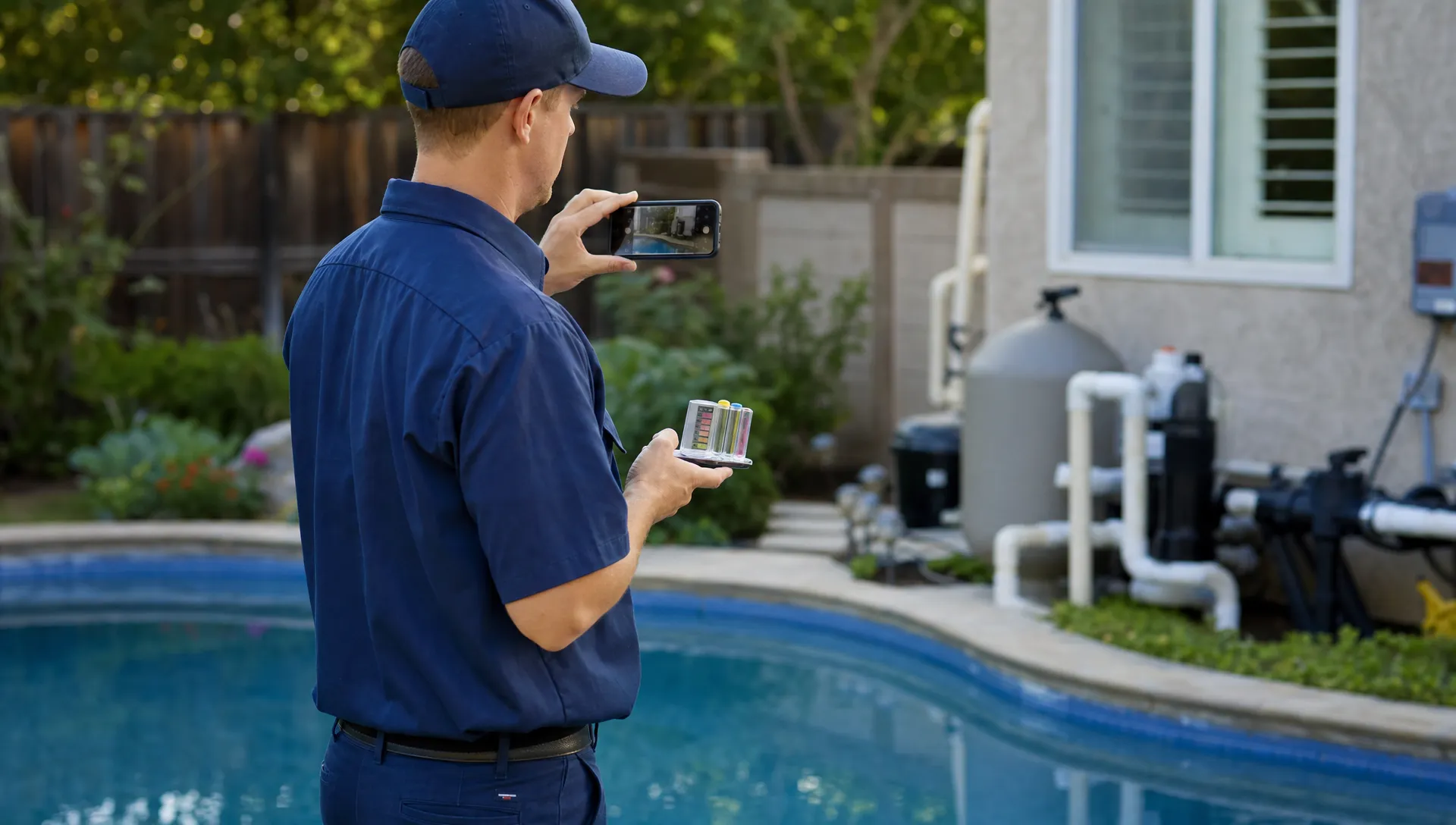
Water-quality logs make that value visible. Recording readings and chemical adjustments gives homeowners a record they can understand and gives your team a defensible service history. It also helps managers spot patterns, coach technicians and identify pools that need extra attention.
A customer success platform should make water logging easy in the field. If techs have to write readings on paper and re-enter them later, the record becomes less reliable. If logs are captured during the visit and attached to the customer record, everyone works from the same truth.
4. Before and after photos that build trust
Photos answer questions before they turn into complaints. A clear skimmer basket photo, equipment pad photo or before and after shot of debris removal can show the homeowner what was handled during the visit.
Photos are especially valuable when a client is away from home, a property is used as a rental or the homeowner rarely sees the technician. They also help justify repair recommendations. A note that says pump seal leaking is easy to ignore. A photo of the leak gives the client evidence.
This is where field documentation becomes a retention tool. The homeowner is not just receiving a service summary. They are seeing proof of care.
5. Smart route scheduling that protects consistency
Loyalty depends on consistency, and consistency depends on route discipline. If routes are built manually in spreadsheets, small changes can create big service problems. A new client gets squeezed into the wrong day, a technician spends too much time driving or weather disruptions leave the office scrambling.
Smart route scheduling helps pool companies protect the customer experience and the margin at the same time. It supports denser routes, more predictable service windows and faster adjustments when the day changes. For homeowners, the result is simple: your company shows up when expected more often.
Route reliability also affects technician morale. A realistic schedule gives field teams enough time to complete work, capture notes and communicate issues instead of rushing from stop to stop. That directly affects the quality clients see.
6. An offline field app for accurate visit records
Pool service happens in backyards, side yards, equipment rooms and neighborhoods where signal can be unreliable. If your platform only works when the connection is strong, technicians may delay notes until later. Delayed notes are less complete and more vulnerable to mistakes.
An offline field app helps techs keep working when connectivity drops. They can capture water readings, photos, visit notes and task completion in the moment, then sync when connection returns. For the homeowner, nothing about the experience feels disrupted.
This is also an adoption issue. Features only help retention if the team uses them consistently. That is why field usability matters as much as office functionality. SplashIQ covers this broader point in its article on why user-friendly CRM matters for adoption and ROI.
Feature impact at a glance
| Customer success platform feature | What the homeowner experiences | How it supports loyalty |
|---|---|---|
| Customer CRM | Faster answers with full service context | Fewer repeated explanations and better follow-up |
| Arrival and service notifications | Clear updates before and after the visit | Less uncertainty and fewer inbound status calls |
| Water-quality logs | Documented readings and chemical care | More trust in routine maintenance value |
| Before and after photos | Visual proof of work completed | Fewer disputes and clearer repair conversations |
| Smart route scheduling | More predictable service timing | Better consistency and fewer missed expectations |
| Offline field app | Complete records even with poor signal | More accurate visit history and less rework |
| Equipment tracking | Better repair recommendations | Higher confidence in maintenance decisions |
| Homeowner portal | Self-service access to key information | Less back-and-forth and more transparency |
| Online payments and financing | Easier payment and repair approval | Less billing friction and faster project movement |
7. Equipment tracking that improves repair conversations
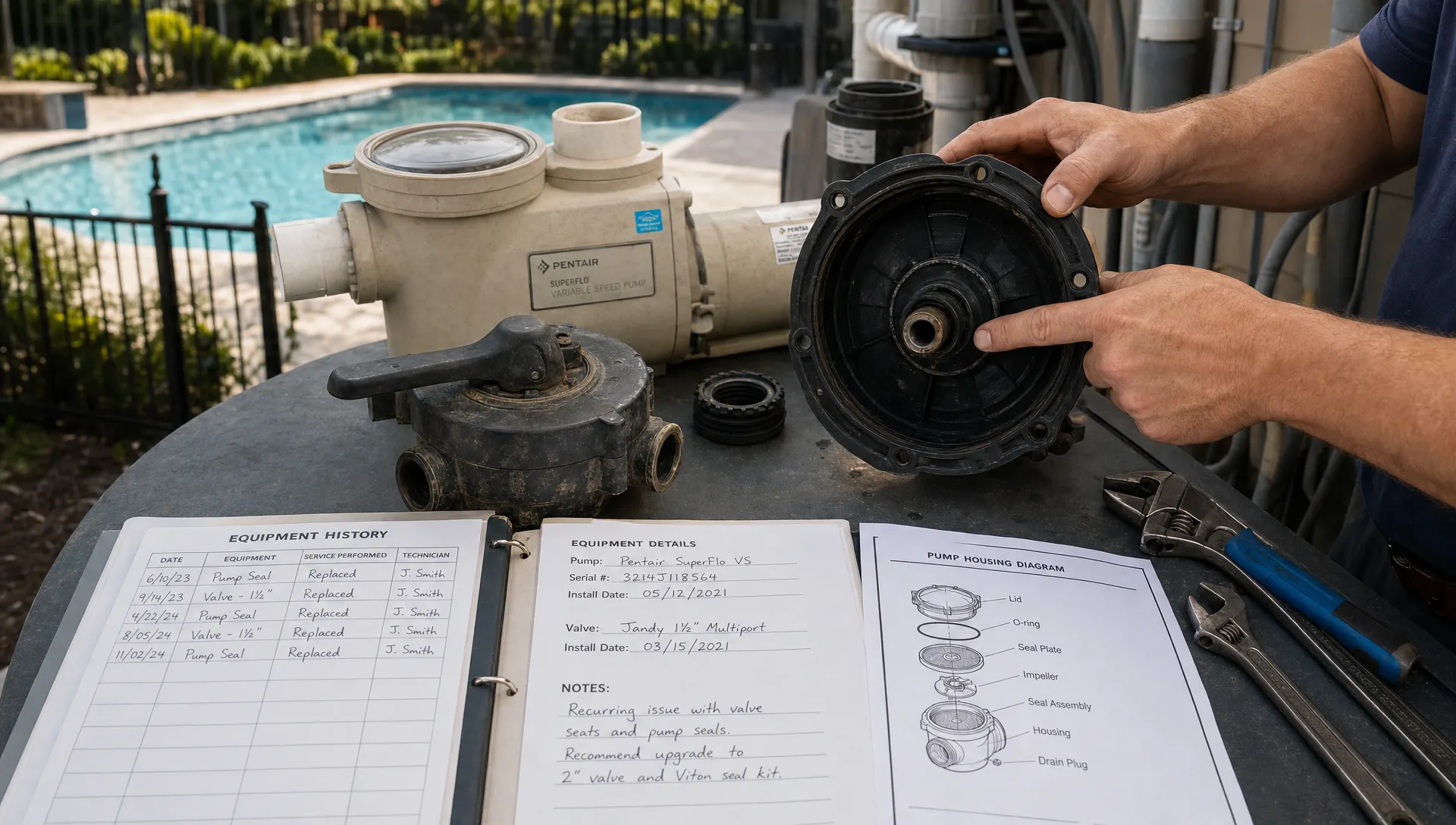
Equipment history is one of the most overlooked retention assets in a pool business. If your company knows when a pump was installed, what repairs were attempted and which parts have caused recurring issues, you can give better advice.
That matters because repairs are a trust test. Homeowners may question whether a replacement is really needed, especially when the cost is high. Equipment tracking helps your team explain recommendations with context instead of relying on a technician opinion alone.
For example, there is a big difference between saying the cleaner is not working and saying the cleaner has had three service notes over the past six months, the hose was already replaced and the latest photo shows the same failure returning. The second explanation gives the homeowner a reason to approve the next step.
8. A homeowner portal that lowers back-and-forth
A customer success platform should make it easy for clients to find what they need without calling the office. A homeowner portal can give clients access to service schedules, visit summaries, water-quality history, photos, invoices and payment options depending on how the business configures it.
This does not replace personal service. It protects personal service by removing repetitive questions from the office queue. The client who just wants to confirm the last visit can do that on their own. The office can spend more time on urgent issues, new leads and repair coordination.
For a closer look at this specific retention lever, SplashIQ has covered how CRM with customer portal features reduces back-and-forth for pool service teams and homeowners.
9. Online payments and financing that remove billing friction
A loyal client can still become frustrated if payment is annoying. Paper invoices, delayed billing and unclear balances create unnecessary tension at the end of an otherwise good service experience.
Online payments make the process easier for homeowners and help pool companies improve cash flow. When invoices are tied to service records, the client can connect the charge to work performed. That is especially valuable for repairs, seasonal service or add-ons outside the monthly maintenance plan.
Homeowner financing can also support loyalty when larger repairs come up. If a client needs a major equipment replacement but cannot pay the full amount immediately, financing options can help them move forward instead of postponing the work or shopping around under pressure. The key is transparency: explain the repair, document the need and make the payment path clear.
10. Technician scorecards that improve consistency
Customer success is not only a client-facing function. It also depends on how well managers can see field performance. Technician scorecards help pool company leaders understand patterns such as completed visits, documentation quality, route performance and follow-up needs.
The goal is not to micromanage technicians. It is to create a fair system for coaching, consistency and accountability. If one tech consistently skips photos or another route has more callbacks than expected, managers can address the issue before clients churn.
Scorecards are most useful when they are tied to the same workflow the team already uses. If performance tracking becomes another spreadsheet, it will fall behind. When it is connected to scheduling, field records and customer communication, it becomes part of daily operations.
How to evaluate a customer success platform for your pool company
When comparing platforms, avoid choosing based only on the longest feature list. The better question is whether the software helps your team create a better homeowner experience every week.
Use these evaluation points during demos or trials:
- Can office staff see the full customer, property, service and billing history in one place?
- Can technicians document visits quickly from the field, even with poor signal?
- Are notifications automatic but still based on real service activity?
- Can homeowners access useful records without calling the office?
- Does the platform support both routine maintenance and repair follow-up?
- Will managers be able to coach consistency across multiple technicians and routes?
This is where a pool-specific operating system has an advantage over a generic customer success platform. Pool service has recurring visits, route density, water chemistry, equipment records, photos, homeowner billing and field work all tied together. If those pieces are separated, the homeowner experience will feel separated too.
Common mistakes that weaken client loyalty
Even good pool companies lose clients when their systems do not support the promises they make. A few patterns show up often.
The first mistake is over-relying on the owner as the memory of the business. This works when the company is small, but it breaks as routes, technicians and office responsibilities expand. Clients do not care that information is trapped in someone else’s phone. They expect the company to know its own history.
The second mistake is treating communication as something that happens only after there is a problem. Proactive updates are much more effective than reactive explanations. A simple service notification, photo and water log can prevent the client from needing to ask whether the visit happened.
The third mistake is separating service operations from billing. If invoices are not connected to work performed, billing can feel arbitrary. When invoices, visit records and repair documentation line up, payment feels more reasonable and disputes are easier to resolve.
The fourth mistake is choosing software the field team will not use. A platform can look impressive in a demo but fail in the field if technicians cannot document visits quickly. Adoption is the bridge between features and retention.
Frequently Asked Questions
What is a customer success platform for pool service companies? A customer success platform for pool service companies helps teams manage the full client experience after the sale, including scheduling, homeowner communication, service documentation, water-quality logs, equipment tracking, billing and follow-up.
How does a customer success platform improve pool client retention? It improves retention by making service more transparent and consistent. Homeowners receive updates, proof of work, clear records and easier payment options, which reduces uncertainty and builds trust over time.
Is a customer success platform different from a CRM? Yes, although the two overlap. A CRM stores and organizes customer relationships. A customer success platform goes further by connecting CRM data to ongoing service delivery, communication, billing and retention workflows.
Which features matter most for pool homeowners? The most visible features are arrival notifications, service summaries, water-quality logs, photos, online payments and a homeowner portal. Behind the scenes, scheduling, field app usability, equipment tracking and technician scorecards help keep that experience consistent.
Can small pool service companies benefit from these features? Yes. Smaller companies often benefit early because good systems prevent messy habits from becoming expensive as the route grows. The goal is not to add complexity. It is to make repeatable work easier for the office, technicians and homeowners.
Turn reliable service into repeat business
Pool clients stay when they trust the routine. They want clear communication, visible proof of service, easy payments and confidence that your team knows their pool history.
SplashIQ brings CRM, scheduling, water-quality logging, equipment tracking, homeowner communication, field operations and payments into one operating system for pool service companies. If your team is ready to replace scattered tools with a more connected client experience, SplashIQ is built to help every visit support the next renewal.